
October 7 Was Supposed to Complicate the Model
Every model simplifies reality. In physics, we treat bodies as point masses, ignore friction and imagine ideal gases that exist in no actual container. That is not a flaw. A model is useful precisely because it leaves part of the world out. But there is a condition: reality gets the last word. A useful model must be capable of encountering a fact that forces it to change. October 7 should have been such a fact.
For years, one influential way of understanding the Israeli-Palestinian conflict has organized it along a series of related binaries: strong and weak, ruler and ruled, oppressor and oppressed, colonizer and colonized. Such categories can illuminate real disparities in military, economic and political power. They can tell us something important about the structure within which events occur.
The problem begins when a description of structure becomes a prediction of moral roles. The weaker side becomes the victim, not merely in the broader relationship but in each particular encounter. The stronger side becomes the aggressor. People cease to be actors whose actions must be judged and become representatives of positions already assigned to them by the model.
Then came October 7.
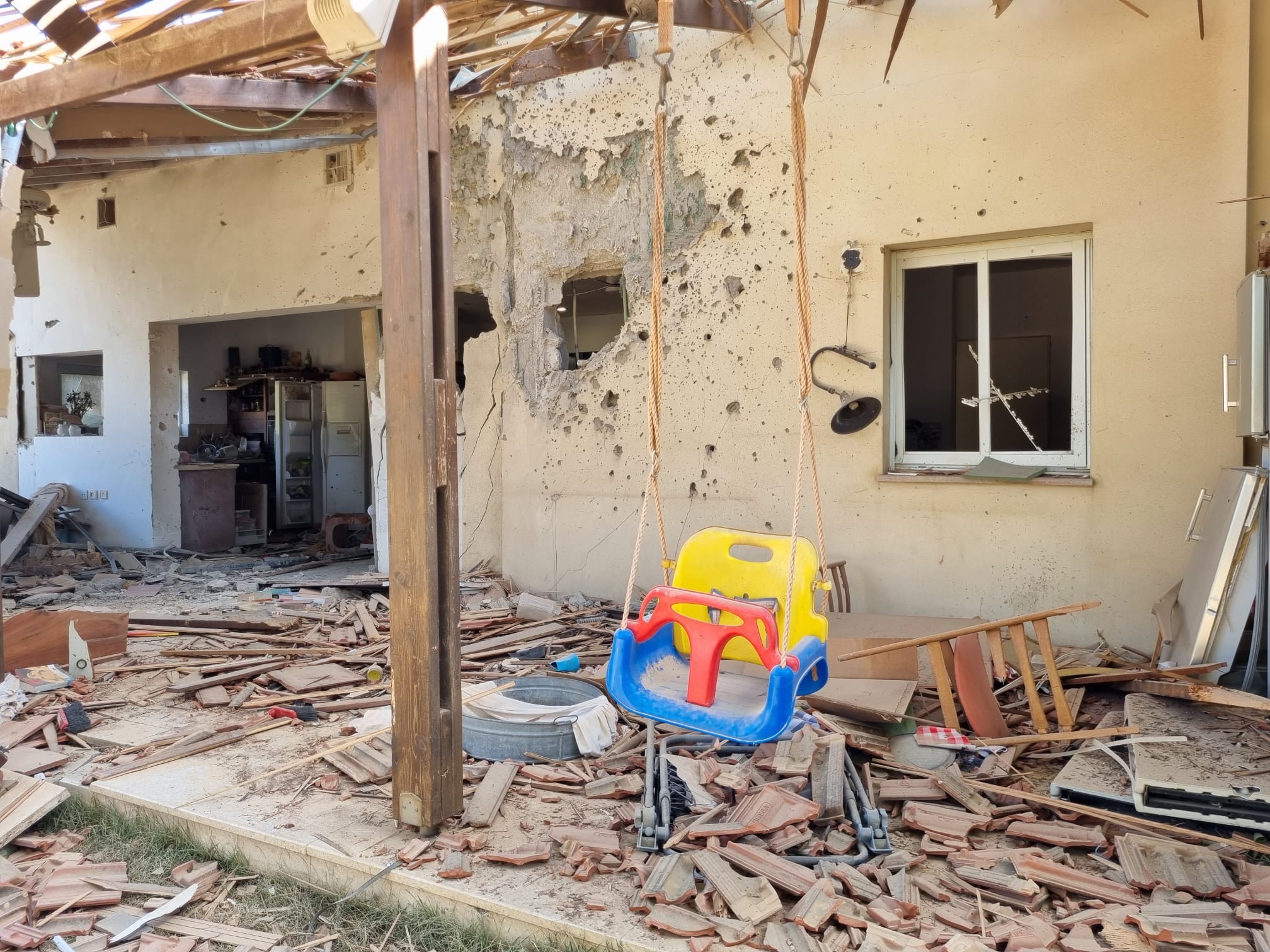
That morning, Hamas, Palestinian Islamic Jihad and other Palestinian armed groups crossed into Israel, attacked civilian communities, murdered civilians and took hostages into Gaza. Whatever one believes about the history of the conflict, or about the enormous disparity of power between Israel and the Palestinians, in the homes of Be’eri, Kfar Aza and Nir Oz the categories no longer aligned neatly. People associated with the stronger side were victims. Armed members of the weaker side were exercising lethal power over them.
This should not have destroyed every analysis based on power. It should have complicated it. There is no contradiction in saying that one group is structurally more powerful while recognizing that members of the other can be aggressors in a particular event. Nor does recognizing Israeli victims on October 7 erase anything that happened before or after that day. These claims concern different levels of reality. A model that cannot hold both at once is too simple for the reality it claims to explain.
Yet some reactions to October 7 did something revealing. Instead of allowing the event to complicate the model, they allowed the model to simplify the event.
Before the scale of the massacre was even fully known, more than 30 Harvard student organizations declared that they held Israel “entirely responsible for all unfolding violence”. Two days after the attack, Black Lives Matter Grassroots wrote that Palestinian “resistance must not be condemned, but understood as a desperate act of self-defense”, placing it within a struggle against settler colonialism.
These organizations were not identical, and they did not speak for everyone who understands the conflict through questions of power or oppression. But their responses revealed the same intellectual problem. Once one side had been assigned the role of oppressed and the other the role of oppressor, an event in which people from the first became perpetrators and people from the second became victims was difficult to accommodate. The event therefore had to be translated back into the categories the model already provided. Violence became resistance. Responsibility moved from those who acted to the structure in which they acted.
There is a deeper paradox here. A political language intended to restore Palestinian agency can end up denying it precisely when agency becomes morally uncomfortable.
To have agency is not merely to be capable of resistance. It is to be capable of choice. And people capable of making choices are capable of making terrible ones. If every Palestinian action is ultimately understood as the product of oppression, Palestinians remain people to whom history happens rather than people who also act within history. Their admirable actions can be called their own; their reprehensible actions are returned to the structure that produced them.
That is not agency. We can ask why Hamas emerged, what conditions strengthened it and what history preceded October 7. Indeed, we should. Explanation matters. But explanation and responsibility are different questions. An action can have causes without those causes becoming its authors. History did not cross the border on October 7. A structure did not choose homes, communities or a music festival. Human beings planned an attack and carried it out.
The same distinction matters in the opposite direction. Recognizing that Israelis were victims on October 7 does not settle every moral question about what Israel has done since, any more than Israel’s military power determines whether an Israeli civilian can be a victim. Moral responsibility cannot simply be read off a map of structural power. It has to follow actions as well.
That is what October 7 should have complicated: not the recognition that power is unequally distributed, but the belief that knowing where power lies tells us in advance who may be victim, aggressor or morally responsible.
Three years later, the question matters because the model survived. For some of those who held it, October 7 did not become a reason to revise the categories. It became further evidence for them. If members of the oppressed group committed violence, their violence could be explained through oppression. If members of the stronger group became victims, their victimhood could be interpreted through their position of power. Either outcome could be absorbed into the same theory.
And that returns us to the basic requirement we place on any model. It must take some risk from reality. There must be some conceivable fact that would make us revise it, add something to it, or admit that it cannot explain everything we thought it could.
If even October 7 could leave the model unchanged, the question is simple: What fact, if any, would have been enough to make it change?