‘October 8’ Director Wendy Sachs on the Jerusalem Film Festival and What’s Next
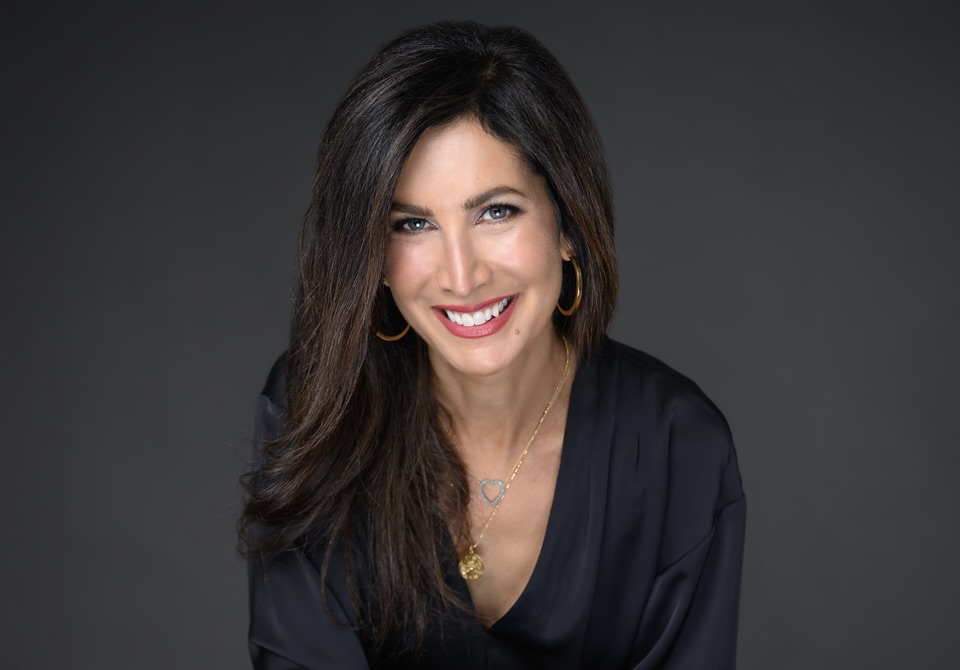
Wendy Sachs knew she needed to make this documentary on October 8, 2023.
On the day following the largest massacre of Jews since the Holocaust, one might’ve expected the response to be sympathy or condemnation of terrorism. Instead, there was an explosion of antisemitism on our streets and college campuses. There was silence from women’s rights organizations and Hollywood. There were anti-Israel protests in major cities across the globe where Hamas was celebrated as freedom fighters. And all this before Israel had finished counting the bodies, let alone initiated a military response.
Like many of us, Wendy felt like the world had lost its mind. She wanted to document what was happening and answer the question: How did we get here as a society?
Against all odds, October 8 premiered last March in a hundred theaters across the United States. What was expected to be just a one-week run expanded to multiple weeks and premieres in additional countries, with the film ultimately garnering more than $1.3 million at the worldwide box office.
This week, the documentary was screened at the Jerusalem Film Festival. Director Wendy Sachs shared her insight on October 8 and what’s to come.
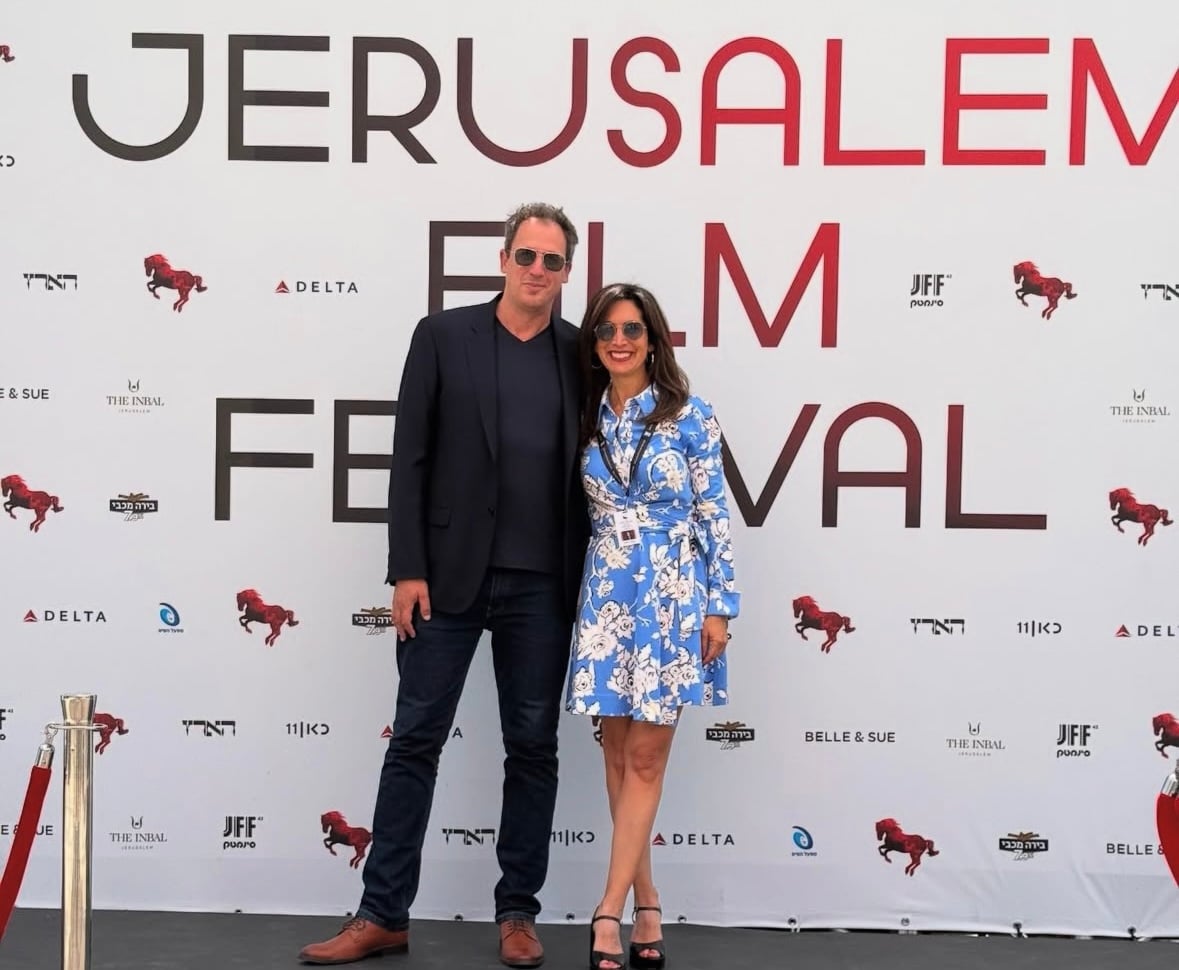
Leah Grossman: How was the Jerusalem Film Festival? Was it a different experience to screen this film in Israel?
Wendy Sachs: It was great. The screening went really well, we had a really full audience. I can’t say it was all that different than other screenings, but my remarks were a little bit different. We always give a trigger warning about the sirens that you hear in the open, and I think it’s obviously more relevant here than any other place we’ve screened. My sensitivity as a filmmaker and having done this through an American lens, and being in Israel basically telling the story but through my own perspective—I’m more conscientious of that and being respectful to the audience. Because of course everyone sitting in that audience knows someone, or is by one degree of separation connected to someone who has been killed since October 7th.
LG: What has the overall response been since October 8 premiered in March? Do you feel the film has moved the needle on viewers understanding the big picture of what’s happening in our country?
WS: For sure. We’ve been screening the film around the world, so we not only have a perspective of how people are perceiving the film and changing opinions in America, but around the world. I think it’s really exposed the long game that Hamas has been playing in America for decades, and how what we saw on college campuses wasn’t accidental—it’s well-funded, it’s sophisticated, well-organized. And while many people in the American Jewish community have been asleep at the wheel or complacent, the other side’s been organizing and infiltrating. The messaging was no accident—it had been planned, they were ready to go. I think the film exposes that and connects the dots for people about how we got to this moment.
I also think people do understand that it’s something bigger than the Jewish community, it’s much bigger than antisemitism. I think people are really understanding how it’s a threat to democracy, it’s a threat to American values, and it’s just a threat to all of us. So we’re doing a lot of screenings with non-Jews, it’s been very important to us not just in America but around the world. And that idea is really resonating—people are really shaken to their core after they see the film.
LG: On that note—this strategy of cultural infiltration that you cover in the film was extremely eye-opening. Lorenzo Vidino (Director of the Program on Extremism at George Washington University) describes a wiretapped meeting of Hamas leaders in 1993, revealing their strategy to push the Hamas narrative by influencing American media outlets and universities.
Given the current state of our country, it’s clear they’ve successfully played the long game. What do you think it’s going to take for people to wake up and realize they’ve been manipulated by terrorists?
WS: Unfortunately I think it’s more people dying—it’s gonna take some more terror incidents in America for people to really understand. I think the mainstream media does a terrible job in America of just blaming and putting the responsibility on those accountable. They have a real problem with actually addressing Islamic fundamentalism and terrorism in America, and frame it always as outliers—these one-offs that are so random, rather than understanding that there’s a lot of coordination happening.
And certainly the language that’s being used has become very mainstream. The antisemitism and anti-Zionism that we’re seeing in the streets of America—in New York City, in New York City’s mayoral race—is being accepted, and I think that’s what’s super alarming.
LG: I know getting distribution for October 8 was not an easy task. How validating was it for you to see the film be so successful that theatrical runs were extended and expanded to other countries? What did it feel like when you hit $1 million at the box office?
WS: Honestly, it felt amazing. I think that we are getting validation and showing Hollywood that there’s a demand for this film, and it’s not just Jewish audiences who are showing up—it’s non-Jews also. The reception to the film has been extraordinary and I am really truly humbled by it because of all the obstacles that we’ve had just getting it out in the world.
And by the way, we still have distributors around the world (from Germany to Latin America to the U.K., Australia and even Canada) who were very hesitant to take the film on—they worried about reaction. We had distributors whose staff revolted and their board members revolted, and then they dropped the film and we would have to pivot and get a new distribution partner.
So the challenges continue, and then at the same time people are showing up and filling theaters. So honestly, it’s been an extraordinary feeling just to know that the film’s resonating. And I hope it paves the way for future films, and for the industry to not be so fearful of taking them on. We’re showing that there’s a real demand and there’s a real interest.
LG: In a great interview you gave on Call Me Back with Dan Senor, you mention the irony of the notion that Jews run Hollywood. You said, “There is something really insidious going on in the film community. It’s not just Hollywood, but I would argue the independent film world. Whether you want to call it anti-Zionist, anti-Israel, or just straight up antisemitic—there’s something really ugly happening there. And it’s impacting Jewish filmmakers and anyone who’s touching this type of subject matter.”
I applaud your persistence to get this film the support it deserves after encountering so many closed doors throughout the process. Not everyone is cut out for that—where does your chutzpah come from?
WS: I love that question. I think it comes from just having a long career—I’ve pivoted my career a whole bunch of times. I started out as a Capitol Hill press secretary, I worked in PR, I wrote a couple of books, I worked in TV news, I did another documentary film on my own, I worked at startups. And all along the way, I faced a lot of rejection. I’m driven by competition, but I’m also not afraid of rejection and humiliation.
I think there is something to be said about: the more people tell you that you can’t do it, the more fiercely determined I become. I did want to prove the naysayers wrong, I did want to show the world that this film had a home and that there would be an audience and that it could be successful. And I also felt like I had the weight on my shoulders, because I was telling the story that needed to be told. I felt like I had the determination to get it done. I think a lot of people feel that way—the more people tell you no, the harder you’re gonna work to prove them wrong.
LG: You’re already in production on your next film, Poison Ivy. What can you tell us about it?
WS: Poison Ivy is almost an extension of October 8, it’s sort of a part 2. My directing and producing partner, Nimrod Erez, and I are diving into academia and how we got to this place in academia where the ideology is so fanatically anti-Israel, anti-Zionist, antisemitic. And it’s not just on university campuses, and by the way it’s not just limited to the Ivy League. We’re also looking at K-12—we’re looking at these curriculums called Teach Palestine that are in the public schools under the guise of teaching Arabic. We’re following the money trail and looking at Qatar and their foreign funding and their influence on university campuses.
This is going to be more of a global film—we are looking also at what’s happening in the U.K. and in Canada and Australia, and in some parts of western Europe. Sort of a Venn diagram of the perfect storm of what’s happening at the UN, what’s happening on social media, what’s happening in academia…tracing how we got here and what we need to do moving forward.
We just filmed in Geneva at the United Nations with Hillel Neuer (he’s the Head of the UN Watch). A couple times a year there’s an agenda item where the United Nations Human Rights Council gets together and they condemn the world for all sorts of human rights abuses. There’s one day dedicated to the entire world and another day dedicated entirely to the State of Israel, and it’s called Agenda item number 7. So we were there to film that and to interview Hillel.
LG: Is there a projected release date? Do you anticipate distribution will be easier this time around?
WS: We’re probably looking at two years before it’s actually in theaters. I really don’t know, I think there’s going to be more challenges. I just think that this subject matter is radioactive, anything that sort of touches on Israel can be just nuclear when it comes to Hollywood.
But this is a more investigative film, and I think tracing the funding and tracing what’s really going on behind the scenes and what’s happening with this funding is just fascinating to a lot of people. It’s not just the Jewish community who’s concerned with the kind of foreign influence that’s happening in academia in America and in the Western world.
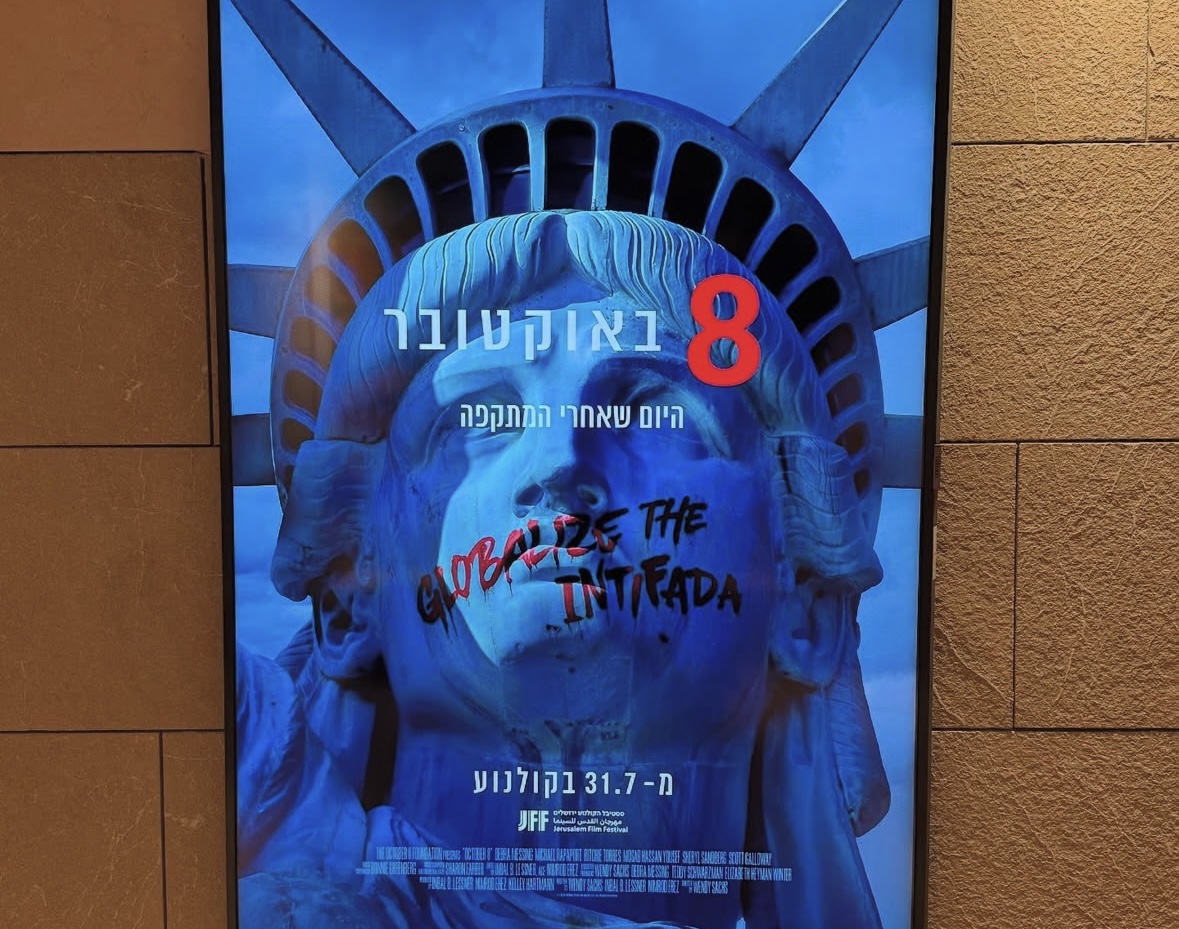
By the end of October 2023, Wendy had already written the treatment for October 8 with the logline: “On October 7 Hamas attacked Israel. On October 8 American Jews woke up.”
We’re awake, all right.
Thank you, Wendy, for your courage and determination to shed light on the truth behind what’s happening in our country and around the world.
For anyone who hasn’t seen the film yet—please don’t wait for more violence to serve as your wake-up call. October 8 is available to buy or rent on digital platforms.
* * *
“I think we’re gonna look back and say: How did so many smart people get it so wrong, and why did these universities let this happen? Why didn’t they have the courage to shut it down, to call it out for what it is? It is not free speech, it is hate speech. And why is the Jewish community the only community that gets targeted in this way and it’s okay?
This is also bigger than the Jews—the takeaway of the film is it’s not about the Jews, this is something much larger. This is why the world needs to really pay attention to what’s happening right now.”
—Wendy Sachs