
Miriam Frankel is a writer on religion, politics and culture.
Olami Manhattan Took Me to Poland – Day One
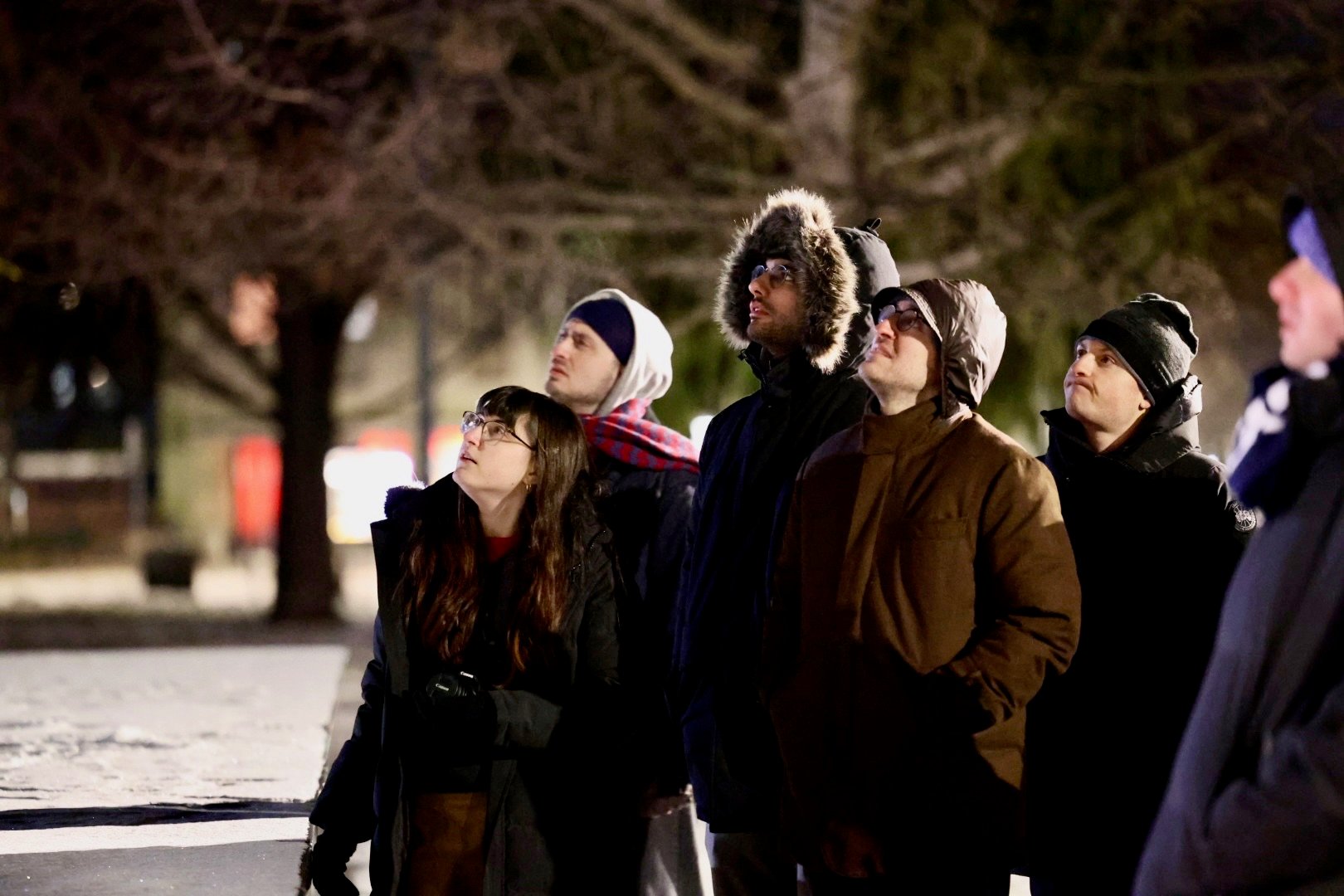
Miriam Frankel (left) and Olami Manhattan trip participants observe the Monument to the Ghetto Heroes in Warsaw, Poland. (Margaux Betesh)
Scarred into the Polish soil, the ruins of once-thriving Jewish communities stand as haunting reminders of a tragic genocide and the remarkable strength of a people’s resolve. Polish Jewry, decimated by the horrors of war, lost three million Polish Jews, 90% of the pre-war community, along with families, homes, and centuries-old traditions and artifacts. Yet, despite the brutal attempt to erase their existence, there is one thing the war could never take: the spirit of the Jewish people.
Though I wasn’t there to witness those dark days, nor do I carry the physical scars of my ancestors’ suffering, their legacy lives on in me. If you listen to their stories as I have, the weight of their words will follow you. If they don’t, we have far deeper issues to confront. For when one becomes immune to humanity and forfeits their empathy, that is when all is truly lost.
This past week, I had the profound honor and privilege of visiting Poland and Slovakia, invited by Olami Manhattan. I witnessed sites of both tragedy and triumph, to reflect on the resilience of Holocaust survivors, and to honor the memories of those whose lives were ripped away from us during one of history’s darkest chapters.
From Mila 18 to Majdanek, an underground bunker, and Auschwitz-Birkenau, each location left a different impression on me, sometimes leaving me with questions, other times with too many painful answers. The brutal actions of Nazi forces, aided by collaborators and bystanders across Europe, are a reminder of the deep betrayal and destruction wrought upon the Jewish people. The torments endured for the simple ‘crime’ of being born into Jewish heritage or practicing one’s faith.
Unlike many heritage tours that focus on history written millennia ago, this one carried an immediacy, the weight of ash still in the air, the echoes of my people’s cries, and the haunting remnants of human devastation, just a few decades ago.
When I was invited on this trip, I expected the weight of death to be my sole takeaway. Yet, in an unexpected turn, I also found the profound presence of life, especially in the face of such destruction, captured my heart and mind. The resilience of the Jewish spirit, unbroken despite such a revolting backdrop, has stayed with me since my return to the States.
I am honored to have the job of documenting what I’ve witnessed and sharing the stories I’ve been privileged to hear, but I would be remiss if I didn’t first mention the sheer incredibleness of the organizers and guides of this trip.
To say this trip met my expectations would be a vast understatement, diminishing the depth, rawness, and life-changing nature of the experience I was given. Visiting these sites is one thing, but to be guided through each moment, to have the weight placed upon your shoulders and then properly lifted, is a profound journey I could not have navigated without the expert guidance of JRoots Founder and Guide, Tzvi Sperber, and the spiritual reframing and tone-setting of Olami Manhattan leader, Rabbi Shmuel Lynn.
Here is what happened as the trip began.
***
On the first day of our journey, New York City was blanketed in snow, and the flight was delayed for several hours. Despite the setback, the atmosphere at the security checkpoint was filled with excitement, as students eagerly anticipated the adventure ahead.
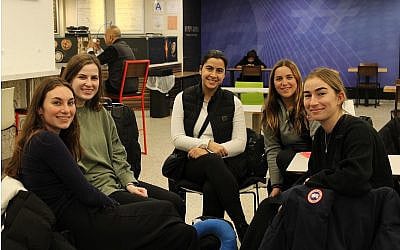
After checking in my bag, I made my way to the gate, where a fellow trip member from orientation spotted me and called my name. They invited me to join their table, and the warmth and camaraderie instantly set the tone for the journey to come.
As the plane took off, my excitement grew. I wrote in my journal: “This is just the beginning of what promises to be an unforgettable journey.” Looking back now, I realize how true those words would prove to be.
Upon landing in Warsaw, we quickly boarded a bus, making our way to the Warsaw Cemetery, the Ghetto, and the site of the Warsaw Uprising. The visit to the cemetery (which was kept open late for us, for which I am deeply grateful), though rushed as the sun began to set, was deeply moving. Boots pressed into the snow-covered ground as we walked through the cemetery, surrounded by rows of gravestones and frozen dirt.
Some of the stones leaned forward, almost as if prostrating themselves before God, making the pathway difficult to navigate. We lit the path with flashlights, as we made our way to a room where we gathered to learn about the lives of great Jewish scholars.
Among them was the Netziv, the Rosh Yeshiva of the famed Volozhin Yeshiva, a pivotal figure in Jewish education. Also commemorated were Rabbi Chaim Soleveitchik, credited as the founder of the Brisker method of Talmudic study within Judaism, whose teachings largely influence Jewish scholarship and contemporary orthodox pedagogy.
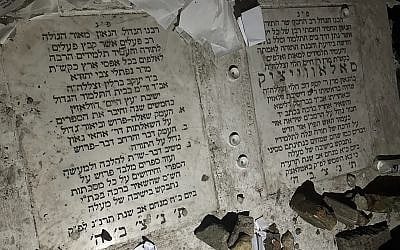
Just a few rows down, a group of Slonimer Hasidim, a sect of Ultra-Orthodox Jews, gathered to honor their spiritual leader, the Slonimer Rabbi, on the date of his Yartzeit. While Rabbi Lynn made clear that there were differences between his own practice of Orthodoxy and the Chassidim, he spoke with deep respect for their observance and customs.
Next, we ventured to the remains of the Ghetto. As we stood there, Sperber pointed out the windows overlooking the walls and the alley where we gathered. Murmurs rippled through the group: “Do the residents know what their backyard once was?” and “Do they even care?” At the time, I desperately wanted to join in the shock, but unfortunately, I had grown too accustomed to people being indifferent to the persecution and pain of Jews. It reminded me of when my father visited Europe and shared the story of a children’s party held in a park built directly on the grounds of a Jewish cemetery. The bodies had never been exhumed, and the gravestones had simply been removed.
We later walked to Stawki Street, where the National Monument at the Ghetto’s former Umschlagplatz stands. This site, once a holding area for Jews from ghettos awaiting deportation to Nazi death camps, features a monument erected in 1988 designed to symbolize an open freight car, representing the brutal deportations of the Holocaust.
On the grey stone, the 400 most common Jewish-Polish first names are inscribed in alphabetical order, each representing 1,000 victims of the Warsaw Ghetto. My eyes scanned the names, and when I came across my own, I felt what I coined descendant’s guilt. What struck me most was not the names themselves, but the lives they represented. What did those Jews dream of? What did they enjoy? What were their hopes for the future? Did they have a favorite food, or were they too young when the war broke out to experience such simple pleasures? I took a breath and looked around once more, jotting down that the monument also features an image of a shattered forest, much like the Jewish nation was, and still is- shattered and trying to once again regrow.
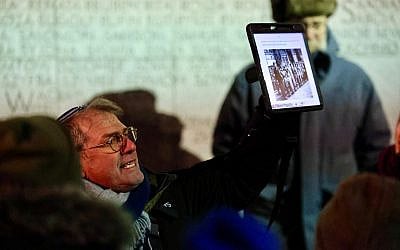
Sperber continued his explanations, showing us photographs and playing music that bridged the past with the present. We were transported back to September 1939, when the German invasion of Poland began, and then guided through the harrowing transformation of the Warsaw Gdańska railway station in 1942. It became a grim sorting and deportation point for Jews bound for Treblinka.
Whispers spread among my peers: how could this atrocity be so widely accepted and even celebrated? I shared their disbelief. The brutality of the Nazis is almost impossible to comprehend. Families were torn apart, infants, elderly and the disabled were murdered without hesitation. Yet, even in the face of such unimaginable violence, the Jewish community resisted with unwavering strength.
Sperber tells us of the spring in 1943, when one of the largest uprisings against the Holocaust, the Warsaw Ghetto Uprising, took place. Resistant groups, including the Jewish Combat Organization (ZOB) and the Jewish Military Union (ZZW), began to organize. Initially, these groups disagreed on methods of resistance, often clashing over strategies. However, they ultimately united, recognizing they were the farthest from each other’s enemies and had a much larger issue on hand.
Despite the threat of the Nazis liquidating the ghetto entirely, the Jewish resistance managed to prevent large deportations. Armed like a ragtag group of Davids standing against Goliaths, the Jewish fighters, using makeshift weapons, held their own against the heavily armed Nazi forces. The task seemed almost Maccabean.
While this was happening, many Jewish families recognized the signs and sought refuge underground, hiding in bunkers. One such family was that of Irene Kurtz. Sperber, who had formed a close friendship with her, gave her story over to us.
Irene’s family held their Judaism close to their hearts, so when Passover arrived, despite the peril and suffering that surrounded them, they were determined not to let anything stop them from observing the holiday. Leaving the safety of the bunker, they made their way upstairs to their apartment, retrieving the fine dishes they had once used before the war. They lacked the food, the wine, the joy, but refused to let themselves lose their practice.
With unwavering faith that God would provide, Irene set about preparing the table. As she carefully arranged the dishware, one of the wine glasses shattered, and in the process cut her hand. She rushed to rinse it off, but her father stopped her. With a gentle smile and a shared desperation, he told her that this, too, was a sign of God’s provision. Together, they poured some of the blood from her finger into the water, using it as a substitute for the wine. It was devastating.
Even with this painful resourcefulness, the family still lacked another essential item for the Seder: matzah. Saddened but resolute, they decided to proceed with the Seder, determined to carry on despite the absence. As they began the service, everything changed. Irene’s father suddenly leapt from his chair, bursting into joyful dancing, hollering and laughing as though possessed by an uncontainable joy.
Irene, bewildered and concerned by her father’s outburst, begged him to sit down. But his dance only intensified. Irene recalled to students on the JRoots’s 2022 Poland Trip, how she wondered if the war had finally taken its toll on him, if the madness of their suffering had broken his mind. But then, after what seemed like an eternity, her father stopped.
With a smile, he turned to Irene and said, ‘I told you God would provide.’
Inside their prayer books, the Haggadah, lay crumbs of matzah, that had been pressed between the pages for years. To a modern mind, these crumbs would be wasted, and seen as stale dust, inedible or undesired. To the Kurtz’s it was everything.
While the Kurtz’s were in hiding, the resistance raged on and the Nazi’s realized the gravity of the situation, intensifying their weaponry and tactics under the direction of SS General Jürgen Stroop. They nearly destroyed the entire Ghetto, and yet still like a budding flame, the resistance did not extinguish. Infuriated, the Nazis on May 16, 1943: forced all resistance members ZOB and ZZW to surrender and killed many of them. At the end of this decimation in Warsaw, between 300,000 and 350,000 jews were stuffed into cattle cars, deported to Treblinka and gassed to their death in the chambers.
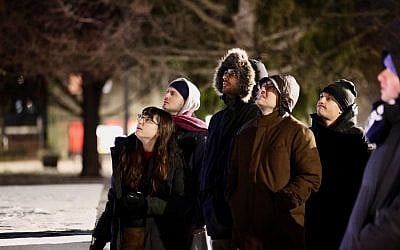
The entrance to the bunker along with the entire Ghetto was burnt to the ground, leaving only some cement and stone as a reminder of what once was. This is where we now stood.
Before concluding the day, we visited the Monument to the Ghetto Heroes, a powerful tribute to the Jewish resistance’s strength in the face of unimaginable oppression. Built, in part, from materials salvaged from the Nazis, I learning this felt the urge to smile. The Nazis thought they could exterminate us, erase us from the earth, but who remains here today, generations later, steadfast in their faith and resolute in their identity? The Jews.
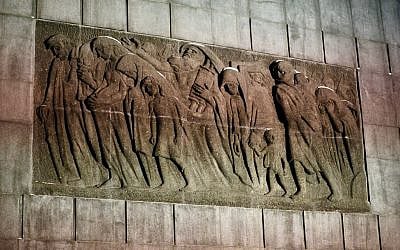
The first side of the monument faced east, depicting Jews bent over and surrounded by enemy forces. As we approached, discomfort spread through the group. Why build a monument that focuses solely on the weakness and vulnerability of the Jewish people? Voices were raised, but then quickly fell silent. This was exactly the moment Sperber had been waiting for. With a quiet smile, he said his signature line, “Come here and see.” With that, he led us to the other side of the monument.
In strong opposition, the western side offered the power of the Jewish resistance. The figures stood strong, resolute in their defiance to victimhood and suffering. The duality was striking, adding depth often overlooked in Holocaust retellings within educational contexts.
Though nearly everything was taken from the Jews, though we were oppressed, and suffered beyond comprehension, we didn’t let it break us. Even in the darkest moments, we held on to our principles and our faith. Our people did not simply survive due to luck or fate; we resisted, we persevered, and we triumphed over despair.
After the emotions of the group calmed, we continued our walk through the remnants of the ghetto. We stood by a mass grave, our voices rising into the air as Rabbi Lynn guided us in reciting our Hebrew names, names shared by the very souls resting beneath us. In that solemn moment, we humbled ourselves before those who carried such an integral part of our identity, vowing to live lives worthy of their memory, lives that would make them proud.
On the way back to the hotel, I found myself unusually quiet. Normally, I love to chat with peers and friends. God blessed me with the gift of gab, and I don’t waste it, but tonight, I decided to give my vocal cords a break and let my thoughts do the talking instead.
Inside my notes, I wrote as follows:
“There’s a thought that has lingered in my mind, one that I can’t seem to shake despite the discomfort it brings. Who would the Jews be without this tragic history, without the backbreaking labor that has shaped our story, or the tears our foremothers shed? I hate to think like this, but I often wonder who we would be if we had not faced such relentless oppression. Would we still hold our faith so dear, or would we practice it as we do now? If survival had not been in question, would our faith have faded like so many others have over time?
Would God want the monument to be viewed not just from east to west, but from every direction, including back around? What if this is our destiny, to be hated, persecuted, and then rise from the ashes like the phoenix, only for the cycle to begin again? I have faith in my people and in God, yet at times, I find myself burdened by the weight of witnessing this endless cycle. Will we ever truly be free?”
As I reread this passage, back home in the states, I yet again wonder the same question.
Related Topics
Related Posts