The views expressed herein are solely mine.
Oman Cannot Be Trusted on Hormuz
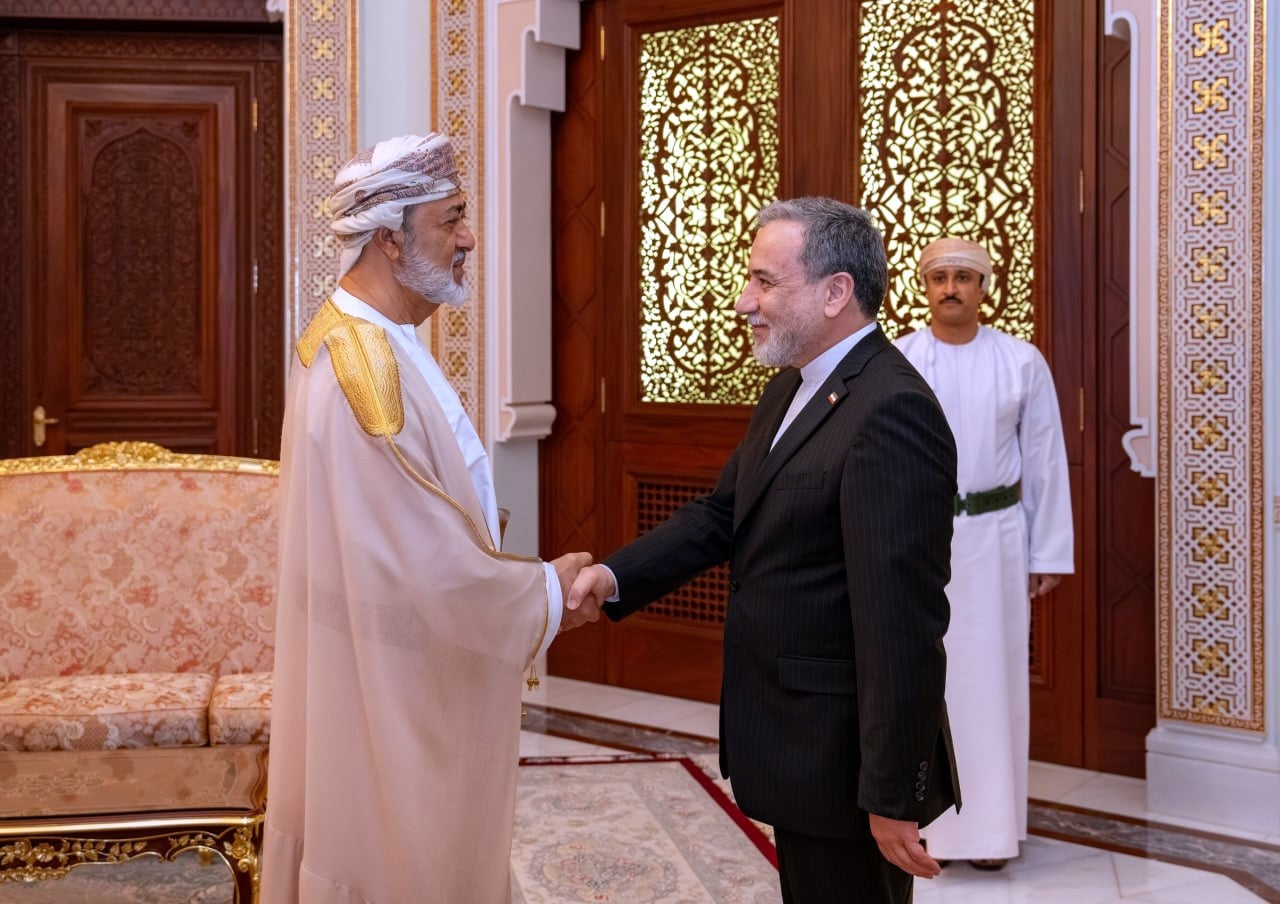
Iranian Foreign Minister Abbas Araghchi, right, shaking hands with Oman's Sultan Haitham bin Tariq during their meeting, in Muscat, Oman, April 26, 2026. (Iranian Foreign Ministry via AP).
Today’s Muscat meeting of the Iran-Oman Joint Hormuz Committee, led by Iranian Deputy Foreign Minister Kazem Gharibabadi, is extremely worrisome. This gathering marks the formal initiation of a bilateral control over the Strait of Hormuz. The sides discussed operations, future administration, navigation services, and passage costs. Tehran wants to turn an international waterway into a revenue source and political lever. Muscat gives that ambition sovereign legitimacy.
The Islamabad agreement between Washington and Tehran calls for toll-free, safe passage through the Strait of Hormuz and talks about its future administration. Iran has answered by advancing its arrangement with Oman while maintaining selective strikes and maritime pressure. The agreement has changed none of the regime’s habits: create danger, then charge the world for relief from it.
Under normal circumstances, Hormuz carries about 21 million barrels of oil daily, roughly one-fifth of global petroleum-liquids consumption and a quarter of seaborne oil trade. Qatar’s immense liquefied-natural-gas exports pass through the same waters. An Omani-Iranian toll or regulatory system would place global energy trade beneath Iranian leverage, while Oman supplies diplomatic cover.
Before the 2026 Iran war, Oman cultivated a reputation as the default regional neutral mediator. Muscat hosted US-Iran talks and cast itself as a bridge between adversaries. Those talks restrained neither Iranian missiles, drones, naval coercion, nor regional proxies. Oman cannot balance Iran and has repeatedly aligned itself with Tehran when the stakes rise.
Oman’s weakness is built into the map. The country has roughly 5 million people and an active military force of only about 42,000 to 47,000. Such a force cannot deter Iranian ballistic missiles, drone swarms, or pressure at sea. Iranian forces struck targets in Oman during the recent conflict. Musandam, the Omani peninsula projecting into the strait, is exposed. For a government avoiding a fight it cannot win, accommodation with Iran may seem reasonable. Prudence for Muscat, however, becomes a danger for everyone else.
Oman spends more than 5 percent of its gross domestic product on defense, which is among the highest in the world, yet it lacks an independent deterrent. Under this arrangement, Iran gets its hands on the cash register of global commerce, while Oman provides the stamp of approval. Such conduct is not neutral mediation; it erodes freedom of navigation.
Weaker states often behave this way when confronted by nearby revisionist powers. They adapt to the stronger neighbor and call it diplomacy. Oman has kept trade and diplomatic ties with Iran and resisted outside pressure to isolate it. Oman’s foreign minister has even called the US-Israel campaign against Iran “immoral and illegal.” No impartial referee speaks that way. Such language belongs to Tehran’s dependable Gulf partner.
Israel and leading Sunni Arab states should treat this as a problem they must solve themselves, not one Washington will solve for them. First, they should jointly field high-altitude, long-endurance stratospheric platforms, funded by Gulf sovereign resources and equipped with Israeli sensors and electronic systems. Publicly, the platforms could serve maritime safety, navigation assistance, and environmental monitoring. In practice, they would keep constant watch over the strait and its approaches. Their electronic capabilities could complicate the communications, radio, or positioning systems needed for coercive enforcement, without committing the coalition to a permanent naval presence.
Second, exposed states should build a sovereign-backed tanker consortium with a shared blockchain-based insurance system. By pooling capital to charter, insure, and influence a share of tankers carrying their energy, they could refuse as a bloc to recognize or pay Iranian-Omani levies. Automated contracts could cover losses, coordinate rerouting, and organize legal and commercial responses. Preferential supply agreements and shared risk could draw Asian importers into the arrangement. A single shipowner can be bullied. A coalition controlling cargo, insurance, data, and customers is harder to squeeze.
The states most exposed to Hormuz do not have to accept an international chokepoint becoming a bilateral tollbooth. Oman’s neutrality is no longer a stabilizing fact. That is a dangerous and costly illusion.
Related Topics
Related Posts