
The Gulf Must Choose: Iran’s Missiles Today or Iran’s Nuclear Bomb Tomorrow
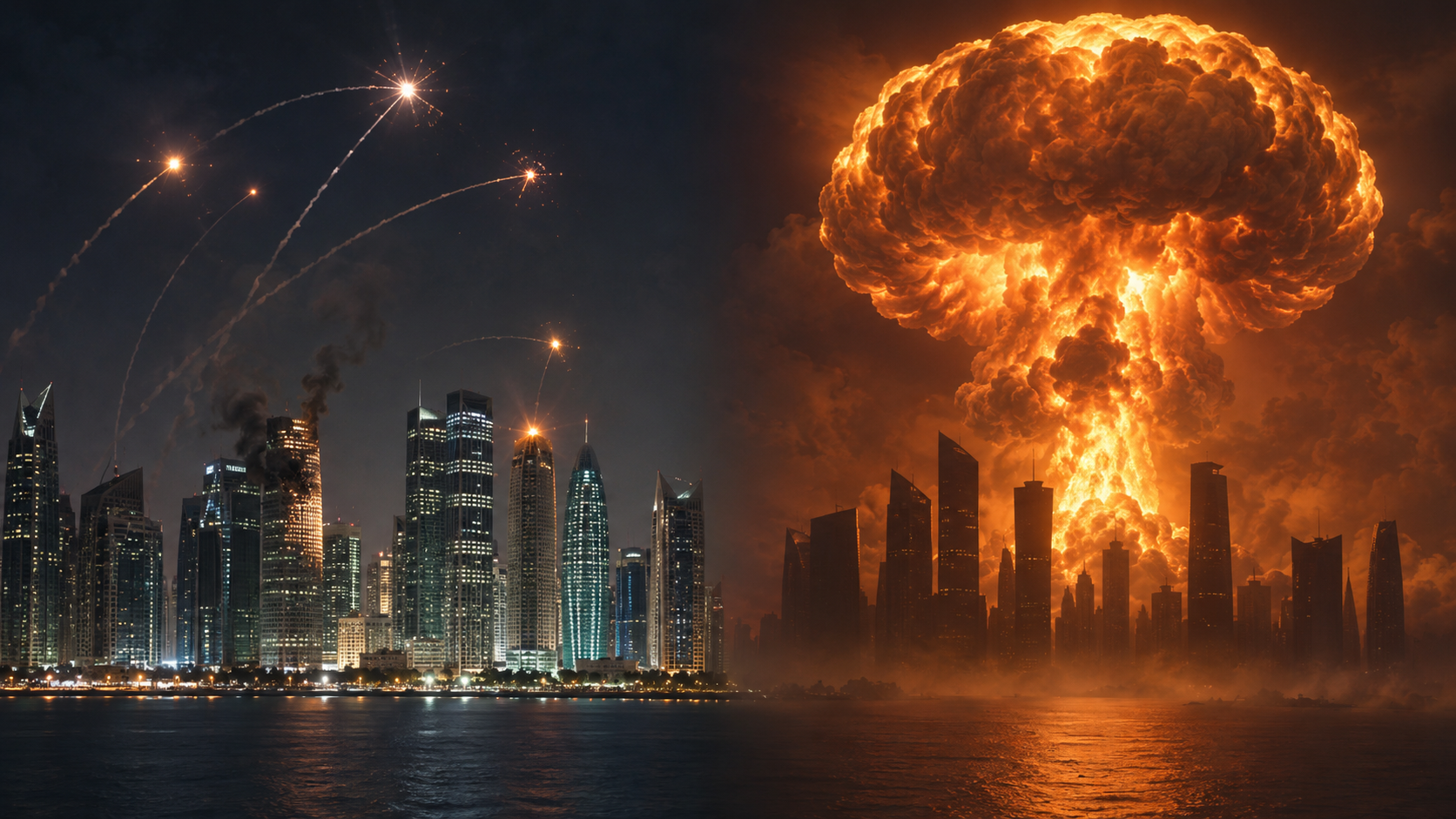
The attack was ready. Trump said so himself. Speaking to reporters aboard Air Force One on August 2, he explained his decision to call off a planned strike on Iran. He claimed the request for restraint came from Saudi Arabia, the United Arab Emirates, Qatar, and Iran. He described the aborted operation as massive.
The Wall Street Journal corroborated the Gulf’s role. Gulf allies urged restraint. Qatari mediators carried a proposal to Tehran on reopening the Strait of Hormuz. Mohammed bin Salman called the White House simply to ask where American strategy was actually heading.
Three Arab capitals asked Washington to wait. According to the president, Tehran asked for the exact same thing. Tehran promptly denied it, insisting Iran is not negotiating with the United States at all. But whether the Iranian plea is a back-channel reality or a White House invention, the Arab panic is perfectly documented. The reason behind it is neither mysterious nor irrational.
The fear driving those calls is not theoretical. Iran has been attacking these countries since the war erupted on February 28. Tehran has made the threat explicit. If American forces strike Iranian soil, Iranian missiles will dismantle the energy grids of the Gulf. Every refinery, every port, and every desalination plant sits on the target list. They host the American bases, making them the closest available targets. A regional war destroys their tourism, aviation, insurance markets, and foreign investment. They asked for time. From their capitals, it looks like prudence.
The flaw lies in the menu this request assumes. Gulf leaders are behaving as though they still get to decide whether they get attacked at all. That question was settled long ago. What remains to be decided is much narrower. With what, and when.
If the American strike goes forward, Iran retaliates using what it has today. Ballistic missiles, drones, proxies, and shipping harassment. The damage is painful and expensive, but survivable. But if the strike keeps getting postponed until Iran finishes the nuclear bomb, the Gulf spends the next several decades under a threat it has no way to answer. The second scenario is no longer speculative. It is strictly a question of how many months the enrichment takes.
This is not a difference of degree. Air defense exposes the gap perfectly. Interception works on percentages. A conventional barrage stopped at ninety percent leaves the country functioning the next morning. A nuclear warhead stopped at ninety percent means Doha is gone.
Their geographic location turns these odds against the Gulf more ruthlessly than anywhere else in the Middle East. Qatar, Bahrain, Kuwait, and the Emirates have no strategic depth. They have no interior to fall back on and no second city far enough away to matter. Their populations, governments, wealth, and energy grids are stacked tightly into a handful of coastal strips. They sit a few minutes of missile flight from Iranian territory. They cannot afford a single failed interception. No defense system in existence promises perfection.
Neither can they answer in kind. Deterrence requires the capacity to threaten a retaliation the other side finds unacceptable. Riyadh cannot. Abu Dhabi cannot. Doha cannot. They would live permanently under a gun with nothing to point back.
All of this rests on a silent assumption across the Gulf. Leaders hope a nuclear Iran would behave like every other nuclear state, holding the weapon strictly for leverage. It does not survive contact with the regime’s actual conduct. Nuclear restraint depends on two brakes: the terror of one’s own annihilation and horror at the suffering of innocents. The Iranian regime demonstrates neither.
Tehran was offered an end to sanctions, access to its frozen money, economic recovery, and its own survival. It turned all of it down to keep the uranium. The Gulf is wagering its existence on the good judgment of a regime actively prioritizing the bomb over its own people.
The actual purchasing power of that bomb is absolute. It does not buy the ability to invade neighbors. It buys the guarantee that whatever Iran takes, Iran keeps. Saddam Hussein seized Kuwait and its oil fields in 1990. A coalition of half a million soldiers removed him. That operation becomes entirely unthinkable against a nuclear opponent. No coalition lands troops in a port waiting to be vaporized. No president signs the order.
The same logic applies to the crisis the region just survived. Iran closed the Strait of Hormuz and had to be forced open under military pressure. Once Tehran holds a nuclear weapon, that pressure comes off the table permanently. Iran would never need to occupy foreign oil fields to control the region’s energy. Holding the door shut while remaining utterly untouchable accomplishes the exact same thing.
None of this leaves the Gulf a painless way out. But bowing to Tehran’s extortion ignores the other side of the battlefield. Gulf capitals must also wager on the sheer firepower of their allies. The United States and Israel possess the capacity to inflict such absolute devastation on Iran that the regime would struggle to mount a full-scale regional assault.
The calculation is brutal. These countries must choose between something bad today and something infinitely worse tomorrow. Last weekend’s phone calls successfully bought a delay on the first. They made the second almost inevitable.
Iran’s missiles are survivable. Iran’s bomb is not.
Which of the two are the Gulf capitals actually preparing for?