
Looking forward
On Civil Wars and Genocides
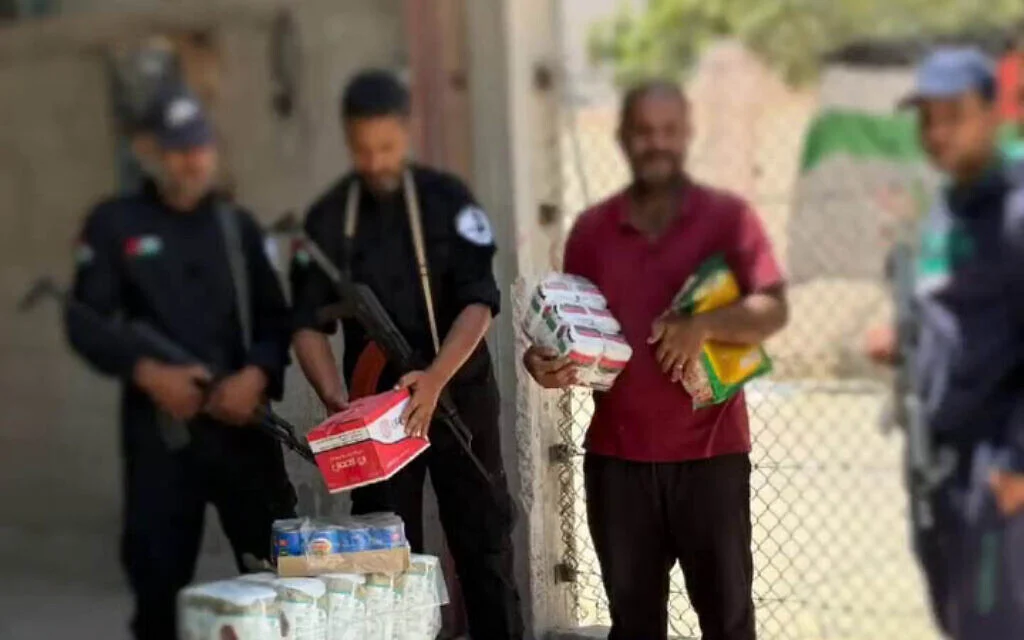
Members of the Abu Shabab gang in Gaza, in screen captures from a recent video posted by the group. (screen capture: Facebook)
Why one should view the Israel-Palestine conflict as a Civil War not a Genocide
In the American Civil War (started in 1861), 620,000 were killed, nearly 2% of the population. In the Russian Civil War (launched in 1918), nearly 1 million died in fighting, tens of millions after the Bolshevik regime’s consolidation. In the Spanish Civil War (1936), nearly half a million were killed. In the Syrian Civil War (2011), over 600,000 were shot, gassed, and bombed. Millions were forcibly expelled or left of their own accord to find better lives. In each war, both sides in the fight had the same goal: to win. To capture or maintain their control of a particular piece of land. Once the losing side surrendered, the war ended with the victorious party in power.
In the Circassian Genocide (started 1864), the Russian Empire aimed to cleanse the North Caucasus of a people deemed foreign. In the Armenian Genocide (started 1915), the Ottoman Empire sought to eliminate the Armenians – their own citizens – who they believed would assist a foreign power, the Russians, against them. Over a million dead. In the Rwandan Genocide (1994), Hutus massacred nearly a million Tutsis with machetes and bludgeons when the Hutu government sought to cleanse their land of their rival tribal group. Genocides are one-sided, systematic killings of civilians unable to surrender, unable to sue for peace.
When Raphael Lemkin invented the term genocide in 1941 he aimed to distinguish between the brutality of war and the unfolding crime of the Nazi government’s Final Solution to the Jewish Problem. He knew of civil wars that wiped out populations in a quest for dominance between ethnic or ideological groups, and knew the Shoah wasn’t it. He was young when the Russian Empire fell and the Bolsheviks consolidated power. He observed the brutality of the Spanish Civil War. He understood that Germany’s quest to cleanse captured territories of a particular people was different, and he gave it a name.
When well-intentioned Jews and gentiles use Lemkin’s term to refer to the ongoing brutal and bloody civil war between Jews and Arabs in this Holy Land, they make moral, ethical, and political mistakes that prolong the conflict and cause more pain and suffering to all involved. It’s also deeply racist.
Morally, they make the mistake of assuming that the waging of war by a stronger party on a weaker party is evil and therefore genocide. It is not. Gaza, an autonomous entity whose government is still to this day controlled by Hamas, may be weaker in all material ways than Israel, yet it was Gaza who launched the October 7 atrocities and thousands of rockets on Israeli population centers in the months that followed. The weak can threaten the strong, and the strong have a duty to protect their citizens from present and future attacks. It is moral for a country to utilize the tool of war to eliminate the capability of a party sworn to harm its citizens, until that party surrenders and rejects violence.
Ethically, they make a mistake because Israel has as much of a right to defend its territory as any other state. Gaza’s government, whose forces invaded Israel on October 7, continues to declare its intentions to erase the Jewish State. So too its supporters, who remain in a state of war against it. To call Israel’s campaign to defeat Gaza by unseating its government and destroying its armed forces a genocide legitimizes Hamas’s desire to threaten Israel while denying Israel the right to live free of threat.
Politically, they make a mistake because by calling the war a genocide, they enable Hamas to hold its population hostage. Hamas holds the key to the war: it can end the war tomorrow by surrendering. The current stage of the war is particularly cruel. Yet, according to the politically centrist Institute for National Security Studies (INSS), the strategy to distribute aid without working through the Hamas-infiltrated UN and Red Crescent seems to be working. Gazans are raiding government warehouses for food that Hamas kept from them. Fear of Hamas retribution is dwindling. As a result, Gazans might very well throw off a government that has sacrificed them as pawns in their jihad. A civil war inside a civil war.
Finally, and importantly, using the term genocide to describe the war in Gaza is deeply racist. It erases the millions of Palestinians living as citizens of Israel, integrated into Israeli society without giving up their language, history, or traditions. Sure, being a minority in any country isn’t easy. Israeli Jews need to fight harder to ensure Palestinian-Israelis are as accepted in Israeli society as are Mexican-Americans in the US. But there are Palestinian judges, parliamentarians, corporate executives, doctors, lawyers, and soldiers in the State of Israel. It’s racist to distinguish between blood and blood, to minimize their contribution to Israeli society, and to imagine Israel’s war on Gaza is an attempt to genocide Palestinian society as a whole.
Calling the century-long war between Israel and the remaining Arabs who have yet to make peace with it a genocide has its roots in the Durban Conference of 2001, and the attempt to brand Israel’s very existence as a crime. It is not. The current war between Israel and Gaza is particularly well-covered by the media, but it is not more brutal or bloody than any of the other civil wars waged even in recent decades. Yes, every child’s death is an absolute tragedy, and every lost life is a world destroyed. War is horrible, tragic, and should be avoided. I and a majority of Israelis have called repeatedly for it to be waged differently. To be ended far sooner. But such is war. If liberals, if humanists, if progressives want to maintain their way of life from assaults by authoritarian or religiously messianic movements, they’d be better off relating to the conflict between Israel and Gaza as a civil war and not calling it by a name that it is not.
Related Topics
Related Posts