
On Mamadani, antisemitism and anti-Zionism
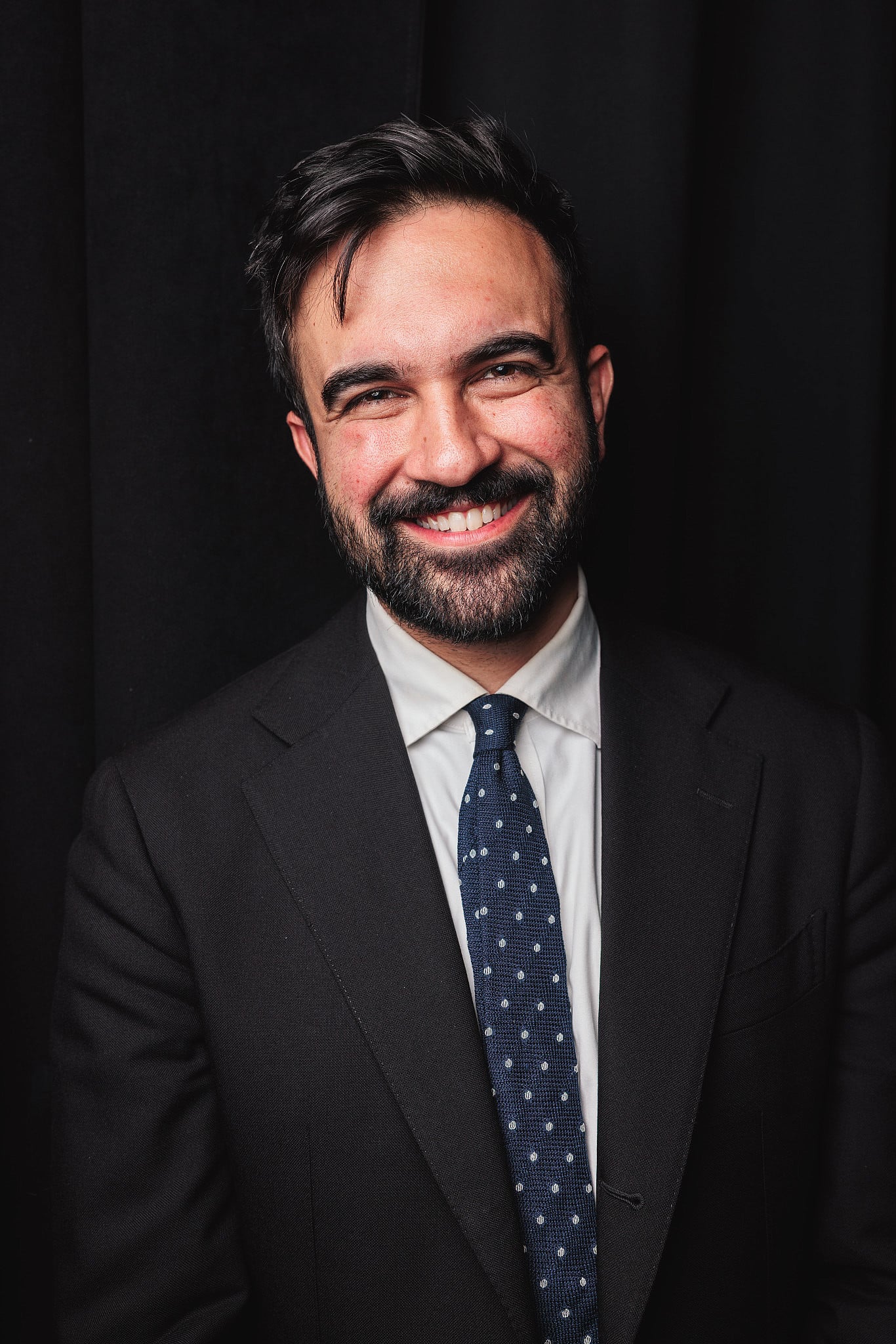
The controversy over Zohran Mamdani’s bid for mayor of New York City – home to the largest Jewish population in the world – has reignited a familiar question: Does anti-Zionism automatically equate with antisemitism?
Mamdani is clearly no Zionist. While he has had long-standing ties with the Jewish community in New York and several senior staff on his campaign are so-called ‘Nice Jewish Boys and Girls’ in New York, many in our community have been concerned and outraged over remarks he has made regarding Israel. Most notably, he has refused to condemn the term “globalize the intifada,” and he later stated he would encourage progressives to avoid using it.
But amid all the hysteria, we must remember that these are mayoral, not presidential , elections, and the relevant issues are principally the high cost of living and personal safety. Some voters now see a candidate’s willingness to criticize the Israeli government as proof of authenticity and a readiness to challenge political orthodoxy, especially in light of the devastation in Gaza and the growing alienation toward Israel among Democratic voters.
In any election, the decision ultimately hinges on the available options, and in this particular race, New York voters find the other two candidates exceedingly unappealing. Disgraced former governor Andrew Cuomo who has been accused of several cases of sexual harassment, has expressed his willingness to join Netanyahu’s legal team and has engaged in excessive fear-mongering about Mamdani, which many perceive as racism.
Regarding anti-Zionism and antisemitism, the insistence by major Jewish institutions, Donald Trump, and the Israeli government that the two are basically the same thing does real harm. Dogmatically conflating the two weakens the fight against genuine antisemitism and, ironically, makes it harder to counter anti-Zionism. When we misdiagnose the problem, we inevitably prescribe the wrong cure.
There is no doubt that some people are both antisemites and anti-Zionists, and others weaponize anti-Zionist rhetoric to mask hatred of Jews. However, the spectrum encompasses both extremes. There are also figures who harbor antisemitic beliefs yet embrace Zionism – not out of solidarity with Jews, but out of a desire to see them elsewhere. Some want Jews concentrated in Israel so that their homelands will remain “pure.” Others admire Israeli right-wing nationalism as a model for ethnocracy and anti-Muslim politics.
There are also those who see us as a tool to bring back the Messiah, Jesus Christ. Our role, in their view, is to fight and die at Armageddon in order for the second coming to occur.
Several people justify their Zionism with a Judeo-Christian covenant, but behind these words lies the belief that it is more urgent today to be anti-Muslim than to hate Jews, presumably because most of the immigrants to Western countries at this time are Muslim. The Judeo-Christian alliance is problematic because it excludes Muslims and ignores the historical fact that most Jewish victims in recent centuries were murdered by Christians during the Inquisition, pogroms, and the Holocaust.
Antisemitism is racism against Jews. The correct, moral, and most practical way to deal with it is to fight racism in all its forms. We should join hands in this struggle with minorities and liberal groups to create an effective coalition. The basis for this rests on a global approach, according to which we are all created in God’s image and are entitled to equal treatment, not out of Jewish uniqueness.
The attempt to present antisemitism as a unique racial phenomenon and insist on fighting it without expressing opposition to racism toward others, such as Islamophobia, is morally flawed and destined to fail. It ends up with campaigns like Cuomo’s – claiming to speak on behalf of the Jewish people while also engaging in vile Islamophobia and fearmongering against minorities.
And then there’s anti-Zionism. Effectively dealing with it requires entirely different tools.
We should first remind ourselves that it is an unrealistic presumption to expect Palestinians whose people have felt the most painful impacts of Zionism to become Zionists. And in multicultural countries such as the United States, we must accept that their right to political opinions and participation is equal to ours.
Active anti-Zionism is a position against the Jewish claim to a national home in the Land of Israel. Some believe, out of ignorance, that the Jewish people have no connection to the land between the Jordan River and the Mediterranean Sea and therefore see Zionism as a colonialist movement.
Others see the face of 21st-century Zionism as Netanyahu, his extremist allies, and other leaders as being out of touch with their values – and they are understandably repelled. The atrocities in Gaza have further exacerbated the situation.
It is my belief that true Zionism – liberal Zionism, which is shared by many in Israel and the majority of the diaspora – does not demand Palestinian submission or negate their self-determination, but quite the opposite. I continue to believe that only a two-state solution can deliver to Palestinians and Israelis their right to self-determination in a sustainable manner.
Another factor driving anti-Zionism is a misunderstanding of Jewish identity. Many people look at Israel and ask why any state should exist for a particular religion. But for the vast majority of Jews — including the Zionist founders — Judaism is not only a faith. It is a peoplehood: a national, historical, and cultural identity.
Modern nation-states emerged from liberal revolutions, and just as France is a state for the French — not for Catholics — Jews, as a nation, have the same right to self-determination as any other people.
Yes, some Jews see Judaism purely as a religion. But most understand it as a nation with diverse religious and secular currents, a shared history and language, and a sense of collective destiny. That includes fully secular Jews like myself, deeply connected to Jewish identity without religious observance.
Anti-Zionism has always existed, even among Jews. Some Jews, such as Neturei Karta, are anti-Zionist for theological reasons, while others, like the Reform movement, were anti-Zionist in their early days because they perceived Zionism as a rejection of Jewish integration into their home countries.
Within the Jewish left, there are organizations like Jewish Voices for Peace that are anti-Zionist precisely because of how they perceive their Jewish values. The existence of anti-Zionist Jews is the clearest demonstration that anti-Zionism is not antisemitism and is fundamentally different from it.
Mamdani appears to be anti-Zionist, and for those of us who are Zionists, that means there is a debate to be had. But it is incorrect to bring into the argument claims that his anti-Zionism means he is antisemitic. It would be better to listen to the New York Jews who are trying to bring Mamdani closer and explain to him why the nation-state of the Jewish people is important to them and does not prevent the establishment of a Palestinian state.
Despite our differences, we must ensure that the policies he implements at City Hall promote both Jewish safety and the safety of all people. Let us not show ourselves to be unworthy of engagement – otherwise we will be doing the work of anti-Zionists and antisemites for them.