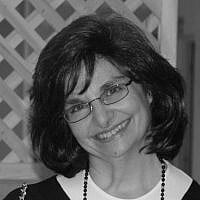
On Shabbat the Rabbi Hung Up Her Tallit

The Atra study on the rabbinic pipeline asked two key questions about the metrics of the rabbinate: Are fewer people choosing the rabbinate, and are rabbis leaving the congregational rabbinate, and if so, why? Many people have weighed in on these questions, and if you’re anything like me, you have read most of those pieces. Atra itself, in a recent eJewishPhilanthropy article, identified the scale of responses its work has revealed. With all the talk about the study and its results, I decided to take a different path. Instead of writing another opinion piece, I stepped into the work.
I’ve been a non-pulpit, albeit active and engaged rabbi since my ordination in 1995, back when, to my knowledge as a novice rabbi, we weren’t yet talking about “rabbinic pipelines.” My professional life became deeply rooted in higher education, alongside a rabbinic career that functioned, in many ways, as a side gig. In recent years, after stepping away from non-sectarian higher education, I found myself on the receiving end of a seemingly innocent question: would I mind providing coverage for two months while the congregational rabbi was deployed?
My inner voice immediately said, Why not? I attend services regularly. I deliver a sermon or d’var Torah on an occasional Shabbat. I’m already a scholar-in-residence and teach adult education. I checked in with my family and received their support. And then I paused. I have been working for the past two years launching a new pathway for a virtual rabbinical school (more on this soon), and here was an opportunity to put into practice some of what that work has been teaching me: introspection, reflection, connection, and healthy boundaries.
I asked myself what qualities in myself were eager to step into this role. Through this introspective work, I noticed that I was happy to be needed, it felt good to be wanted. I also recognized that I found meaning in doing this work at a time that feels so hard in the world; here was an opportunity to be in a place where I could offer compassion and inspiration as a rabbi. Reflecting on the day-to-day work, I recognized that many of my skills as a leader in higher education were originally developed in preparation for the rabbinate. The transferability between the two was a deep intermingling of management and leadership capacity. I also recognized that I could leverage my human-network skill set to deepen the ways I was available to connect.
My greatest concern was practical: I already had a job, granted half-time job. Did I have the capacity to put healthy boundaries in place so I could be present for each role without depriving either of its valued, contracted time?
In the end, what I worried about most turned out to be the least of my concerns in practice. What I did not anticipate, what challenged me most, and what I was gifted, was, in the overused but entirely accurate word, priceless.
I was honored to be invited to do this work. There is perhaps nothing more vulnerable for a congregation than allowing a “random rabbi” to step in and become their rabbi, even for a short period of time. That invitation reflects deep trust in their rabbi, trust on both our sides, that he knew what he was doing and discerned that this would work for his community. I carried that sense of vulnerable trust with me throughout the coverage period.
There was also a clear desire for stability and continuity. Their rabbi was away for a defined period of time, and it was my responsibility to hold the space in his manner and way, without losing my own voice along the way. At the same time, it was a moment of expansiveness. As a member of the congregation, my family and I had our small circle of relationships. But in stepping into this role, the entirety of the congregation became my community. It mattered deeply to me that everyone felt they could access me and knew where to find me.
How do you hold all of this? In this digital age, technology helped. A VoIP number allowed us to share my contact information while building in healthy boundaries. In a broader sense with great intentionality I expanded my voice in community. I studied key phrases the rabbi regularly used in services and quoted him when offering directions, so that we all knew this was the service he would have been leading. I often referred to myself as the substitute rabbi, not to diminish the role, but to contextualize it. My sermons were written and delivered in my own voice and style, though I did hear him shouting alongside me the one time I delivered a particularly “fire and brimstone” d’var.
Did I make mistakes? Of course. Did we survive them? Yes. And as any rabbi will tell you, that the one missed coffee, the one moment of not connecting when someone reached out, will weigh more heavily than the many times of showing up fully and faithfully in moments of need.
Most importantly, we learned as a community just how much our rabbi matters and how many places and spaces he shows up. In his absence, the congregation stepped up in extraordinary ways. Evening and morning minyanim were lay-led and robust throughout his deployment. People stepped in to read Torah. Others took on the sacred responsibility of leading shiva minyanim. We held events, including one with a comedian who kept joking about whether we were all “playing hooky” without the rabbi. We weren’t. The lights were on, and the vibrancy and participation were tenfold. We launched a robust new early Friday night Chanukah candle-lighting and service, offered three adult education classes, we were present for AJC galas, and at Interfaith programs, canasta still happened, and Talmud class continued. We marked life as it unfolded: babies came into the world, and people left it.
Our rabbi, his voice, his love, his care, was deeply missed. And yet he was also present, as we followed his deployment through the most valuable weekly updates and photos he shared. In our prayers, we intermingled the words on the page with the words of our hearts, adding prayers for his safety and for the safety of all deployed troops into every Amidah.
Rabbi Levenson is now home with us, and we are overjoyed and almost but we know not as happy as his own family.
There is a Torah image that has stayed with me throughout this experience. “Then Moses held out his arm over the sea, and the Eternal drove back the sea with a strong east wind all that night, and turned the sea into dry ground; the waters were split.” (Exodus 14:21) Moses leads the people forward, staff raised, eyes fixed on the horizon. That is the work of the rabbi who carries the community across.
But Torah is clear that leadership at the sea did not belong to one voice alone. “Then Miriam the prophetess, Aaron’s sister, took a timbrel in her hand, and all the women went out after her with timbrels and dancing.” (Exodus 15:20) Miriam was a leader in her own right, a prophet who understood her personal toolbox of skills that afford her to help mark the moments of transition and hold people together in process. Moses moved the people through the sea; Miriam ensured they crossed with their spirit intact. She led not by command, but by rhythm, embodiment, and joy, by translating their anxiety and hard work into song so it could live joyfully in their hearts after the liminal moment had passed. What a joy to be Miriam, and to turn the community back to its Moses.
This experience points to something larger. This model, not a year-long sabbatical, not moving into a synagogue full-time, but a clearly defined, part-time, two-month coverage, should be stored in the repository of responses to the real needs identified in the Atra research. It is a simple solution. When done thoughtfully, it can be a meaningful side gig for rabbis in non-congregational careers, helping colleagues step away for short breaks. What a gift when colleague can partner, to share talents and gifts across communities. What a gift for communities to have more than one person to call their Rabbi.
This Shabbat, our rabbi comes home. And now, like Miriam placing her timbrel back at her side, I will hang up my tallit.