London based entrepreneur, cybersecurity analyst doing a PhD in AI
One Idea Tafsir No.11 – Orange Oakleaf Butterfly.
Petr Ganaj via Pexels.com - https://www.pexels.com/photo/insect-on-orchid-4136896/
The Orange Oakleaf Butterfly
Evolution, belief, and the One who gives all things their form
A reflection on Sūrat al-Ḥashr (59:24)
A Butterfly That Became a Leaf
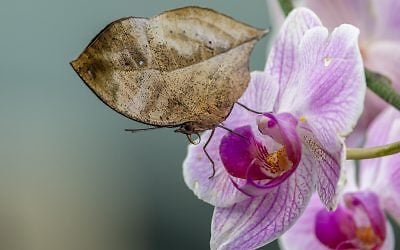
Somewhere in the forests of Asia, a butterfly performs one of nature’s most extraordinary disappearing acts.
When its wings are open, the Orange Oakleaf Butterfly (Kallima inachus) displays brilliant orange and blue markings. But when it closes them, something remarkable happens.
The butterfly appears to become a dead leaf.
There is a central vein. Smaller veins branch away from it. Brown patches resemble decay. Irregular edges reproduce the outline of a withered leaf. Even its resting posture completes the illusion.
The resemblance is so convincing that a predator may see the butterfly without recognising it as something edible.
Now consider a deceptively simple question:
How did a butterfly acquire the appearance of something entirely different from itself?
Evolutionary biology offers an explanation involving genetic variation, inherited changes, natural selection and enormous stretches of time.
Religion offers another dimension: creation, divine wisdom, and the One who gives existence its forms.
But the deeper question is not simply whether evolution or divine creation explains this butterfly.
It is what we actually know, what we infer, and what we believe.
And this leads us to a remarkable verse of the Qur’an.
1. The Qur’anic Backdrop: Al-Khāliq, Al-Bāriʾ, Al-Muṣawwir
Allah says in Sūrat al-Ḥashr:
هُوَ ٱللَّهُ ٱلْخَـٰلِقُ ٱلْبَارِئُ ٱلْمُصَوِّرُ ۖ لَهُ ٱلْأَسْمَآءُ ٱلْحُسْنَىٰ ۚ يُسَبِّحُ لَهُۥ مَا فِى ٱلسَّمَـٰوَٰتِ وَٱلْأَرْضِ ۖ وَهُوَ ٱلْعَزِيزُ ٱلْحَكِيمُ ٢٤
He is Allah: the Creator, the Inventor, the Shaper. He ˹alone˺ has the Most Beautiful Names. Whatever is in the heavens and the earth ˹constantly˺ glorifies Him. And He is the Almighty, All-Wise. — Qur’an 59:24, translation: Quran.com
Three Divine Names appear together.
Al-Khāliq (ٱلْخَٰلِقُ): The Creator.
Al-Bāriʾ (ٱلْبَارِئُ): The Originator, who brings creation into existence.
Al-Muṣawwir (ٱلْمُصَوِّرُ): The Fashioner, who gives things their particular forms.
In his Tafsīr, Ibn Kathīr (raḥimahullāh, may Allah have mercy upon him) explains Al-Khāliq in connection with determining and proportioning creation, Al-Bāriʾ with bringing into existence what Allah has determined, and Al-Muṣawwir with giving creation its form according to His will.
Al-Ṭabarī (raḥimahullāh) similarly describes Allah as the One who brings creatures into existence and fashions them however He wills.
These Names are not three separate creators, nor is the verse setting out a scientific production sequence. They describe distinct aspects of Allah’s one act of creation.
Another verse makes the connection with form explicit:
هُوَ ٱلَّذِى يُصَوِّرُكُمْ فِى ٱلْأَرْحَامِ كَيْفَ يَشَآءُ ۚ لَآ إِلَـٰهَ إِلَّا هُوَ ٱلْعَزِيزُ ٱلْحَكِيمُ ٦
He is the One Who shapes you in the wombs of your mothers as He wills. There is no god ˹worthy of worship˺ except Him—the Almighty, All-Wise. (Quran 3:6)
The verb yuṣawwirukum comes from the same Arabic root as Al-Muṣawwir.
Here the Qur’an directs our attention to the formation of living beings.
Our question, therefore, becomes particularly interesting.
If Allah is Al-Muṣawwir, what should we make of the biological processes through which creatures acquire their forms?
2. What Evolution Would Actually Require
Suppose the butterfly did indeed evolve its astonishing resemblance to a dead leaf.
What would have had to happen?
First: Heritable Variation
An ancestral population of butterflies would have possessed differences in wing colour, shape, markings and behaviour.
Some differences would have resulted from mutations in DNA. Others would have arisen through recombination of existing genetic variants.
These variations would need to influence the development of the wings and be heritable.
A slightly straighter dark marking, a browner underside or a different wing outline could form part of this variation.
Second: Natural Selection
Imagine two butterflies resting among fallen leaves.
One has wings that stand out. The other has markings that make it somewhat harder for a bird to distinguish from its surroundings.
If the second butterfly is less likely to be attacked and consequently leaves more surviving offspring, the relevant inherited traits may become more common.
Repeat this process across many generations.
Third: The Reorganisation of Wing Patterns
This is where the scientific evidence becomes especially fascinating.
A 2014 study by Takao K. Suzuki and colleagues examined the wing markings of Kallima and 45 closely related butterfly species.
The researchers found that the leaf-like appearance could be explained by modifications to pre-existing elements of butterfly wing patterns.
Through comparative morphology and evolutionary reconstruction, they inferred a sequence of intermediate patterns.
Curved markings became straighter. Certain markings diminished. Others changed their relative positions.
Together, these modifications produced patterns resembling leaf veins.
In other words, the proposed evolutionary history did not require an entirely new wing-design system to appear suddenly.
It involved the progressive modification of structures already present in ancestral butterflies.
This is an important distinction.
The study provided evidence for a stepwise evolutionary pathway, although the reconstructed ancestors and the exact historical sequence remain scientific inferences rather than directly observed events.
Read that again, the inference is an extrapolation – not a conclusion from direct observation.
What does that mean in “lay man” terms?
It’s a “story” which fits the evidence.
But another story could too, and multiple others.
Fourth: Genes That Control the Pattern
In 2022, a study published in Cell investigated the evolutionary history and genetic basis of oakleaf butterfly wing patterns.
Researchers identified an important role for the wing-patterning gene cortex in controlling variation in their leaf-like appearance.
They also found evidence that balancing selection had maintained different wing-pattern variants over long evolutionary periods.
The cortex finding provides a concrete genetic connection between inherited differences and visible wing patterns.
It does not mean that one gene alone explains the complete origin of leaf mimicry.
It doesn’t answer why mimic a leaf? Why not the soil?Why not a twig? Why not moss? Why not any other feature of the woodlands that make their habitat.
Fifth: This is Goal oriented – A Predator Must Actually Be Deceived
Perhaps the most interesting question is whether the resemblance really works.
Scientists can look at a butterfly and declare that it resembles a leaf.
But that is a human judgement.
For natural selection to favour the disguise through protection from predation, it must matter to the animals hunting the butterfly.
In 2024, researchers experimentally investigated this using domestic chicks.
Chicks previously familiarised with ordinary dead leaves showed greater hesitation before attacking dead-leaf butterflies than chicks without that experience or those exposed to visually altered leaves.
The results supported the hypothesis that predators can mistake the butterfly for an inanimate object.
This is known as masquerade: not merely hiding from detection, but being misclassified after detection.
The experiment did not directly reconstruct millions of years of evolutionary history or measure survival in wild butterfly populations.
3. Does This Mean the Butterfly Evolved by Chance?
The central scientific question is not whether someone can imagine a sequence of beneficial mutations.
It is whether the proposed historical explanation accounts for the available evidence better than competing explanations.
But now we encounter another question.
Does a scientifically explained mechanism settle the question of ultimate creation?
4. Mechanism Is Not the Same as Meaning
Suppose tomorrow we discovered the exact genetic and developmental history of every marking on this butterfly.
Every mutation.
Every ancestral population.
Every selective pressure.
Every change in wing shape.
Would that establish that Allah does not exist?
No.
Would the butterfly’s extraordinary appearance, by itself, scientifically demonstrate that Allah designed it?
Also no.
These are different kinds of claims.
Evolutionary biology investigates how inherited biological traits change and diversify through natural processes.
Theology asks whether the natural world, including its laws and processes, ultimately owes its existence to a Creator.
The two questions are not automatically contradictory, although particular interpretations of biological history and religious texts can conflict.
This brings us to belief itself.
5. What Is Belief?
Human knowledge is limited.
Individually, none of us has personally observed even a fraction of the facts on which we depend.
Collectively, humanity possesses far more knowledge than any individual can acquire. Yet even our collective understanding remains incomplete.
We did not personally observe the evolutionary history of this butterfly.
We infer it through evidence preserved in living organisms, genomes and evolutionary relationships.
We did not witness the formation of the Earth.
We reconstruct it through geology, physics and chemistry.
We cannot directly observe another person’s private thoughts.
We form judgements using their words, actions and our accumulated experience.
Much human belief, therefore, involves moving beyond what is immediately observed.
We might call this extrapolation, although the more precise philosophical term is often inference.
But not all inferences are equal.
A scientific conclusion supported by several independent methods is not equivalent to an unsupported guess.
Science develops confidence through observation, testing, prediction, replication and correction. It does not require absolute certainty about every detail to establish what it considers reliable knowledge.
Religious belief has a different epistemic foundation. It may draw on philosophical reasoning, reflection on creation, historical testimony, revelation and religious experience.
For Muslims, the Qur’an and the authentic Sunnah are foundational sources of religious knowledge.
Faith therefore cannot be adequately defined as believing something merely because we lack information.
Belief is not the abandonment of knowledge. It is an assent to a proposition on grounds we judge sufficient, even when its reality is not fully and directly accessible to us.
What differs is the nature and strength of those grounds.
6. The Butterfly and the Limits of Human Knowledge
Return to the butterfly.
A scientist might describe its appearance through the accumulation of inherited changes across generations.
A Muslim might look at the same butterfly and reflect upon the Divine Name Al-Muṣawwir.
What separates these statements?
The first makes an empirical claim about biological history.
The second makes a theological claim about the ultimate Creator of the living world.
Both extend beyond what the observer sees in that moment, but they do not rely on identical methods or claim identical forms of certainty.
We should not confuse their distinct roles.
Nor should we turn gaps in current scientific knowledge into proofs of divine intervention.
If tomorrow scientists discover another gene involved in leaf mimicry, the believer has lost nothing essential.
If scientists reconstruct an additional evolutionary intermediate, the Divine Name Al-Muṣawwir has not become less meaningful.
The real theological question is not whether we can discover the butterfly’s biological history.
It is whether the existence of an intelligible natural order ultimately points beyond itself.
This is a philosophical and theological question, rather than a laboratory result.
7. Tafsīr: Why Does Allah Call Himself Al-Muṣawwir?
Let us return to the closing verse of Sūrat al-Ḥashr.
The central teaching of Al-Muṣawwir is not that complex things must resemble objects manufactured by human engineers.
Rather, it is that the diversity and particularity of created forms belong ultimately to Allah’s power and will.
From the human embryo to the butterfly wing, no created form exists independently of its Creator.
Importantly, the Qur’an concludes the verse by calling Allah:
Al-ʿAzīz, Al-Ḥakīm — the Almighty, the All-Wise.
The ending is significant.
Creation is not presented merely as a display of power.
It is associated with wisdom.
The classical tafsīr establishes this theological meaning. Applying the verse to the Orange Oakleaf Butterfly is our contemporary reflection upon it, not a claim that the early commentators discussed this particular species or evolutionary theory.
We may observe the butterfly’s wing patterns as an occasion for contemplation.
We must not pretend that contemplation supplies experimental evidence about every biological mechanism.
And we should not mistake an analogy for the meaning of revelation itself.
8. Charles Darwin on Evolution and Belief in God.
Contrary to the popular assumption that Charles Darwin’s theory of evolution necessarily entailed atheism, Darwin explicitly distinguished evolutionary biology from the question of God’s existence. In a letter to John Fordyce dated 7 May 1879, Darwin wrote:
“In my most extreme fluctuations I have never been an atheist in the sense of denying the existence of a God.”
Darwin further explained that he generally considered agnostic the more accurate description of his position, particularly as he grew older. In the same letter, he argued that belief in God and acceptance of evolution were not inherently incompatible.
Darwin’s position should therefore not be misrepresented as an unequivocal affirmation of theism or religious faith. Rather, he recognised that a scientific account of how species evolve does not, by itself, establish whether God exists. This distinction is important when considering the Qur’anic Divine Names Al-Khāliq (the Creator) and Al-Muṣawwir (the Fashioner): explaining the biological mechanisms through which living forms develop is not necessarily equivalent to resolving the philosophical and theological question of their ultimate origin.
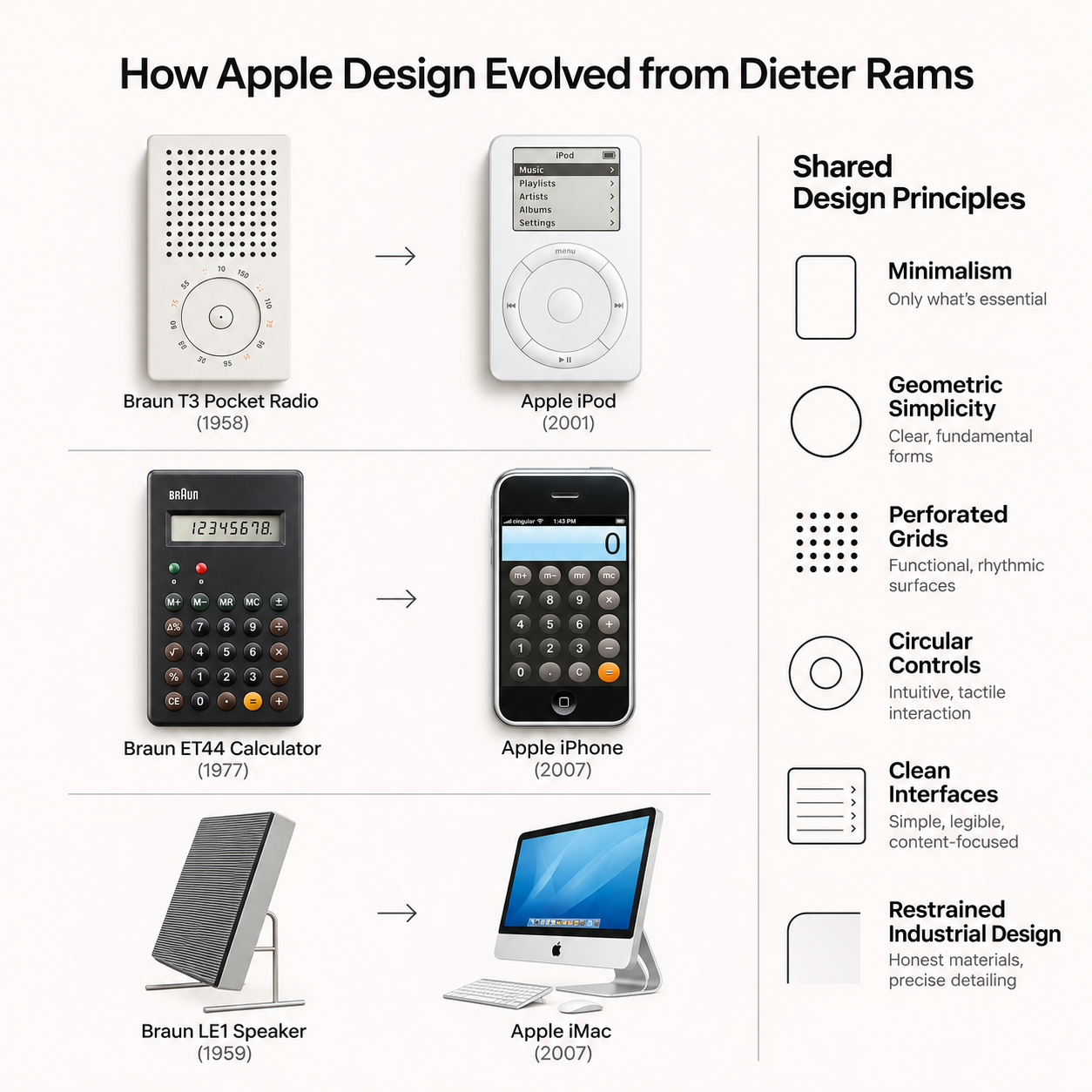
Think about this point very carefully. Just because you understand how an iPhone was designed, or a Stirling engine was designed or 5G protocol, does not in any way mean there was no designer. Understanding the mechanism of creation, does not in any way take away from the necessity of a creator. If anything, it should inspire a person to be more “in awe” of the Creator who allowed the universe and biology to be intelligible.
Think of the human designers – from Dieter Rams to Steve Jobs to Jony Ive to Elon Musk to James Dyson – the almost “celebrity status” they command in tech circles. But they can’t “create” without “assembling” things and “precedents” which they “did not themselves create”. So how much more credit goes to the one who “creates out of nothing” and “without effort” or “trial or error” or “multiple prototypes”.
بَقُلِ ٱللَّهُمَّ فَاطِرَ ٱلسَّمَـٰوَٰتِ وَٱلْأَرْضِ عَـٰلِمَ ٱلْغَيْبِ وَٱلشَّهَـٰدَةِ أَنتَ تَحْكُمُ بَيْنَ عِبَادِكَ فِى مَا كَانُوا۟ فِيهِ يَخْتَلِفُونَ بَدِيعُ ٱلسَّمَـٰوَٰتِ وَٱلْأَرْضِ ۖ وَإِذَا قَضَىٰٓ أَمْرًا فَإِنَّمَا يَقُولُ لَهُۥ كُن فَيَكُونُ ١١٧
˹He is˺ the Originator of the heavens and the earth! When He decrees a matter, He simply tells it, “Be!” And it is! (Quran 2:117)Here Al-Badi‘ (الْبَدِيعُ) is one of the 99 Names of Allah (Asma ul-Husna), and it means The Originator—the One who creates things out of nothing, in an unprecedented and incomparable manner without any prior model or example.
I am also in no way taking “evolution” as a “settled matter”. This is at the limits of my knowledge – and I must put my hands up and say “I don’t know enough” to comment. However taking the “scientific mainstream” as the “status quo” when science itself “evolves” (pun not intended), as “absolute truth” doesn’t “add up” to “giving up on truth” humanity has relied on since time memorial. In scientific terms, “religion”, “worship” has been “peer reviewed” by all of humanity across every generation humanity has existed in.
These (science, philosophy of science, philosophy and theology) are often conflated and scientists like Richard Dawkins, whose famous book titled “The Selfish Gene”, never explain why a gene should be “selfish” or why “survival of the fittest” is goal oriented towards survival.
Why weren’t species designed to self destruct instead of survive and proliferate?
There is no answer in biology for this, and scientists overstep when making claims regarding theology but never explicitly delineate the two in their speech or writing.
9. The Final Reflection: The Form and the Fashioner
Perhaps the deepest lesson of the Orange Oakleaf Butterfly is not found in the extraordinary resemblance between its wings and a dead leaf.
It is found in our response to it.
We begin with wonder.
We ask how it happened.
We investigate the biology.
We reconstruct evolutionary history.
And then, having learned something real, we discover that there are still questions beyond the scope of our experiment.
A scientific explanation can become more complete without answering every metaphysical question.
A religious conviction can remain meaningful without pretending to be a scientific discovery.
This is where faith and intellectual humility can meet.
Not because science requires blind belief.
Not because every unanswered scientific question proves God.
But because human beings are finite knowers who must continually distinguish observation, inference, understanding and trust.
The butterfly did not need to understand the leaf to acquire its resemblance through evolution.
The predator did not need to understand the butterfly to be deceived by it.
And perhaps we, too, should be careful about assuming that our understanding of how a thing works is identical to a complete understanding of what it is.
For discovering how a form came to be is one kind of knowledge. Reflecting upon the Fashioner is another.
References and Explanatory Notes
- Qur’an 59:21–24. The principal passage for this reflection. The verse describes Allah as Al-Khāliq, Al-Bāriʾ and Al-Muṣawwir. English translation follows Sahih International, with contextual wording where indicated.
- Ibn Kathīr, Tafsīr al-Qurʾān al-ʿAẓīm, commentary on 59:21–24. Explains Allah’s Names in connection with determining creation, bringing it into existence and giving it form.
- Al-Ṭabarī, Jāmiʿ al-Bayān, commentary on 59:24. Explains Al-Muṣawwir as Allah fashioning His creation according to His will.
- Suzuki, T. K., Tomita, S., & Sezutsu, H. (2014). “Gradual and contingent evolutionary emergence of leaf mimicry in butterfly wing patterns.” BMC Evolutionary Biology, 14, 229. https://doi.org/10.1186/s12862-014-0229-5
- Wang, S., et al. (2022). “The evolution and diversification of oakleaf butterflies.” Cell. https://doi.org/10.1016/j.cell.2022.06.042
- Zhang, Z.-T., Yu, L., Chang, H.-Z., Zhang, S.-C., & Li, D.-Q. (2024). “Nature’s disguise: Empirical demonstration of dead-leaf masquerade in Kallima butterflies.” Zoological Research, 45(6), 1201–1208. https://doi.org/10.24272/j.issn.2095-8137.2024.025
- Qur’an 3:6; 2:3–4; 17:36; 41:53. Supporting passages concerning divine formation, belief in the unseen, responsibility for knowledge and reflection upon Allah’s signs.
- Image Source – Petr Ganaj via Pexels.com – https://www.pexels.com/photo/insect-on-orchid-4136896/
- Charles Darwin, letter to John Fordyce, 7 May 1879, The Correspondence of Charles Darwin, vol. 27, p. 209; also reproduced in Francis Darwin (ed.), The Life and Letters of Charles Darwin (1887), vol. 1, Chapter VIII, “Religion.”
- Dawkins, R. (1976). The selfish gene. Oxford University Press.
Theological clarification: This article follows classical Sunni affirmation of Allah as Creator and Fashioner, while distinguishing the established meanings of the Qur’anic verses from contemporary philosophical reflection. It does not claim that classical commentators endorsed modern evolutionary biology, nor that a particular evolutionary mechanism is explicitly taught by the Qur’an.