
Israel as a global geostrategic axis
The Abdelrazek case lays bare the martyrdom of Christians in Egypt
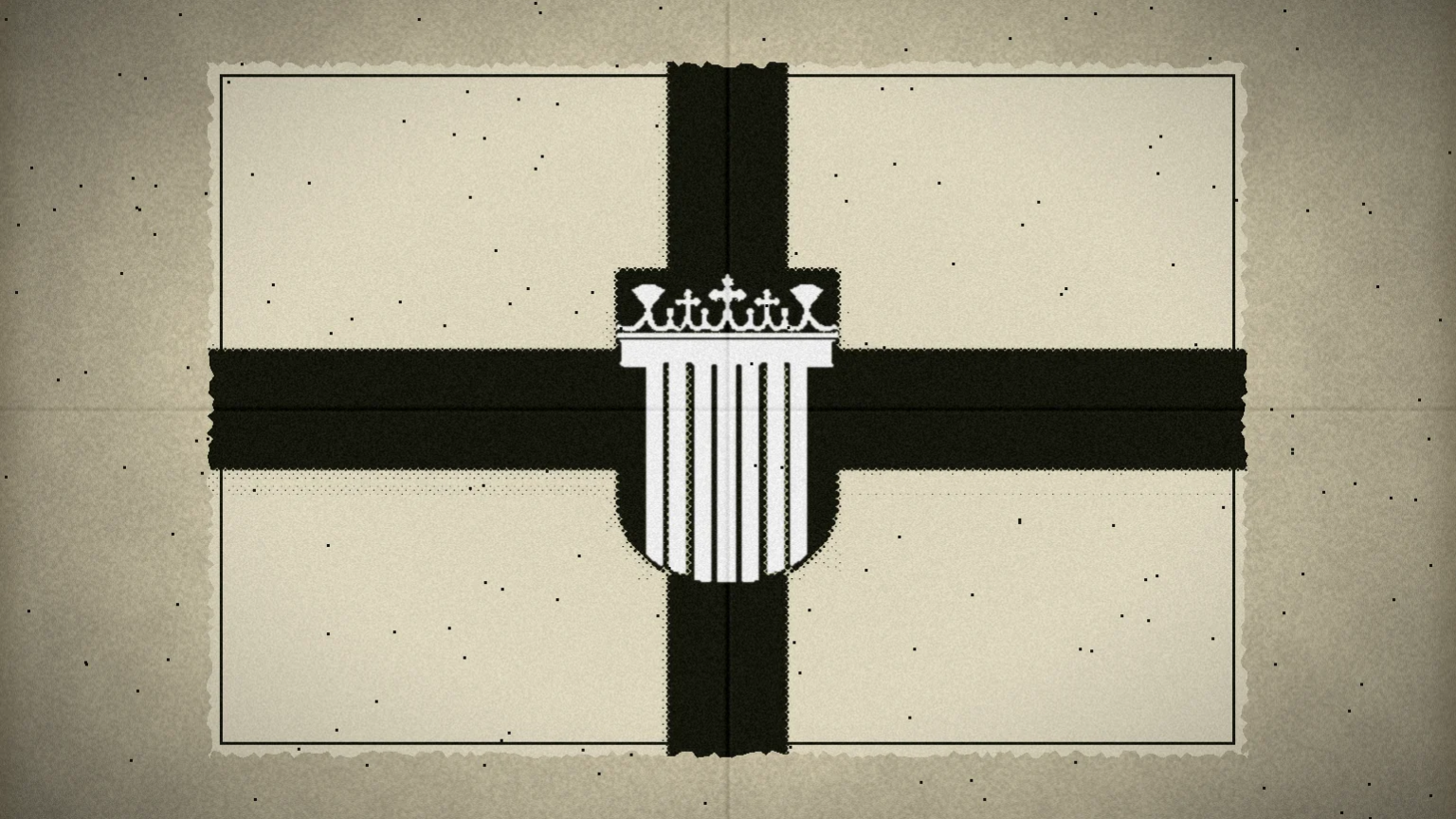
Flag of the Coptic Christians of Egypt, created in 2005 (AI-generated image)
Egypt is home to the largest Christian community in the Arab world: the Copts, whose presence in the country predates the arrival of Islam by more than six centuries. Despite this, the community — estimated at between 10% and 15% of the population — has faced legal restrictions, sectarian violence, and structural discrimination for centuries. This article traces the history of that persecution and examines how it manifests today.
Christianity arrived in Egypt in the first century, traditionally attributed to the preaching of St. Mark, founder of the Church of Alexandria. Egypt became one of the great centers of early Christianity — and the seat of important church councils and theological debates. Egyptian Christians, the Copts (from the Greek Aigyptos), were the overwhelming majority of the population at the time of the Arab Muslim conquest in 641 CE.
Under Muslim rule, Christians were reduced to the status of dhimmi — protected under Islamic law, but subordinated. In practice, this meant:
Jizya: a special tax levied on non-Muslims;
Legal restrictions: a ban on building or repairing churches without authorization, limits on the height of religious buildings and the use of church bells;
Civil disabilities: a Christian’s testimony counted for less than a Muslim’s in court; conversion to Islam was encouraged, while the reverse was punishable by death.
Contemporary persecution
Legal and state restrictions:
Church construction: for centuries, building or even repairing a church required presidential authorization (the 1856 Hamayouni Decree and its subsequent versions). The 2016 law transferred approval to provincial governors, but the bureaucracy remains slow and discriminatory, while mosques face no equivalent requirements;
Blasphemy: Article 98 of the Penal Code, which criminalizes the defamation of religions, is applied disproportionately against Christians;
Conversions: converting from Islam to Christianity is not recognized by the state, leaving converts legally forced to remain Muslims on official documents — and, increasingly, criminally prosecuted for practicing their faith.
The Said Mansour Rezk Abdelrazek case
The most emblematic case of the current persecution of converts is that of Said Mansour Rezk Abdelrazek. Born into a Muslim family, Abdelrazek converted to Christianity and was baptized around 2017. Detained afterward, he is on trial in a case in which, according to his lawyers, he faces the death penalty or 25 years in prison — for the simple fact of having embraced the Christian faith.
His fiancée, Sophia, told the Washington Post that he was tortured in detention and pressured to return to Islam. Held in Block 10 of the 10th of Ramadan Prison, Said does not receive adequate food from the state: Sophia spends about 11,000 Egyptian pounds a month to have food and clothing smuggled in to his cell — evidence of the degrading treatment reserved for prisoners accused of apostasy. His defense is to be presented by his lawyers on December 8.
The case encapsulates the three mechanisms of modern persecution: the criminalization of conversion, torture as an instrument of forcing converts back to Islam, and the sluggishness of a judicial system that, in practice, punishes the religious freedom that the Egyptian Constitution formally guarantees.
Persecution and systemic violence
Who could forget February 2015, when the Islamic State released a video showing the execution of 21 Coptic Christians — 20 Egyptian workers and one Ghanaian citizen — on a beach near the coastal city of Sirte, Libya? The broadcast scene shocked the world and became the ultimate symbol of Christian martyrdom in the 21st century.
That attack, however, was not an isolated episode:
Kosheh massacre (2000): 21 Christians killed amid local tensions, with police standing by;
Bombing of the Saints Church, Alexandria (January 1, 2011): a bomb killed 23 worshippers on New Year’s;
Maspero massacre (October 2011): military vehicles ran over and killed some 27 Coptic protesters demonstrating against the demolition of a church;
Post-2013 era: following Morsi’s ouster, Islamists attacked dozens of churches, monasteries, and Christian homes;
Islamic State attacks (2015–2017): beyond the Sirte executions (Feb. 2015), the bombing of Cairo’s cathedral (Dec. 2016, 25 dead) and the attacks on churches in Tanta and Alexandria (April 2017, more than 45 dead);
Individual killings: cases such as the murder of Father Rafael Moussa (2017) and attacks on Christians accused of spreading the faith continue to be recorded.
Conclusion
The persecution of Egyptian Christians is not an episode but a 14-century continuum: from subordinated legal statutes and humiliating taxes in the past, to blasphemy laws, anti-church bureaucracy, and jihadist terror today — and, in the case of Said Mansour Rezk Abdelrazek, the concrete threat of execution for a man whose only crime was choosing his faith. The Coptic community endures, however, with remarkable vitality: the churches remain full, and the faith that survived pharaohs, caliphs, and sultans remains at the heart of Egyptian identity for millions of believers.
All of this raises a question: what good does it do Egypt to formally designate the Muslim Brotherhood as a terrorist organization if the government itself commits terrorism against Christians?
Shema Yisrael שְׁמַע יִשְׂרָאֵל
Related Topics
Related Posts