London based entrepreneur, cybersecurity analyst doing a PhD in AI
One Idea Tafsir No.14 – Spiritual Thirst
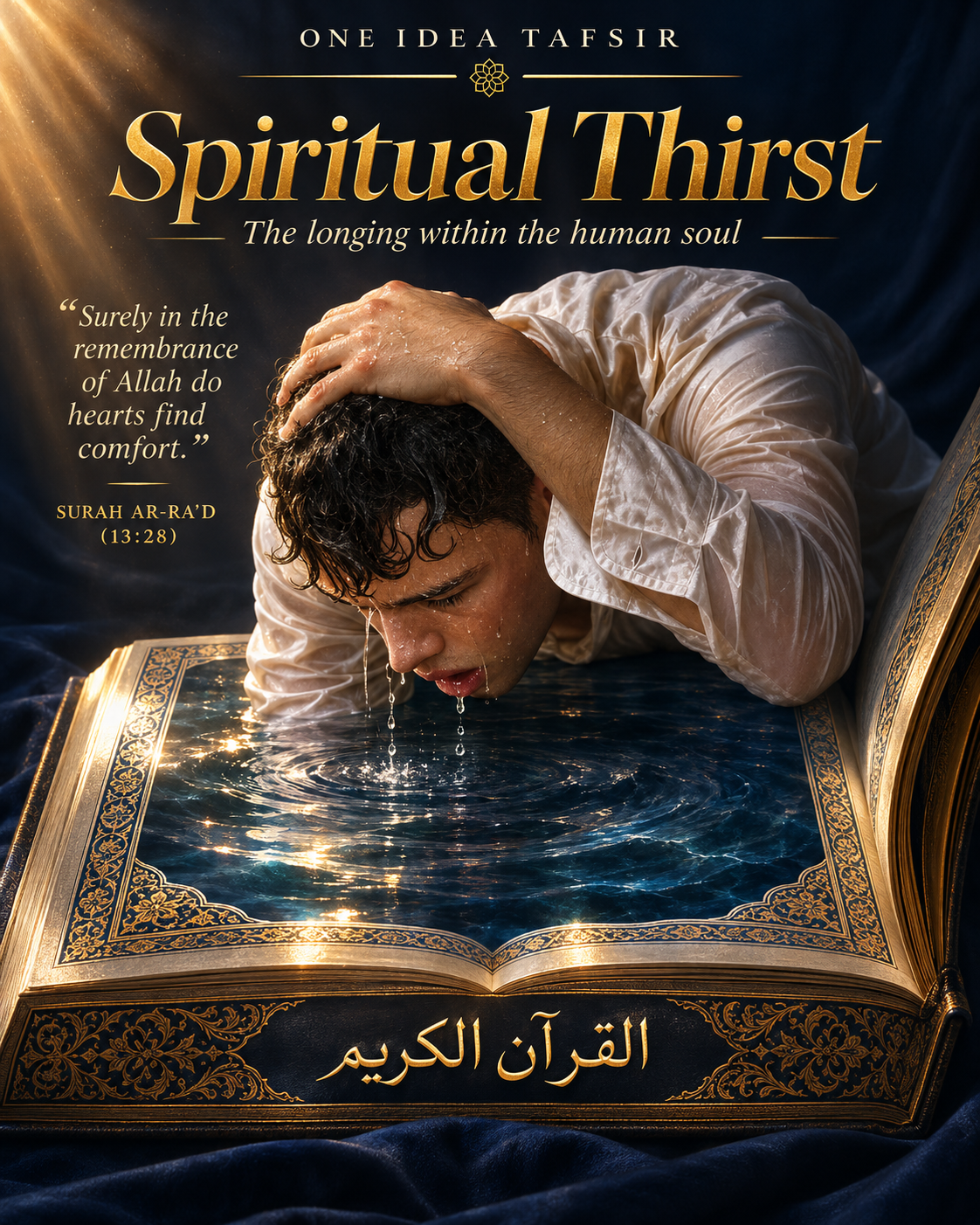
Every human yearns. When they can't get it from spirituality, they usually deviate and try and fill it through something else - greed, power, addiction, status etc.
Spiritual Thirst (Surat Al Hadid 57:16-17,20)
One Idea Tafsir — Why the Human Soul Yearns for Allah
We recognise physical thirst almost immediately. But what happens when the body has everything it needs, and something within us remains unsatisfied? The Qur’an offers an extraordinary explanation: perhaps the human being was created with a longing that the material world alone was never intended to satisfy.
I will ask two questions (1A and 1B), and then look at divine guidance to reflect on it.
 Question 1A – My phone already tells me the time. Yet I still stop to look at the mechanical watch in the jeweller’s window. I admire the workmanship. I know it runs 1-2 minutes late everyday, by design. A $20 Casio does the job better if I need one. So why do I want it? And would I want it quite as much if nobody who saw me wearing it knew what it was?
Question 1B – The second thing to ponder over is – what is the answer to the enormous strife the world sees? The injustice? The plundering of resources in a destructive manner? The myriad of mental health problems people face? Is there a model for the human state and life on earth? Is there an antidote inside the human being to end the severe social ills? Is there a frame of the human being and society that can provide a sustained change?
In Question 1A, If the answer is no, then part of what I want is the moment someone notices. I can buy the watch and keep it for decades. The feeling I bought it for might last only as long as their glance.
Sūrat al-Ḥadīd captures that fleeting appeal. Allah speaks of adornment and boasting among people, then asks us to picture a field after rain. The growth delights those who planted it. Then the crop yellows and crumbles. Then, Allah directs that same competitive impulse towards something worth striving for: His forgiveness and Paradise.
ٱعْلَمُوٓا۟ أَنَّمَا ٱلْحَيَوٰةُ ٱلدُّنْيَا لَعِبٌ وَلَهْوٌ وَزِينَةٌ وَتَفَاخُرٌۢ بَيْنَكُمْ وَتَكَاثُرٌ فِى ٱلْأَمْوَٰلِ وَٱلْأَوْلَـٰدِ ۖ كَمَثَلِ غَيْثٍ أَعْجَبَ ٱلْكُفَّارَ نَبَاتُهُۥ ثُمَّ يَهِيجُ فَتَرَىٰهُ مُصْفَرًّا ثُمَّ يَكُونُ حُطَـٰمًا ۖ وَفِى ٱلْـَٔاخِرَةِ عَذَابٌ شَدِيدٌ وَمَغْفِرَةٌ مِّنَ ٱللَّهِ وَرِضْوَٰنٌ ۚ وَمَا ٱلْحَيَوٰةُ ٱلدُّنْيَآ إِلَّا مَتَـٰعُ ٱلْغُرُورِ ٢٠
Know that this worldly life is no more than play, amusement, luxury, mutual boasting, and competition in wealth and children. This is like rain that causes plants to grow, to the delight of the planters. But later the plants dry up and you see them wither, then they are reduced to chaff. And in the Hereafter there will be either severe punishment or forgiveness and pleasure of Allah, whereas the life of this world is no more than the delusion of enjoyment. (Quran 57:20)
Just a few verses earlier, the sūrah asks whether the time has come for our hearts to soften at Allah’s remembrance. Then it reminds us that Allah brings the earth back to life after its death. Ibn Kathīr draws the connection: the One who revives dry ground with rain can soften a hardened heart through the Qur’an.
The watch asks, What will people see when they look at me? The rain asks, What will grow in me when I hear what Allah has revealed?
After a long dry spell, the first rain leaves little dark patches on the ground. For a while, that may be all you see. Then, a few days later, green begins to show where the soil looked lifeless.
In Sūrat al-Ḥadīd, Allah asks believers whether the time has come for their hearts to humble themselves at His remembrance and at the truth He has revealed.
۞ أَلَمْ يَأْنِ لِلَّذِينَ ءَامَنُوٓا۟ أَن تَخْشَعَ قُلُوبُهُمْ لِذِكْرِ ٱللَّهِ وَمَا نَزَلَ مِنَ ٱلْحَقِّ وَلَا يَكُونُوا۟ كَٱلَّذِينَ أُوتُوا۟ ٱلْكِتَـٰبَ مِن قَبْلُ فَطَالَ عَلَيْهِمُ ٱلْأَمَدُ فَقَسَتْ قُلُوبُهُمْ ۖ وَكَثِيرٌ مِّنْهُمْ فَـٰسِقُونَ ١٦
Has the time not yet come for believers’ hearts to be humbled at the remembrance of Allah and what has been revealed of the truth, and not be like those given the Scripture before—˹those˺ who were spoiled for so long that their hearts became hardened. And many of them are ˹still˺ rebellious. (Quran 57:16)
The verse warns that hearts can harden as time passes. The very next verse says:
ٱعْلَمُوٓا۟ أَنَّ ٱللَّهَ يُحْىِ ٱلْأَرْضَ بَعْدَ مَوْتِهَا ۚ قَدْ بَيَّنَّا لَكُمُ ٱلْـَٔايَـٰتِ لَعَلَّكُمْ تَعْقِلُونَ ١٧
Know that Allah revives the earth after its death. We have certainly made the signs clear for you so perhaps you will understand. (Quran 57:17)
Ibn Kathīr reads these verses together. Just as Allah brings dry earth to life with rain, He can soften hardened hearts and guide them through the Qur’an. The warning in the first verse makes us ask what has happened to our hearts. The image in the second gives us reason to hope that they can change.
The same rain, three kinds of ground
In Sūrat al-Aʿrāf, Allah describes winds carrying heavy clouds towards lifeless land. Rain falls, and the land yields fruit. The verse then tells us what this scene points to:
وَهُوَ ٱلَّذِى يُرْسِلُ ٱلرِّيَـٰحَ بُشْرًۢا بَيْنَ يَدَىْ رَحْمَتِهِۦ ۖ حَتَّىٰٓ إِذَآ أَقَلَّتْ سَحَابًا ثِقَالًا سُقْنَـٰهُ لِبَلَدٍ مَّيِّتٍ فَأَنزَلْنَا بِهِ ٱلْمَآءَ فَأَخْرَجْنَا بِهِۦ مِن كُلِّ ٱلثَّمَرَٰتِ ۚ كَذَٰلِكَ نُخْرِجُ ٱلْمَوْتَىٰ لَعَلَّكُمْ تَذَكَّرُونَ ٥٧
He is the One Who sends the winds ushering in His mercy. When they bear heavy clouds, We drive them to a lifeless land and then cause rain to fall, producing every type of fruit. Similarly, We will bring the dead to life, so perhaps you will be mindful (Quran 7:57).
Allah will likewise bring the dead back to life. The next verse describes how fertile land yields vegetation by its Lord’s permission, while poor soil yields meagre growth. Al-Ṭabarī reads this second image as a parable of how faith and its fruits appear in a person’s deeds. Ibn Kathīr cites the Prophet’s ﷺ parable of the rain in his commentary on the passage.
وَٱلْبَلَدُ ٱلطَّيِّبُ يَخْرُجُ نَبَاتُهُۥ بِإِذْنِ رَبِّهِۦ ۖ وَٱلَّذِى خَبُثَ لَا يَخْرُجُ إِلَّا نَكِدًا ۚ كَذَٰلِكَ نُصَرِّفُ ٱلْـَٔايَـٰتِ لِقَوْمٍ يَشْكُرُونَ ٥٨
The fertile land produces abundantly by the Will of its Lord, whereas the infertile land hardly produces anything. This is how We vary ˹Our˺ lessons to those who are thankful. (Quran 7:58)
Abū Mūsā al-Ashʿarī (may Allah be pleased with him) narrated that the Prophet ﷺ likened the guidance and knowledge Allah sent him with to abundant rain. It falls on three kinds of ground. Fertile soil absorbs the water and produces grass and vegetation. Ground that holds water makes it available for people to drink, give to their animals and use for crops. Barren ground neither holds the water nor grows anything. The narration is recorded in Ṣaḥīḥ al-Bukhārī (79) and Ṣaḥīḥ Muslim (2282).
Narrated Abu Musa: The Prophet (ﷺ) said, “The example of guidance and knowledge with which Allah has sent me is like abundant rain falling on the earth, some of which was fertile soil that absorbed rain water and brought forth vegetation and grass in abundance. (And) another portion of it was hard and held the rain water and Allah benefited the people with it and they utilized it for drinking, making their animals drink from it and for irrigation of the land for cultivation. (And) a portion of it was barren which could neither hold the water nor bring forth vegetation (then that land gave no benefits). The first is the example of the person who comprehends Allah’s religion and gets benefit (from the knowledge) which Allah has revealed through me (the Prophets and learns and then teaches others. The last example is that of a person who does not care for it and does not take Allah’s guidance revealed through me (He is like that barren land.)” (Sahih Bukhari 79)
The middle ground is easy to overlook. It serves people by preserving water they can use elsewhere. In the same way, someone who faithfully learns and passes on a teaching may benefit people they will never meet. The fertile soil shows another kind of benefit. The teaching takes root in the person who receives it, and what grows there becomes visible to others.
What grows after we hear?
We can recognise the words of a verse and still need to hear them again. A person may have read Allah’s command to speak justly many times. Then, in the middle of a dispute, they remember it and correct an accusation they know was unfair. Someone may have heard about repentance since childhood. One evening, they finally ask Allah to forgive the thing they have spent years excusing. These are small enough changes that nobody else may notice them. They are also ways in which a familiar teaching begins to bear fruit.
The Qur’an says that hearts find comfort in the remembrance of Allah (13:28).
ٱلَّذِينَ ءَامَنُوا۟ وَتَطْمَئِنُّ قُلُوبُهُم بِذِكْرِ ٱللَّهِ ۗ أَلَا بِذِكْرِ ٱللَّهِ تَطْمَئِنُّ ٱلْقُلُوبُ ٢٨
those who believe and whose hearts find comfort in the remembrance of Allah. Surely in the remembrance of Allah do hearts find comfort. (Quran 13:28)
In al-Ḥadīd (57:16), remembrance is also something before which the heart is called to humble itself. We may come to the Qur’an looking for reassurance and find a verse asking us to admit a fault or give someone their due. This is possibly the answer to question 1B. That, too, is part of what it means for the heart to receive guidance.
Look again after the rain
The Qur’an also asks us to watch what happens after the field turns green. In Sūrat az-Zumar (39:21), crops of many colours grow, then yellow and crumble. Ibn Kathīr reads the cycle as a reminder of how quickly the flourishing of worldly life passes. In Sūrat ar-Rūm (30:50), the revival of the land points beyond that passing life. The One who gives life to the earth after its death will raise the dead.
When a field has been dry for months, it is easy to forget how green it can become. We can make the same mistake about ourselves. We grow used to getting through a prayer with our minds elsewhere, or to hearing a verse and letting it pass. The next time we open the Qur’an, we can linger over one verse long enough to ask what it calls us to do, and ask Allah to make us receptive to it.
The One who brings green shoots out of dry ground can bring life back to a heart that has gone dry.
Interpretive note: “Spiritual thirst” is a contemporary explanatory analogy, not a quotation from the Qur’an or an established technical category in classical tafsīr. The scriptural foundation of this article is the doctrine of fiṭrah, the purpose of worship, the Qur’anic teachings on remembrance, and authentic hadith. It should not be read as claiming that every psychological difficulty results from inadequate faith.
Related Topics
Related Posts