London based entrepreneur, cybersecurity analyst doing a PhD in AI
One Idea Tafsir No. 21 – Power of Positive Thought
Thinking positively entails taking the steps in your control, supplicating to Allah believing in him, and believing in the best outcome from Allah and submitting to his will and being content with the destiny that he has written for you.
One Idea Tafsīr No. 21 — A Father Who Kept Looking, Surah Yusuf, Verse 87
Short Tafsir On the Go – The Daily Brew
On thinking well of Allah when you cannot see how things could change.
There are two things a father might say after years of missing his son. The first is that he misses him. The second is that someone should go and look for him. We understand the first almost without thinking. The second makes us pause. After all this time, what reason does he have to send anyone?
In Sūrat Yūsuf, we hear Yaʿqūb عليه السلام say both things, one verse after the other. He tells his sons that he brings his anguish and sorrow to Allah. Then he gives them an errand. For the question of what it means to think well of Allah in a difficulty that has outlasted your explanations, this is the verse I would choose.[1]
يَـٰبَنِىَّ ٱذْهَبُوا۟ فَتَحَسَّسُوا۟ مِن يُوسُفَ وَأَخِيهِ وَلَا تَا۟يْـَٔسُوا۟ مِن رَّوْحِ ٱللَّهِ ۖ إِنَّهُۥ لَا يَا۟يْـَٔسُ مِن رَّوْحِ ٱللَّهِ إِلَّا ٱلْقَوْمُ ٱلْكَـٰفِرُونَ ٨٧
O my sons! Go and search ˹diligently˺ for Joseph and his brother. And do not lose hope in the mercy of Allah, for no one loses hope in Allah’s mercy except those with no faith. (Quran 12:87)
The words you remember
Abū Hurayrah رضي الله عنه narrated a hadith qudsī in which the Prophet ﷺ reports these words from Allah:
Allah the Almighty said: I am as My servant thinks I am (1). I am with him when he makes mention of Me. If he makes mention of Me to himself, I make mention of him to Myself; and if he makes mention of Me in an assembly, I make mention of him in an assembly better than it. And if he draws near to Me an arm’s length, I draw near to him a cubit, and if he draws near to Me a cubit, I draw near to him a fathom. And if he comes to Me walking, I go to him at speed. (1) Another possible rendering of the Arabic is: “I am as My servant expects Me to be”. The meaning is that forgiveness and acceptance of repentance by the Almighty is subject to His servant truly believing that He is forgiving and merciful. However, not to accompany such belief with right action would be to mock the Almighty. It was related by al-Buhkari (also by Muslim, at-Tirmidhi and Ibn-Majah).عَنْ أَبِي هُرَيْرَةَ رَضِيَ اللَّهُ عَنْهُ قَالَ: قَالَ النَّبِيُّ صَلَّى اللَّهُ عَلَيْهِ وَسَلَّمَ : “يَقُولُ اللَّهُ تَعَالَى: أَنَا عِنْدَ ظَنِّ عَبْدِي بِي، وَأَنَا مَعَهُ إِذَا ذَكَرَنِي، فَإِنْ ذَكَرَنِي فِي نَفْسِهِ، ذَكَرْتُهُ فِي نَفْسِي، وَإِنْ ذَكَرَنِي فِي مَلَإٍ، ذَكَرْتُهُ فِي مَلَإٍ خَيْرٍ مِنْهُمْ، وَإِنْ تَقَرَّبَ إِلَيَّ بِشِبْرٍ، تَقَرَّبْتُ إِلَيْهِ ذِرَاعًا، وَإِنْ تَقَرَّبَ إِلَيَّ ذِرَاعًا، تَقَرَّبْتُ إِلَيْهِ بَاعًا(1) وَإِنْ أَتَانِي يَمْشِي، أَتَيْتُهُ هَرْوَلَةً”
رواه البخاري (وكذلك مسلم والترمذي وابن ماجه)If you remember a further phrase about Allah being able to do for you what you think He can do, there is a reason. The English translation of al-Bukhārī includes that explanation in parentheses. In the Arabic, the next words concern Allah being with the servant when the servant remembers Him. Read on and the servant is remembering Allah privately, mentioning Him in company and drawing near to Him.[2]A Hadith related to this is also the following which is from the 40 Hadith Nawawi:-Abu al-‘Abbas ‘Abdullah bin ‘Abbas(ra) reports:
“One day I was riding (a horse/camel) behind the Prophet, peace and blessings be upon him, when he said, ‘Young man, I will teach you some words. Be mindful of God, and He will take care of you. Be mindful of Him, and you shall find Him at your side. If you ask, ask of God. If you need help, seek it from God. Know that if the whole world were to gather together in order to help you, they would not be able to help you except if God had written so. And if the whole world were to gather together in order to harm you, they would not harm you except if God had written so. The pens have been lifted, and the pages are dry.’
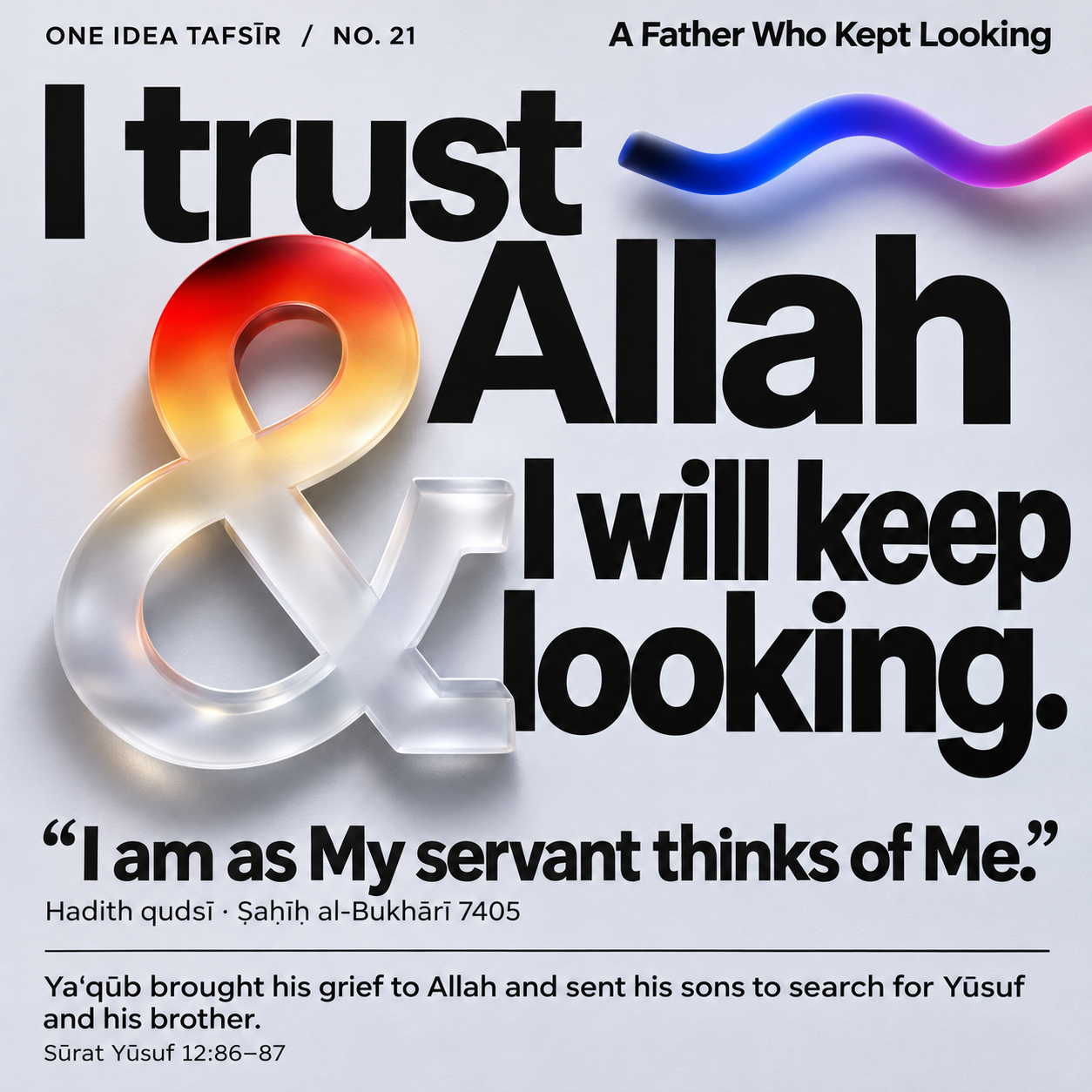 That sequence helps us understand ḥusn al-dhann billāh, thinking well of Allah. Imagine someone who has done something he is ashamed of. Before he has asked for forgiveness, he has already decided what the answer will be. What gives him the authority to decide that? In Sūrat al-Zumar (39:53), Allah addresses people who have wronged themselves as My servants. He tells them to keep hope in His mercy, then calls them to return to Him. Ibn Kathīr reads these verses as an invitation to repentance however grave the sins. The man who thought himself beyond forgiveness has a reason to ask for it, and, where he has harmed someone, a reason to begin putting the harm right.[3] One of the 99 Names of Allah is Al Tawwab, the one who accepts repentance.
Similarly, the below Hadith shows humans are flawed and will make mistakes :-
Abu Huraira reported Allah’s Messenger (ﷺ) having said:
By Him in Whose Hand is my life, if you were not to commit sin, Allah would sweep you out of existence and He would replace (you by) those people who would commit sin and seek forgiveness from Allah, and He would have pardoned them.حَدَّثَنِي مُحَمَّدُ بْنُ رَافِعٍ، حَدَّثَنَا عَبْدُ الرَّزَّاقِ، أَخْبَرَنَا مَعْمَرٌ، عَنْ جَعْفَرٍ الْجَزَرِيِّ، عَنْ يَزِيدَ بْنِ الأَصَمِّ، عَنْ أَبِي هُرَيْرَةَ، قَالَ قَالَ رَسُولُ اللَّهِ صلى الله عليه وسلم ” وَالَّذِي نَفْسِي بِيَدِهِ لَوْ لَمْ تُذْنِبُوا لَذَهَبَ اللَّهُ بِكُمْ وَلَجَاءَ بِقَوْمٍ يُذْنِبُونَ فَيَسْتَغْفِرُونَ اللَّهَ فَيَغْفِرُ لَهُمْ ” .
This doesn’t mean we go around looking for trouble, but when mistakes happen, which they will, we turn to Allah in repentance and have a positive belief in Allah’s forgiveness and our repentance being accepted.
The same care matters when we ask for something we love. Allah has power over all things. He tells the person making duʿāʾ that He is near and responds to the caller. We can therefore ask plainly for the particular good we want. The date, the means and the outcome remain within His wisdom. A frightened person can make that prayer just as sincerely as someone who feels confident.[4]
What the brothers were asked to do
Return to the conversation in Sūrat Yūsuf. Imagine hearing only the instruction to keep hope. The brothers might reasonably ask what their father expects them to do when they wake tomorrow. Yaʿqūb has already answered. They are to go and make enquiries about two particular people. Ibn Kathīr explains that their father encouraged them to seek news of Yūsuf and his brother and to continue trusting Allah in what they sought. In the next verse the brothers are back in Egypt. Hope has made a difference one can actually see. They have gone somewhere.[1]
Now read the preceding verse again. The person sending them is the same person who has just acknowledged the extent of his grief. This matters whenever we tell someone in distress to “think positively”. A person might hear those words as a request to spare us the discomfort of hearing how badly they are hurting. Yaʿqūb’s sons heard their father speak his sorrow aloud. The Qur’an preserves those words alongside his instruction to search. A reader who wakes grieving can recognise himself in the first verse and still have something to do in the second.[1]
What can a positive thought actually change?
A 2025 experiment published in Behaviour Research and Therapy gives a surprisingly precise answer. In a study involving people with fibromyalgia, one group described and pictured a future in which things had gone well. A comparison group described and pictured a typical day. After the exercise, the first group reported more positive expectations about the future. Yet the researchers detected no corresponding increase in positive mood or improvement on the selective-learning task they tested.[5]
Think about what those measures mean in ordinary language. “I can imagine tomorrow going better” and “I feel better right now” are two different answers to two different questions. In this experiment the first could move while the second stayed much the same. For someone sitting beside a grieving friend, that distinction suggests a kinder question. Instead of asking whether he feels more cheerful yet, one might ask, “Is there something you would still like to try? I could come with you.”
A separate line of research examines what happens between wanting to do something and actually doing it. Paschal Sheeran, Olivia Listrom and Peter Gollwitzer brought together 642 tests of plans that specify when and how to act. Their review, published online in 2024, found that these plans generally helped people carry out their intentions. Benefits varied, and the authors found larger effects when people were already motivated and had rehearsed the plan. A familiar example would be a person who wants to repay an overdue debt. “When my wages arrive on Friday, I will send the first payment” gives him a moment he can recognise and an action he can take.[6]
These studies help explain a human part of the story. A person can imagine a possibility even on a painful day. A specific instruction can help someone act on an intention. Neither experiment can tell us what Allah will decree. The believer’s reason for hoping in Allah comes from what Allah has disclosed about Himself. The psychological finding concerns the person who hopes.
This is by no means an exhaustive list. There are many more studies and sub-branches in psychology such as Neuroplasticity and the paper quoted in this video which deal with the topic.
Before you know the ending
We read Sūrat Yūsuf with an advantage the brothers did not have when their father sent them back. We can turn a few pages and find the reunion. In our own lives we cannot do that. It would be a cruelty to promise every grieving parent Yaʿqūb’s earthly ending, or to suggest that a long separation measures the quality of anyone’s faith. The verse gives us something we can use earlier in the story, while we still have no news.[1]
Perhaps you owe an apology and have been putting it off because you think it will be refused. Ask Allah to help you repair what you damaged. Then write the apology carefully enough that the other person can hear what you are taking responsibility for. Their reply belongs to them. Your willingness to tell the truth is already one thing that despair might have cost you. Or perhaps, for today, you have done everything available to you. There is still the private remembrance mentioned in the hadith. Even there, in a moment nobody else sees, Allah tells the servant that He remembers them.[2]
What did thinking well of Allah sound like in the house of Yaʿqūb? It sounded like a father saying that he was hurting. A moment later it sounded like that same father asking his sons to go and look. There is room in a believer’s day for both sentences.
Author’s note. I am not a scholar. This installment is a personal reflection informed by classical Sunni tafsīr. The English renderings of the Arabic excerpts convey their meaning. Allah knows best.
Sources and further reading
[1] Sūrat Yūsuf 12:86–87 and Tafsīr Ibn Kathīr on 12:87–88.
[2] The narration of Abū Hurayrah in Ṣaḥīḥ al-Bukhārī 7405 and Ṣaḥīḥ Muslim 2675a. Al-Bukhārī’s Arabic and the parenthetical English gloss can be compared on the first page.
[3] Sūrat al-Zumar 39:53–54 and Tafsīr Ibn Kathīr on the call to repent.
[4] Sūrat al-Baqarah on Allah’s power, 2:20, and His response to the caller, 2:186.
[5] “Visualizing one’s Best Possible Self increases positive future expectancies, but does not boost selective learning in fibromyalgia.” Behaviour Research and Therapy (2025). Research article.
[6] Paschal Sheeran, Olivia Listrom and Peter M. Gollwitzer. “The when and how of planning: Meta-analysis of the scope and components of implementation intentions in 642 tests.” European Review of Social Psychology. Research article.
Related Topics