London based entrepreneur, cybersecurity analyst doing a PhD in AI
One Idea Tafsir No.9 – The Restaurant Menu.
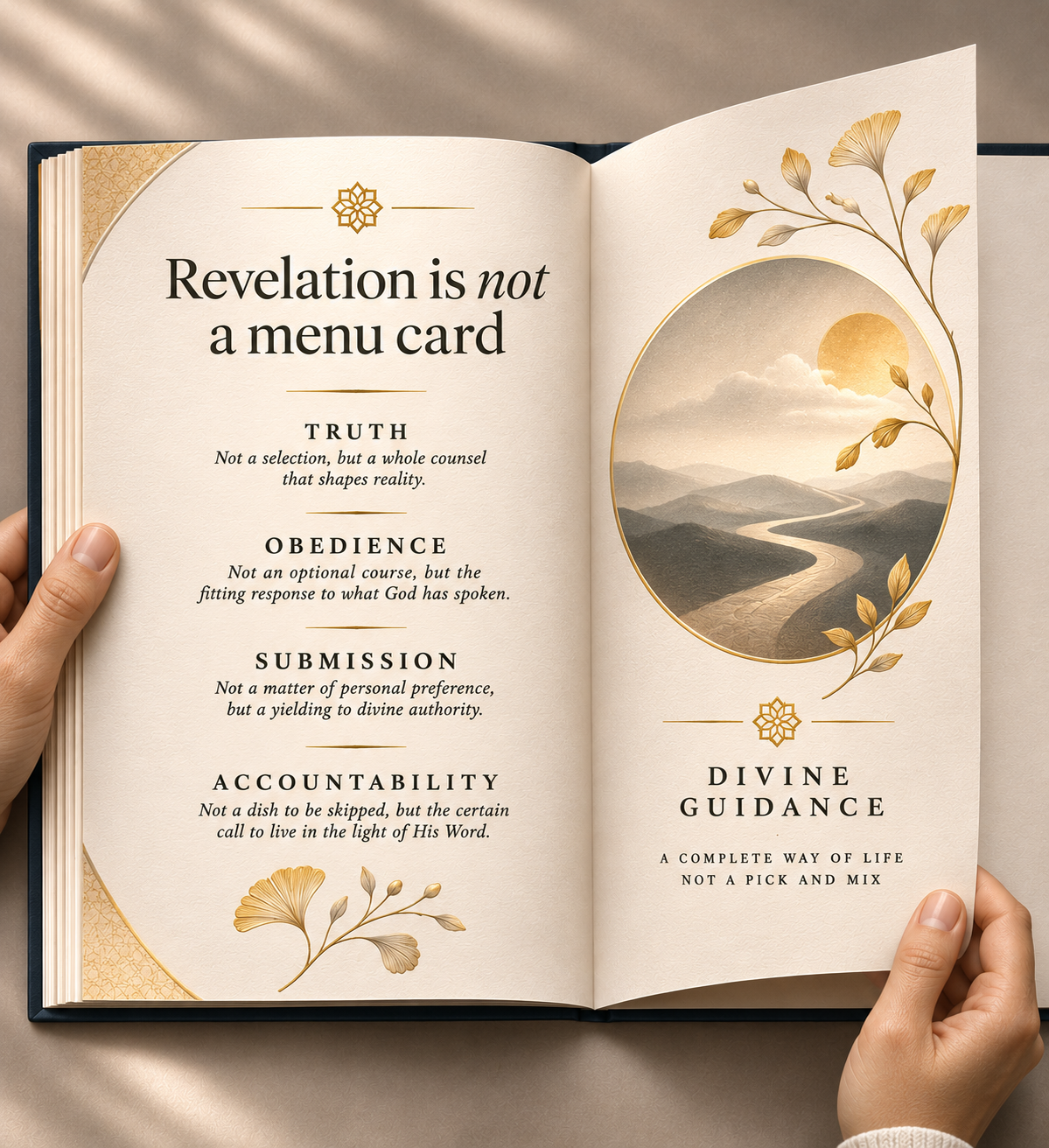
Illustrative AI generated image. We cannot choose to follow part, and leave the other part.
Daily Brew — Short Tafsīr on the Go
No. 9 — When Truth Becomes Inconvenient
Sūrat al-Māʾidah (5:16–44): Revelation, Responsibility and the Judgement We Want
Preamble — A Clarification on the Raven
In the previous edition of Daily Brew, we examined Cain and Abel alongside Samuel Taylor Coleridge’s The Rime of the Ancient Mariner.
The albatross represented the enduring burden of wrongdoing in Coleridge’s poem. The raven, in the Qur’anic account (5:31), was sent by Allah to demonstrate how Cain could cover his murdered brother’s body. It did not uncover evidence or investigate a crime. My description of a modern raven scratching away at buried truth was a deliberate literary reversal, not an interpretation established by the Qur’an, the Sunnah or classical tafsīr. This is simply to “provoke thought” – not an established meaning in Tafsir and should not be construed as such.
Classical commentators, including Ibn Kathīr, al-Ṭabarī and al-Qurṭubī, explain the raven in Qur’an 5:31 as demonstrating burial or the covering of Abel’s body, not the deliberate concealment of evidence to evade justice.
The interpretation of the raven as a symbol of buried evidence and its subsequent discovery is therefore a contemporary literary analogy, not an established interpretation from the Qur’an, authentic Hadith or classical Tafsīr. In hindsight, this is not a good example to give.
The vulture represented the danger of exploiting accusations, suffering or evidence for personal advantage while pretending to pursue justice. This is in line with the Verse on backbiting, suspicion and spying.
يَـٰٓأَيُّهَا ٱلَّذِينَ ءَامَنُوا۟ ٱجْتَنِبُوا۟ كَثِيرًا مِّنَ ٱلظَّنِّ إِنَّ بَعْضَ ٱلظَّنِّ إِثْمٌ ۖ وَلَا تَجَسَّسُوا۟ وَلَا يَغْتَب بَّعْضُكُم بَعْضًا ۚ أَيُحِبُّ أَحَدُكُمْ أَن يَأْكُلَ لَحْمَ أَخِيهِ مَيْتًا فَكَرِهْتُمُوهُ ۚ وَٱتَّقُوا۟ ٱللَّهَ ۚ إِنَّ ٱللَّهَ تَوَّابٌ رَّحِيمٌ ١٢
O believers! Avoid many suspicions, ˹for˺ indeed, some suspicions are sinful. And do not spy, nor backbite one another. Would any of you like to eat the flesh of their dead brother? You would despise that! And fear Allah. Surely Allah is ˹the˺ Accepter of Repentance, Most Merciful. (Quran – 49:12)
The Hadith clarifies what Backbiting is :-
Abu Huraira reported: The Messenger of Allah, peace and blessings be upon him, said, “Do you know what backbiting is?” They said, “Allah and His Messenger know best.” The Prophet said, “To mention your brother in a way he dislikes.” It was said, “What if it is true about him?” The Prophet said, “If what you say about him is true, it is backbiting. If it is not true, it is slander.”
Source: Ṣaḥīḥ Muslim 2589 , Grade: Sahih (authentic) according to Muslim
Therefore, these are only literary analogies, not additional meanings revealed in scripture. The distinction is important because the Qur’an does not simply teach us to recognise wrongdoing. It also teaches us how to respond to it: truthfully, proportionately and justly.
And that brings us to an extraordinary question.
What happens when the truth is inconvenient—not to our enemies, but to ourselves?
1. From Darkness into Light
يَهْدِى بِهِ ٱللَّهُ مَنِ ٱتَّبَعَ رِضْوَٰنَهُۥ سُبُلَ ٱلسَّلَـٰمِ وَيُخْرِجُهُم مِّنَ ٱلظُّلُمَـٰتِ إِلَى ٱلنُّورِ بِإِذْنِهِۦ وَيَهْدِيهِمْ إِلَىٰ صِرَٰطٍ مُّسْتَقِيمٍ ١٦
through which Allah guides those who seek His pleasure to the ways of peace, brings them out of darkness and into light by His Will, and guides them to the Straight Path. (Quran 5:16)
The verse continues by describing Allah bringing people from darkness into light and guiding them to a straight path.
Ibn Kathīr (raḥimahu Allāh) explains subula al-salām in terms of ways leading to safety, salvation and guidance.
Light, in this passage, means guidance through revelation.
Not simply information.
We possess more information today than almost any previous generation.
We can search millions of documents, consult vast databases and ask artificial intelligence to explain difficult subjects in seconds.
Yet information is not equivalent to wisdom.
A person may understand a law perfectly and still deliberately violate it.
Guidance requires the willingness to act upon what is known and turning sincerely towards Allah with our hearts.
2. Who Is Allah?
Qur’an 5:17 rejects the claim that Allah is the Messiah, Jesus, son of Mary.
لَّقَدْ كَفَرَ ٱلَّذِينَ قَالُوٓا۟ إِنَّ ٱللَّهَ هُوَ ٱلْمَسِيحُ ٱبْنُ مَرْيَمَ ۚ قُلْ فَمَن يَمْلِكُ مِنَ ٱللَّهِ شَيْـًٔا إِنْ أَرَادَ أَن يُهْلِكَ ٱلْمَسِيحَ ٱبْنَ مَرْيَمَ وَأُمَّهُۥ وَمَن فِى ٱلْأَرْضِ جَمِيعًا ۗ وَلِلَّهِ مُلْكُ ٱلسَّمَـٰوَٰتِ وَٱلْأَرْضِ وَمَا بَيْنَهُمَا ۚ يَخْلُقُ مَا يَشَآءُ ۚ وَٱللَّهُ عَلَىٰ كُلِّ شَىْءٍ قَدِيرٌ ١٧
Indeed, those who say, “Allah is the Messiah, son of Mary,” have fallen into disbelief. Say, ˹O Prophet,˺ “Who has the power to prevent Allah if He chose to destroy the Messiah, son of Mary, his mother, and everyone in the world all together?” To Allah ˹alone˺ belongs the kingdom of the heavens and the earth and everything in between. He creates whatever He wills. And Allah is Most Capable of everything.
The verse asks who could prevent Allah if He willed to destroy the Messiah, his mother and everyone on earth.
This is an argument from divine sovereignty.
In Sunni Islam, ʿĪsā (ʿalayhi al-salām) is a revered messenger, not Allah or a partner in divinity.
Allah alone possesses absolute, independent authority.
The disagreement with Christian theology is explicit.
But theological disagreement does not justify mistreatment, deception or injustice.
A person can reject another’s belief while remaining obligated to treat that person justly.
Conviction and fairness are not opposites.
3. The Messenger Removes the Excuse
Qur’an 5:19 announces the coming of Muhammad ﷺ after an interval between messengers.
يَـٰٓأَهْلَ ٱلْكِتَـٰبِ قَدْ جَآءَكُمْ رَسُولُنَا يُبَيِّنُ لَكُمْ عَلَىٰ فَتْرَةٍ مِّنَ ٱلرُّسُلِ أَن تَقُولُوا۟ مَا جَآءَنَا مِنۢ بَشِيرٍ وَلَا نَذِيرٍ ۖ فَقَدْ جَآءَكُم بَشِيرٌ وَنَذِيرٌ ۗ وَٱللَّهُ عَلَىٰ كُلِّ شَىْءٍ قَدِيرٌ ١٩
O People of the Book! Our Messenger has indeed come to you, making things clear to you after an interval between the messengers so you do not say, “There has never come to us a deliverer of good news or a warner.” Now there has come to you a deliverer of good news and a warner. And Allah is Most Capable of everything.
He comes with glad tidings and warnings so that people cannot claim no messenger had come to them.
Revelation is therefore not merely a collection of prohibitions.
It is clarification.
And clarification creates responsibility.
Once the truth has been explained, our response becomes a moral choice.
We may accept it.
We may reject it.
Or we may attempt something particularly human: acknowledge it selectively.
The greater our knowledge, the greater our responsibility to respond sincerely.
Knowing and obeying remain two different things.
4. The Limits of Leadership
In Qur’an 5:25, Mūsā (ʿalayhi al-salām) tells Allah that he has authority only over himself and his brother.
قَالَ رَبِّ إِنِّى لَآ أَمْلِكُ إِلَّا نَفْسِى وَأَخِى ۖ فَٱفْرُقْ بَيْنَنَا وَبَيْنَ ٱلْقَوْمِ ٱلْفَـٰسِقِينَ ٢٥
Moses pleaded, “My Lord! I have no control over anyone except myself and my brother. So set us apart from the rebellious people.”
His people had refused the command to enter the Holy Land.
He could convey Allah’s instruction.
He could urge obedience.
But he could not manufacture sincere conviction in another person’s heart.
Ibn Kathīr records an explanation attributed to Ibn ʿAbbās (raḍiya Allāhu ʿanhumā) that fa-friq baynanā means asking Allah to judge or distinguish between Mūsā and the disobedient people.
There is an important principle here.
A leader is accountable for his own duties.
Followers remain accountable for their own choices.
Authority is not limitless.
And responsibility cannot simply be transferred upwards whenever obedience becomes inconvenient.
5. The Path Back to Allah
Qur’an 5:35
يَـٰٓأَيُّهَا ٱلَّذِينَ ءَامَنُوا۟ ٱتَّقُوا۟ ٱللَّهَ وَٱبْتَغُوٓا۟ إِلَيْهِ ٱلْوَسِيلَةَ وَجَـٰهِدُوا۟ فِى سَبِيلِهِۦ لَعَلَّكُمْ تُفْلِحُونَ ٣٥
O believers! Be mindful of Allah and seek what brings you closer to Him and struggle in His Way, so you may be successful.
Ibn Kathīr records an explanation from Ibn ʿAbbās identifying al-wasīlah here with al-qurbah: nearness to Allah.
The verse commands God-consciousness and striving in His cause.
Its immediate meaning concerns drawing near to Allah through faith, obedience and deeds pleasing to Him.
There is also an authentic hadith in which the Prophet ﷺ instructs believers to ask Allah to grant him al-Wasīlah, a distinguished rank in Paradise. — Ṣaḥīḥ Muslim 384.
The two usages of the word are related but have distinct applications.
The essential principle remains:
We draw nearer to Allah through sincere faith and obedience—not by inventing a more convenient version of His commands.
6. Money Cannot Purchase the Final Verdict
Qur’an 5:36–37 describes those who reject faith attempting to ransom themselves from punishment in the Hereafter.
إِنَّ ٱلَّذِينَ كَفَرُوا۟ لَوْ أَنَّ لَهُم مَّا فِى ٱلْأَرْضِ جَمِيعًا وَمِثْلَهُۥ مَعَهُۥ لِيَفْتَدُوا۟ بِهِۦ مِنْ عَذَابِ يَوْمِ ٱلْقِيَـٰمَةِ مَا تُقُبِّلَ مِنْهُمْ ۖ وَلَهُمْ عَذَابٌ أَلِيمٌ ٣٦
As for the disbelievers, even if they were to possess everything in the world twice over ˹and offer it all˺ to ransom themselves from the punishment of the Day of Judgment, it would never be accepted from them. And they will suffer a painful punishment.يُرِيدُونَ أَن يَخْرُجُوا۟ مِنَ ٱلنَّارِ وَمَا هُم بِخَـٰرِجِينَ مِنْهَا ۖ وَلَهُمْ عَذَابٌ مُّقِيمٌ ٣٧
They will be desperate to get out of the Fire but they will never be able to. And they will suffer an everlasting punishment.
Even if they possessed everything on earth and an equal amount besides, it would not suffice.
The condemned wish to escape the Fire but cannot do so.
The lesson is unsettling.
In this world, wealth can purchase influence.
It can purchase representation.
It can fund extraordinary public-relations campaigns.
Sometimes it can make accountability more difficult.
But Allah’s judgement cannot be purchased.
The richest person in the world cannot buy a different Day of Judgement.
Wealth may change how people judge us. It cannot change what Allah knows about us.
7. Forgiveness and Sovereignty
Qur’an 5:40 affirms that dominion over the heavens and earth belongs to Allah.
أَلَمْ تَعْلَمْ أَنَّ ٱللَّهَ لَهُۥ مُلْكُ ٱلسَّمَـٰوَٰتِ وَٱلْأَرْضِ يُعَذِّبُ مَن يَشَآءُ وَيَغْفِرُ لِمَن يَشَآءُ ۗ وَٱللَّهُ عَلَىٰ كُلِّ شَىْءٍ قَدِيرٌ ٤٠
Do you not know that the kingdom of the heavens and the earth belongs to Allah ˹alone˺? He punishes whoever He wills and forgives whoever He wills. And Allah is Most Capable of everything.
He punishes whom He wills and forgives whom He wills.
But this does not authorise human beings to make unrestricted promises of salvation—or declarations of damnation—concerning particular individuals.
Allah’s judgement operates according to His complete knowledge, justice, wisdom and revealed guidance.
The Qur’an distinguishes between disbelief, sinful disobedience, repentance and the circumstances in which a person dies.
We must preserve those distinctions.
This is especially important when interpreting the verses that follow.
Allah’s forgiveness must be understood alongside the rest of His revelation. Qur’an 4:48 distinguishes dying upon unrepented shirk from other sins that Allah may forgive according to His will. Sincere repentance during life remains open, even from disbelief.
8. When People Want a Particular Verdict
Qur’an 5:41 describes people who listen eagerly to falsehood and distort words from their proper places.
۞ يَـٰٓأَيُّهَا ٱلرَّسُولُ لَا يَحْزُنكَ ٱلَّذِينَ يُسَـٰرِعُونَ فِى ٱلْكُفْرِ مِنَ ٱلَّذِينَ قَالُوٓا۟ ءَامَنَّا بِأَفْوَٰهِهِمْ وَلَمْ تُؤْمِن قُلُوبُهُمْ ۛ وَمِنَ ٱلَّذِينَ هَادُوا۟ ۛ سَمَّـٰعُونَ لِلْكَذِبِ سَمَّـٰعُونَ لِقَوْمٍ ءَاخَرِينَ لَمْ يَأْتُوكَ ۖ يُحَرِّفُونَ ٱلْكَلِمَ مِنۢ بَعْدِ مَوَاضِعِهِۦ ۖ يَقُولُونَ إِنْ أُوتِيتُمْ هَـٰذَا فَخُذُوهُ وَإِن لَّمْ تُؤْتَوْهُ فَٱحْذَرُوا۟ ۚ وَمَن يُرِدِ ٱللَّهُ فِتْنَتَهُۥ فَلَن تَمْلِكَ لَهُۥ مِنَ ٱللَّهِ شَيْـًٔا ۚ أُو۟لَـٰٓئِكَ ٱلَّذِينَ لَمْ يُرِدِ ٱللَّهُ أَن يُطَهِّرَ قُلُوبَهُمْ ۚ لَهُمْ فِى ٱلدُّنْيَا خِزْىٌ ۖ وَلَهُمْ فِى ٱلْـَٔاخِرَةِ عَذَابٌ عَظِيمٌ ٤١
O Messenger! Do not grieve for those who race to disbelieve—those who say, “We believe” with their tongues, but their hearts are in disbelief. Nor those among the Jews who eagerly listen to lies, attentive to those who are too arrogant to come to you. They distort the Scripture, taking rulings out of context, then say, “If this is the ruling you get ˹from Muḥammad˺, accept it. If not, beware!” Whoever Allah allows to be deluded, you can never be of any help to them against Allah. It is not Allah’s Will to purify their hearts. For them is disgrace in this world, and they will suffer a tremendous punishment in the Hereafter.
The passage describes an attitude in which people are prepared to accept a particular judgement if it suits them and reject it otherwise.
Classical commentators, including Ibn Kathīr, discuss incidents involving some Jewish groups and disputes over legal penalties.
The historical setting matters.
But the moral weakness is recognisable.
A person approaches an authority not necessarily to discover what is right, but to obtain the conclusion they already want.
Imagine asking an AI system the same question repeatedly until it produces a favourable answer.
Or seeking different legal opinions until one confirms a desired outcome.
Or selecting only those documents that support a preconceived allegation.
The verdict comes first. The evidence is assembled afterwards.
This is not the pursuit of truth.
It is the pursuit of confirmation.
And the Sunnah contains an extraordinary warning about precisely this danger.
9. The Hadith: Winning the Argument Does Not Make You Right
The Prophet Muhammad ﷺ said, in a narration from Umm Salamah (raḍiya Allāhu ʿanhā), that people brought disputes before him and some were more persuasive in presenting their arguments than others.
He warned that if he awarded someone another person’s right because of that persuasive presentation, the recipient would be taking:
“a piece of fire; so he should not take it.”
— Ṣaḥīḥ al-Bukhārī 2680.
Consider the implications.
A person can win an argument while being wrong.
They can obtain a favourable judgement without being morally entitled to what they receive.
A convincing presentation does not necessarily establish the truth.
And a legal verdict reached through incomplete or misleading evidence does not make an underlying injustice permissible before Allah.
The hadith is particularly profound because it comes from the Prophet ﷺ himself.
It teaches that judicial decisions concerning outward evidence must be distinguished from the actual rights known to Allah.
This is directly relevant to our earlier discussion of the raven.
An investigator may uncover information.
An accuser may present a compelling case.
A judge may issue a ruling.
But none of these processes makes deception morally acceptable.
Winning the case and being right are not necessarily the same thing.
10. The Revealed Law Is Not a Menu
Qur’an 5:43 questions why certain people seek the Prophet’s judgement while possessing the Torah, containing Allah’s judgement, and then turn away.
وَكَيْفَ يُحَكِّمُونَكَ وَعِندَهُمُ ٱلتَّوْرَىٰةُ فِيهَا حُكْمُ ٱللَّهِ ثُمَّ يَتَوَلَّوْنَ مِنۢ بَعْدِ ذَٰلِكَ ۚ وَمَآ أُو۟لَـٰٓئِكَ بِٱلْمُؤْمِنِينَ ٤٣
But why do they come to you for judgment when they ˹already˺ have the Torah containing Allah’s judgment, then they turn away after all? They are not ˹true˺ believers.
The criticism concerns selective submission.
People cannot consistently declare revelation authoritative while accepting only the parts convenient to them.
Then comes Qur’an 5:44, which describes the Torah as containing guidance and light and condemns failure to judge according to what Allah revealed.
إِنَّآ أَنزَلْنَا ٱلتَّوْرَىٰةَ فِيهَا هُدًى وَنُورٌ ۚ يَحْكُمُ بِهَا ٱلنَّبِيُّونَ ٱلَّذِينَ أَسْلَمُوا۟ لِلَّذِينَ هَادُوا۟ وَٱلرَّبَّـٰنِيُّونَ وَٱلْأَحْبَارُ بِمَا ٱسْتُحْفِظُوا۟ مِن كِتَـٰبِ ٱللَّهِ وَكَانُوا۟ عَلَيْهِ شُهَدَآءَ ۚ فَلَا تَخْشَوُا۟ ٱلنَّاسَ وَٱخْشَوْنِ وَلَا تَشْتَرُوا۟ بِـَٔايَـٰتِى ثَمَنًا قَلِيلًا ۚ وَمَن لَّمْ يَحْكُم بِمَآ أَنزَلَ ٱللَّهُ فَأُو۟لَـٰٓئِكَ هُمُ ٱلْكَـٰفِرُونَ ٤٤
Indeed, We revealed the Torah, containing guidance and light, by which the prophets, who submitted themselves to Allah, made judgments for Jews. So too did the rabbis and scholars judge according to Allah’s Book, with which they were entrusted and of which they were made keepers. So do not fear the people; fear Me! Nor trade my revelations for a fleeting gain. And those who do not judge by what Allah has revealed are ˹truly˺ the disbelievers.
This is a serious verse requiring careful interpretation.
Ibn Kathīr records an explanation attributed to Ibn ʿAbbās distinguishing someone who denies what Allah revealed from someone who acknowledges it but fails to judge accordingly.
In one report, Ibn ʿAbbās explains that denying revelation constitutes disbelief, while acknowledging it and nevertheless failing to act properly constitutes wrongdoing and disobedience.
Other early authorities, including ʿAṭāʾ, discuss forms of lesser disbelief that do not necessarily remove someone from Islam.
These explanations prevent two errors.
First, we must not pretend that divine commands are optional.
Second, we must not declare every person who commits a sin or makes an unjust judgement to be outside Islam.
Classical Sunni theology distinguishes deliberate rejection of revelation from sinful disobedience, while recognising further legal and theological qualifications.
The matter is far too serious for careless accusations of disbelief.
Final Round-up — The Judgement We Cannot Rewrite
To end, Revelation is not a restaurant menu card, and rejecting guidance is effectively us rejecting ourselves, our peace in this life, and our salvation in the next. Because, as I have repeatedly emphasised, death will catch up to all of us, whether we like it or not. So “better do the homework” and “submit before it’s too late”.
As I have also repeated many many times throughout this series, I am not an Islamic scholar, this is not a “traditional tafsir” but a “bridge”. I can take no guarantees for theological accuracy and it is the reader’s responsibility to consult those who are pious, Hafiz, Alims and Imams in mosques – and use these simply as a way to “pique interest” in the last revelation and the life of the last and the seal of prophets صَلَّى ٱللَّٰهُ عَلَيْهِ وَسَلَّمَ. Any good in them is from Allah, and any mistakes are solely my own. They are written solely in the spirit of the following verse based on my knowledge:-
ٱدْعُ إِلَىٰ سَبِيلِ رَبِّكَ بِٱلْحِكْمَةِ وَٱلْمَوْعِظَةِ ٱلْحَسَنَةِ ۖ وَجَـٰدِلْهُم بِٱلَّتِى هِىَ أَحْسَنُ ۚ إِنَّ رَبَّكَ هُوَ أَعْلَمُ بِمَن ضَلَّ عَن سَبِيلِهِۦ ۖ وَهُوَ أَعْلَمُ بِٱلْمُهْتَدِينَ ١٢٥
Invite ˹all˺ to the Way of your Lord with wisdom and kind advice, and only debate with them in the best manner. Surely your Lord ˹alone˺ knows best who has strayed from His Way and who is ˹rightly˺ guided. (Quran 16:125).
References and Further Reading
Qur’an and Tafsīr
- Sūrat al-Māʾidah 5:16–48
- Al-Māʾidah 5:31 — The Raven
- Ibn Kathīr on 5:25 — Mūsā’s Prayer
- Ibn Kathīr on 5:35 — Al-Wasīlah
- Ibn Kathīr on 5:41 — Selective Judgement
- Ibn Kathīr on 5:44 — Judging by Revelation
- Al-Ṭabarī on 5:44 — Early Interpretations
Authentic Hadith
Related Topics
Related Posts