One Table, Many Faiths: Reclaiming Humanity in Divided Times
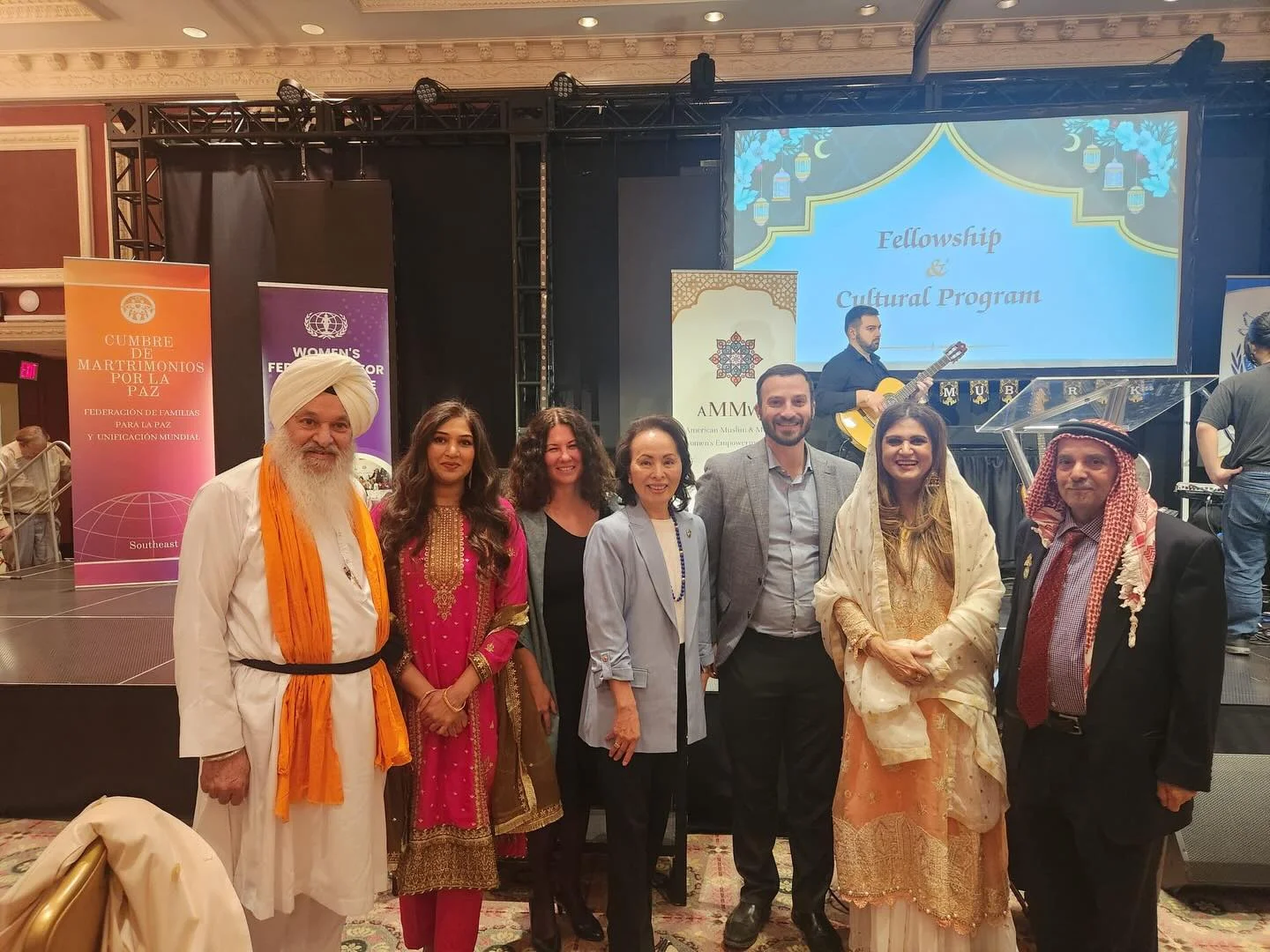
American Muslim and Multifaith Women’s Empowerment Council (AMMWEC)’s Annual Interfaith Iftar, hailed as a “beautiful, powerful gathering” at the Washington Times building, offered something increasingly rare in today’s fractured climate: a space where differences were not erased, but embraced with dignity. In an age defined by polarization and suspicion, this gathering stood as a quiet yet firm reminder that coexistence is not only possible — it is essential.
The evening brought together leaders from Jewish, Christian, Muslim, Sikh, and Druze faiths, creating a space that was much more than just a ceremonial breaking of the fast. It was a heartfelt gesture of unity, grounded in the belief that faith should connect us rather than create divisions. As everyone gathered to share the iftar meal, they were also engaging in something much more profound, acknowledging a shared moral foundation that has been shaped by centuries of spiritual heritage.
Different faiths. Shared humanity. One table.
AMMWEC’s Interfaith Iftar continues to foster dialogue, peace, and understanding among diverse communities.@anilaali #ammwec #ramadan #iftar #interfaith pic.twitter.com/OjihKJwwDb— AMMWEC (@ammwecofficial) March 5, 2026
Charity Beam, who represents the District of Columbia government, perfectly captured the essence of the event when she called it a “beautiful and powerful gathering.” Her words echoed the rich tapestry of Washington’s diverse religious community, a community that boasts historic Black churches, lively mosques, synagogues, temples, and congregations from all corners of the globe. In this context, diversity wasn’t seen as a hurdle to overcome, but rather as a treasure to be celebrated.
At the heart of the evening was the Interfaith “Water of Life” ceremony — a moment for collective reflection that went beyond theological differences. With a shared symbol of purification and renewal, everyone was encouraged to engage in contemplation rather than debate. In a world where religion is often politicized or simplified to mere identity, such moments remind us of its true purpose: to nurture humility, empathy, and a sense of shared humanity.
One of the most thought-provoking reflections came from Rabbi Dan Epstein, who pointed out that the term “People of the Book,” often associated with Jewish identity, finds its origin in the Qur’an rather than the Torah. His observation carried a subtle but powerful message — that understanding across faiths is not a one-way exchange, but a mutual process of learning. It was a reminder that dialogue, when approached with sincerity, can deepen rather than dilute belief.
AMMWEC President Dr Anila Ali highlighted the evening’s theme beautifully by calling fasting a “spiritual bridge linking communities across centuries.” Her message resonated deeply across different traditions. Fasting isn’t exclusive to Islam; it’s a practice seen in Judaism, Christianity, and beyond — one that fosters discipline, compassion, and a greater awareness of those in need. In this light, it serves as a common spiritual language, quietly weaving communities together.
The significance of such gatherings extends beyond a single evening in Washington. In Jackson Heights, Queens, a similar interfaith iftar brought together Muslims, Hindus, Jews, Christians, and Buddhists under the banner of shared humanity. Hosted jointly by AMMWEC and Voice of Women Empowerment, the event reflected the same spirit of openness — where stories were exchanged, laughter was shared, and connections were built across lines that too often divide.
Natalie Sanandaji’s presence brought a profoundly human touch to the event. As a survivor of the tragic October 7 Nova Music Festival and a passionate advocate against antisemitism, her words resonated with both sorrow and purpose. She expressed her gratitude for AMMWEC’s interfaith leadership, especially their tireless work to advocate for the release of hostages and to shine a light on the often-ignored victims of the Nova festival. Her remarks highlighted a crucial truth: interfaith dialogue isn’t just an abstract concept; it’s a heartfelt response to the real suffering in our world.
Cultural expression was key in reinforcing the message of the evening. Kamel Zennia, the Algerian musician, reminded us that art can say what words sometimes can’t. In situations where political conversations get stuck, culture flows freely — it has the power to open hearts when debates fail to connect.
We came together for a beautiful Interfaith Iftar, hosted by AMMWEC.
As we broke our fast together, people from different faiths and backgrounds shared more than just a meal. We shared stories, laughter, and a deeper commitment to peace and mutual respect. In a world often… pic.twitter.com/uIiRAVOsmw
— AMMWEC (@ammwecofficial) March 12, 2026
This is where the concept of cultural diplomacy really comes into play. As one speaker pointed out, culture has a way of communicating when politics can’t; it mends wounds when negotiations hit a wall. It encourages us to step away from a zero-sum mindset and consider more constructive questions: How can we foster trust? How can we create shared spaces? How can we turn historical pain into a foundation for future collaboration?
These questions aren’t just theoretical. They’re essential to any genuine vision of peace. Because, as the evening made clear, peace isn’t just about avoiding conflict. It’s about ensuring dignity, creating opportunities, and nurturing mutual respect.
Women-led initiatives like AMMWEC and Voice of Women Empowerment are making a significant impact in shaping this vision. Their approach focuses on building genuine relationships rather than just talking the talk — they create spaces where real dialogue happens, not just staged conversations. By doing this, they’re transforming the concept of leadership in the interfaith community to be more inclusive, empathetic, and future-oriented.
An inspiring evening at the Interfaith Iftar hosted by Voice of Women Empowerment in New York and AMMWEC, uniting Muslims, Hindus, Jews, Christians, and Buddhists in Jackson Heights.
Community leaders,faith leaders and partners attended the event.#ramadan #i̇ftar #ammwec #ny… pic.twitter.com/CskuL8FC0S
— AMMWEC (@ammwecofficial) March 13, 2026
There are those who might question the real effects of such gatherings. But let’s be real: significant change doesn’t usually stem from big, flashy actions. It often starts in settings like this—where individuals opt to listen, connect, and recognize each other beyond mere labels.
As the fast was broken with dates and shared meals, something more enduring was also being built — trust. And in a world where trust is in short supply, that may be the most valuable outcome of all.
Different faiths. One table. And a timely reminder that our shared humanity still has the power to bring us together.