A year into al-Sharaa’s regime: Is the West celebrating a mirage?
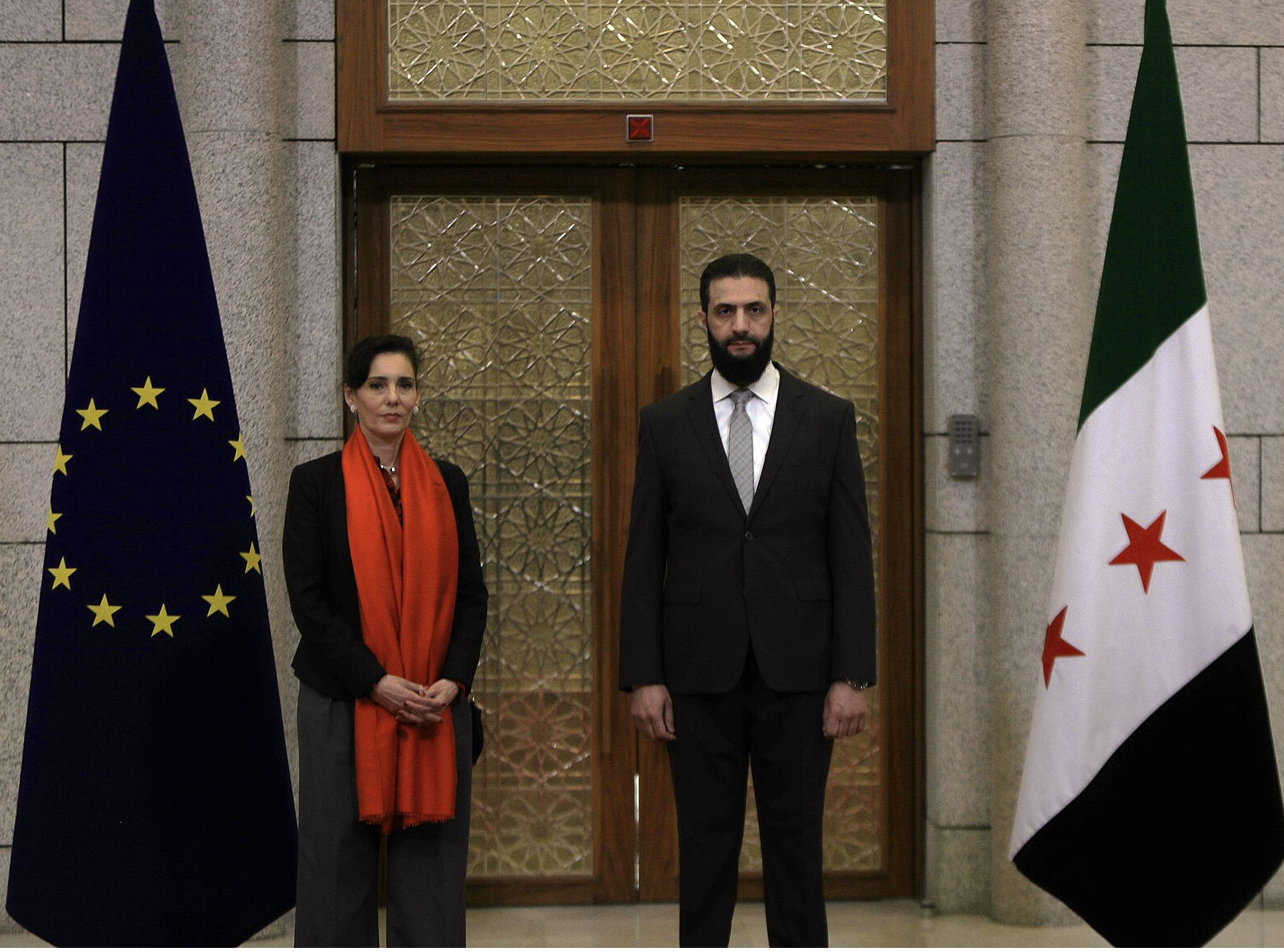
December 8 marks the first anniversary of the overthrow of Bashar al-Assad and the arrival in power of Ahmed al-Sharaa. It is a date that many Western capitals celebrate as the beginning of a new era: a Syria finally turning toward reconstruction, stability, and perhaps even a form of regional normalization. I understand this aspiration. I hope it comes true. After 15 years of war, economic collapse and social fragmentation, who would not wish to see the emergence of a pragmatic leader eager to turn the page and rebuild his country?
But this hope, however legitimate, cannot replace analysis: One year later, the results are not there.
The temptation to believe in the “pragmatism” of the new regime rests on a misunderstanding. Certainly, al-Sharaa masters the codes of a head of state, and a young one at that. He speaks of economy, administration, foreign investment; he presents himself as open to regional dialogue, including, verbally, with Israel. But beneath this varnish lies a fact that too few diplomatic actors are willing to look in the face: the new Syrian power was not born of any institutional or democratic process, but of an internal compromise between Islamist factions supported by Turkey and Qatar, the most structured of which remains directly linked to Al-Qaeda. In other words, Syria has not broken with the ideological matrix that fueled the worst excesses of the past decade; it has merely reconfigured it into a form of Islamism with more moderate appearances.
The truth must be said: the notion of a “moderate” Islamism, regulated by the responsibilities of governance and the necessities of reconstruction, is a fiction that has already proven costly for the Middle East. It failed in Egypt, produced a terror-based dictatorship in Gaza, paralyzed Tunisia, and allowed militias to flourish in Syria and Iraq. Can one reasonably believe that a figure emerging from a jihadist network, even equipped with a skillful communication strategy, could transform himself into a guarantor of regional stability? And even if al-Sharaa were genuinely driven by a desire for openness — a hypothesis that would be irresponsible to dismiss outright — would he, in the current configuration, have the means to impose this sincerity upon the militias that control Syria’s security apparatus? The question is neither polemical nor superfluous: it is central for the future of the Middle East, for Israel’s security and, beyond that, for Europe’s. Yet it remains absent, almost taboo, in Western public debate.
The contrast between the diplomatic narrative and the reality on the ground is striking. One year after Assad’s fall, the same practices persist: coercion of minorities, increasing pressure on the Druze, religious courts, informal taxation, collusion with Turkish and Qatari networks, active presence of Islamist militias stemming from Al-Qaeda, gradual infiltration of Iranian actors in new forms, repeated threats against Israel. The regime speaks the language of compromise but governs according to the codes of the matrix that brought it to power. And the more the West multiplies gestures of recognition, the more this system feels free to act without constraint.
For in truth, the West does not genuinely believe in the thesis of an ideological rupture. It knows that the regime has not rid itself of its Islamist dimension. It knows that it is, in practice, encouraging an authoritarian model backed by militias. Yet it continues to applaud, to finance, to normalize — in the name of a seductive idea: that of a “new Syria” that is inclusive, calm and reasonable. This is a strategic error and a political failing. As with Iran, a monster is being nourished with the hope that it will adapt to our democratic expectations and standards. Without real conditions. Without coherence. Without firmness. We simply sign checks with a smile, hoping that our aspirations will eventually create reality. This is what naivety looks like.
The West is thus reproducing the same mistake made in 2011: confusing the collapse of a regime with the emergence of a credible alternative. At the time, the European Union, paralyzed by the fear of an opposition dominated by the Muslim Brotherhood, refused to support democratic Syrian forces, fearing “the worst.” The result: a few years later, it ended up supporting the very Islamists it had feared, who had in the meantime become unavoidable. Where is the coherence? We know the outcome: marginalization of non-Islamist forces, rise of armed groups, fragmentation of the country, and then the ascent of jihadist structures that methodically destroyed Syria. Today, history risks repeating itself. By granting unconditional international legitimacy to an Islamist power, the West is giving it the means to consolidate an ideological hegemony openly directed against Israel and destabilizing for the entire region.
Yet all is not lost. There is a path of lucidity, one that does not exclude hope but refuses blindness. Yes, Syria deserves a chance. Yes, even a leader emerging from an Islamist network can, in theory, evolve. Yes, the possibility of a genuine transition must remain open. But this is possible only on one condition: replacing unconditional encouragement with a strategy based on firmness, conditionality and responsibility. Europe must finally become the explicit protector of minorities, the actor that refuses any normalization as long as the real inclusion of all Syrians is not guaranteed. Today, the opposite is happening: a regime feels free to pressure those who challenge it, encouraged by the absence of Western red lines.
Normalization must no longer be a blank check. All international aid must be tied to measurable transformation: progressive disarmament of factions, guarantees for minorities, credible engagement in a security process with Israel, a clear break with jihadist networks, financial transparency, and the establishment of a genuinely inclusive institutional model. The United States and Europe know how to impose such conditions — they have done so elsewhere. Why not in Syria? How can we understand, for example, that Donald Trump designates the Muslim Brotherhood as a terrorist organization while extending a hand to a regime born of the same ideological matrix? Why not impose the simplest condition: rejecting Islamism as the political foundation of the new Syria?
One year after Assad, this is not a time for diplomatic enthusiasm but for questioning. Without clear requirements, the West will not consolidate a transition: it will nourish a monster. With them, it could finally contribute to stabilizing a region where illusions have always cost far more than truth.