
The views expressed herein are solely mine.
Use Captagon Intel to Arm Druze Against Mecca Pact
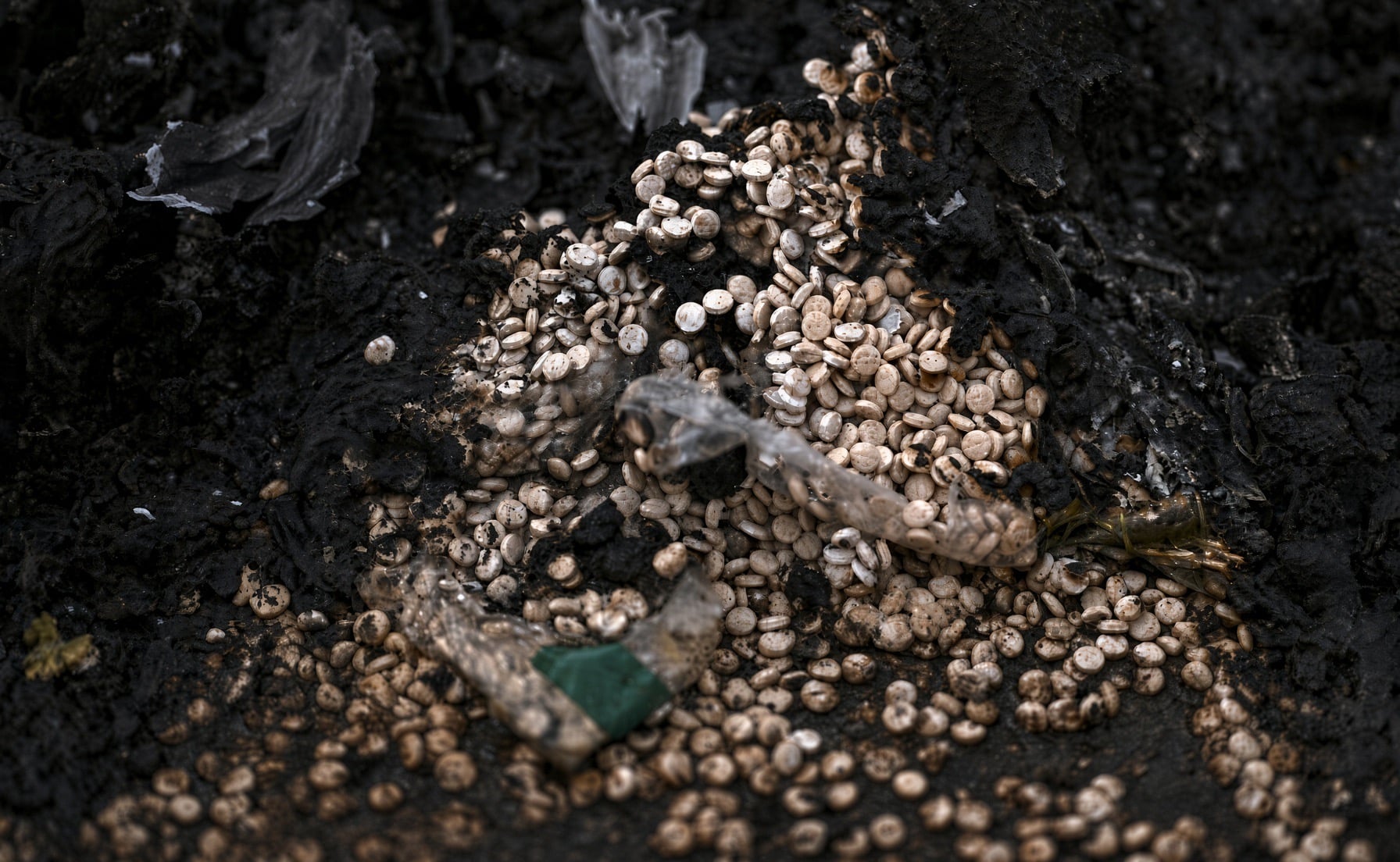
Pills of captagon are pictured after their burning to be disposed of upon their discovery at Mazzeh Military Airport in the west of Damascus on December 12, 2024. (Aris Messinis/AFP).
Bashar al-Assad’s collapse exposed the fatal flaws of the 1974 Israel-Syria Disengagement Agreement, ending decades of United Nations fictitious patrols and leaving the Jewish state to confront the volatile remnants of a narco-state. Before its fall, the regime oversaw massive Captagon production through the Syrian Arab Army’s 4th Armored Division and Maher al-Assad’s networks. That enterprise produced millions of pills daily, fueled a global market worth nearly $10 billion annually, and accounted for 80 percent of seizures in the Middle East between 2019 and late 2025. Following the regime’s eradication, Syria’s post-December 2024 authorities dismantled 15 industrial-scale Captagon laboratories and 13 smaller storage sites, according to the United Nations Office on Drugs and Crime. Across the first 18 months after Assad’s fall, Syrian forces seized roughly 700 million pills and dismantled 90 international trafficking networks, while regional seizures totaled at least 177 million tablets, or roughly 30 tonnes. Despite these crackdowns, residual stockpiles sustain trafficking for years. After July 2025, the Druze-majority Suwayda province emerged as a primary manufacturing and distribution hub, driving a surge of more than 325 percent in reported smuggling toward Jordan.
This narco-threat intersects directly with an urgent humanitarian crisis in southern Syria. In July 2025, kidnappings triggered clashes in Suwayda between Druze factions, Bedouin tribes, and government forces. The violence killed around 1,400, according to the Syrian Observatory for Human Rights, including hundreds of Druze civilians and victims of field executions. The fighting also displaced tens of thousands and destroyed dozens of villages. During that escalation, Israeli strikes on Syrian Ministry of Defense targets and near the presidential palace proved Jerusalem’s commitment to intervene and defend the Druze people in southern Syria.
Meanwhile, Ankara exploits Damascus’s instability to pull Syria into a hostile geopolitical orbit. Following the August 2026 signing of the Mecca Pact by Turkey, Saudi Arabia, and Pakistan—and its formal ratification earlier this month—Turkey now presses Syria to join its mutual-defense clause. Syrian Foreign Minister Asaad al-Shaibani publicly stated that Damascus is evaluating accession, while Turkish training, intelligence support, and economic ties already shape Syrian security institutions. If Damascus joins Ankara’s Sunni Islamist-oriented axis, Turkey will constrain Syrian maneuverability toward the Golan Heights and the southern border.
Damascus, however, has signaled openness to a security understanding that revives elements of the 1974 framework and de-escalates tensions along the southern border. By trading counter-narcotics intelligence for Druze security guarantees, Israel and its partners can offer President Ahmed al-Sharaa’s government a viable alternative to Turkish dominance. Over time, this Captagon-for-security bargain will reduce Turkish leverage, stabilize Israel’s southern flank, and build the confidence necessary for potential Abraham Accords pathways once narco-networks stop funding spoilers and Druze communities achieve lasting security. To execute this strategy, Jerusalem, Washington, and their regional allies must take three concrete steps.
First, policymakers should establish a trilateral Israel-Syria-United Arab Emirates Captagon fusion cell in a neutral third country, rotating Gulf and Moroccan liaison officers alongside core intelligence staff. Israel must map residual precursor flows, share targeting data on cross-border networks, and conduct joint interdiction with Jordanian and Gulf partners. Through this framework, Syrian security services will gain direct operational links to Morocco, Bahrain, and the United Arab Emirates—core members of the emerging Abrahamic security architecture. Once operational, the cell should prioritize financial tracking, precursor chemical interdiction, and joint operations against Suwayda-linked routes that still reach Saudi Arabia and the Gulf, generating independently verifiable metrics on seizures and dismantlements.
Building on this same multilateral coalition model, Jerusalem can also reinforce Washington’s newly proposed multinational mission to train Syria’s post-Assad military in demining, explosive ordnance disposal, and border security through the Jordan-based Damascus Coordination Center (DCC). As an anchor of the emerging Abrahamic Alliance alongside the United Arab Emirates, Israel offers unmatched combat-engineering expertise, border-sensing technology, and intelligence vetting—helping Washington satisfy strict U.S. Leahy Law human-rights screening requirements for Syrian units while delivering defensive capabilities far superior to Ankara’s offerings. Whereas Turkish military assistance seeks to entangle Damascus in an Islamist-aligned defense bloc and turn Syria into a dependent proxy, Abrahamic-backed training equips Syrian forces to clear unexploded ordnance, secure sovereign borders, and professionalize without surrendering autonomy to Ankara.
Furthermore, Jerusalem and Damascus should negotiate a Southern Syria Druze Security Protocol that codifies exclusive local security zones in designated Suwayda sub-districts and adjacent southern areas. This framework will adapt the functional self-defense structures that protected Iraqi Kurds after 1991 while eliminating the patronage and revenue-diversion patterns that later plagued the Kurdistan Regional Government with corruption scandals. A transparent escrow mechanism—drawing from seized Captagon assets and Gulf reconstruction pledges—must fund the zones. Under this protocol, vetted local Druze forces—strictly conditioned on purging local cartel networks and severing all ties to Captagon trafficking—will patrol villages and roads cleared of external armed groups, receiving Israeli-standard training and equipment under third-party monitoring. Meanwhile, the Jewish state will retain transparent intelligence-sharing, presence rights, and automatic overwatch triggers against verified threats, deterring future massacres without formal annexation.
Finally, both Israel and Syria should condition further normalization steps on a time-bound, internationally observed referendum in the exclusive zones. Limiting the vote to permanent residents, this mechanism will let the local population choose between continued association with Syria under reinforced autonomy or closer integration with Israel, determining the final status of those areas within the security agreement. Locking in this safeguard converts the 2025 violence into a documented baseline for protection guarantees while offering Damascus a face-saving path to stability that removes its incentive to deepen Mecca Pact commitments under Turkish pressure.
If Washington and Jerusalem hesitate, crystal-jawed and aspiring sultan Recep Tayyip Erdoğan will gladly fill the vacuum in southern Syria, turning Damascus into a Turkish satellite while leaving the Druze at the mercy of Islamist proxies and cartel warlords. By trading actionable Captagon intelligence for ironclad Druze self-defense today, Israel and its partners can break Ankara’s stranglehold, dry up a multi-billion-dollar illicit economy, and prove that America’s allies—not its adversaries—write the rules of the post-Assad Levant.
Related Topics
Related Posts