
Operation Midnight Hammer: Iran’s Nuclear Obsession And US’s Middle East Gamble
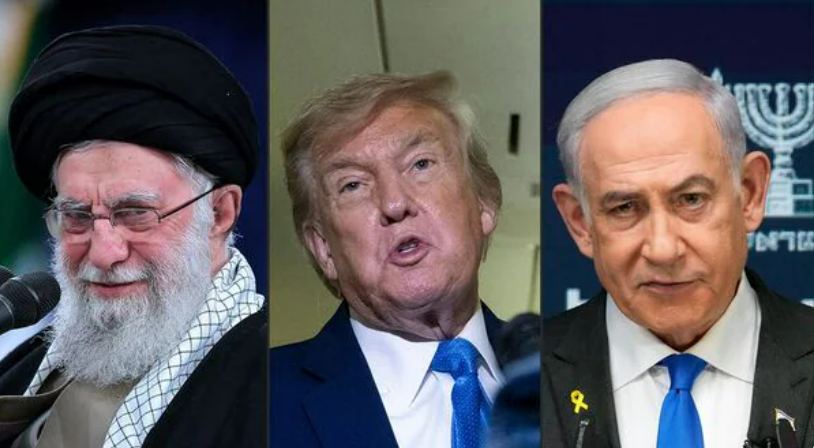
After nine days of Israel’s Operation Rising Lion, the US launched its first strike on Iran’s key nuclear sites, mainly Fordow and Natanz. The strike significantly damaged Iran’s nuclear capabilities, though it remains controversial, as Iran claims only superficial damage, and many OSINT analysts question the US bombing campaign, suggesting Iran might have shifted uranium. The real question is not about the strike’s effectiveness but whether this risk will force Iran into a corner or if it will lead to a fragile ceasefire and symbolic victories.
U.S. Middle East Policy
The US adopted a strategic policy of offshore balancing and containment to maintain its influence and prevent any one regional power from becoming too dominant in oil and gas. Its first major operation was organizing Iran’s coup d’état in 1953, which overthrew Prime Minister Mohammad Mosaddegh, who was leaning toward the Soviets. Five years later, in 1958, the US deployed troops to Lebanon under Operation Blue Bat to protect its interests amid political instability. The Eisenhower Doctrine shaped the US’s strategic approach in the Middle East, stating that any regime threatened by Communism in the region could request military support from the US. Meanwhile, the US prepared the ground for supporting Israel to strengthen its regional presence and influence in the 1960s. Throughout this period, the US continued following a containment and balancing approach in the Middle East. A significant shift occurred during the 1980s and 1990s, when the US became more assertive and involved in Middle East affairs, beginning with the Islamic Revolution in Iran and the hostage crisis, and extending to the Lebanon Intervention. A sense of strategic assertiveness—aimed at containment and influence through allies—became central to US policy in the region, focusing on issues from oil security to countering Soviet influence.
The Gamble Period
The Iran-Iraq war was more than a territorial dispute; it was a struggle for dominance in the Gulf. On one side, the Islamic revolution marked the rise of the Shia crescent in the Middle East, while Saddam Hussein feared that Iran’s Islamic ascent would seriously challenge his power in the Gulf. The US viewed Iran’s rise as a threat to its influence and allies in the region. Moreover, the US did not want a single power dominating the Gulf, especially since Iran was strategically exporting the Islamic revolution throughout the region. Consequently, the US supported Saddam to ensure Iran’s defeat, providing military and economic aid to Iraq against Iran.
The US’s gamble and blind eye to Saddam Hussein’s atrocities, human rights violations and usage of chemical weapons led to the beginning of long-term instability in the region. After three years of war, the region witnessed the first Gulf War in 1991, when Iraq invaded Kuwait. Perhaps the first failure of the US’s foreign policy in the Middle East- the US wanted to keep a check on rising powers and contain the soviets, but the US’s gamble on Saddam backfired, as the US’s quest to contain Iran made Iraq more dangerous and powerful which to some extent weakned US position in Middle East. However, the US readjusted its policy and adopted a broader containment strategy, known as dual containment, in 1993.
Dual Containment: Another Gamble Failed
The US pushed the Dual containment policy by containing both Iran and Iraq, which was seen as a tactical victory in coercing both countries. Still, in the long term, it proved counterproductive for the US’s strategic interests in the Middle East. The region became more instable and gave rise to Shite groups and proxy conflicts began to brew. Notably, the dual containtment policy weakned Iraq but it allowed Iran to carve a silver lining to take advantage weakned regional power Iraq and push its rise through Shite groups. Moreover, the threat of terror groups also increased in the region as the US presence in the Gulf significantly increased, especially in Saudi Arabia, which led Al-Qaeda to get into active mode and spread anti-American sentiments—the Riyadh Compound Bombing in 2003, where Westerners were targeted.
The US’s policy of dual containment also employed regime change tactics through the use of sanctions and deterrence, but these measures had no significant impact on either country. US foreign policy had scattered, faulty geopolitical assesments and a superficial understanding of regional dyanamics contributed to a fractured policy in the Middle East, ultimately making it a power-gambling game. However, US Middle East policy in recent years has undergone necessary makeovers, like weighing more on diplomacy and limiting itself to security issues, but it still hinges upon limited strategic gains and more on risks.
Iran’s Nuclear Obsession and US Strikes
US strikes on Iran nuclear facilities follow Israel’s strike, serving as a display of containment and deterrence. However, will the US transform this tactical success into strategic gains by pushing Iran to negotiate a new plan or by dropping its nuclear obsession? The answer is no. Iran’s fixation on nuclear weapons is deeply linked to its identity and national pride, which can be reduced through coercion but not entirely abandoned. Trump’s efforts to do so complicate new negotiations, and Iran’s obsession is evident: it did not aim to import a nuclear bomb but to develop its own. Reports indicate that US Vice President JD Vance confirmed that 400kg of uranium is missing after US strikes. Two primary outcomes are possible: first, Iran might directly proceed to develop its nuclear bomb, bypassing nuclear diplomacy and brinkmanship as North Korea did; second, heightened security fears could threaten the fragile ceasefire, especially as the US-Israeli relationship remains far from their goals. Reports suggest the US strike has set Iran’s nuclear program back only a few months. Therefore, it might be seen as a symbolic victory for the US, as it fails to deter Iran or hinder its nuclear ambitions. Instead, the strikes have increased Iran’s threat level, with Iran making serious calls to close the Strait of Hormuz and advancing nuclear ambitions. This indicates that the US’s hurried gamble in the Middle East has once again failed.