Pakistan’s Pragmatic Turn: The End of Extremist Politics
Something remarkable is unfolding in Pakistan — quietly, deliberately, and against all historical precedent. For a country long defined by its hard-line approach, the recent trajectory suggests not merely a policy adjustment but a fundamental reckoning with reality.
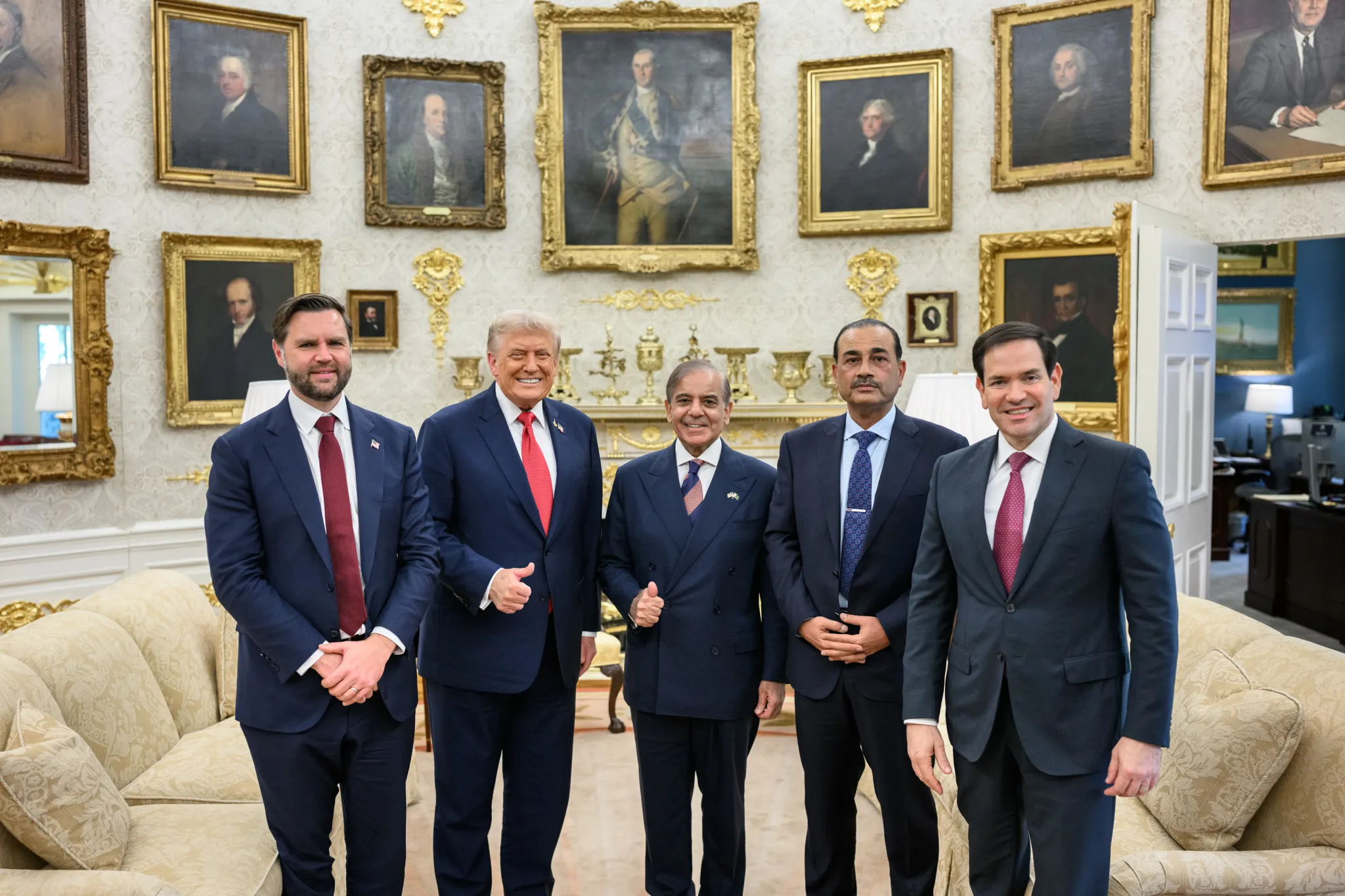
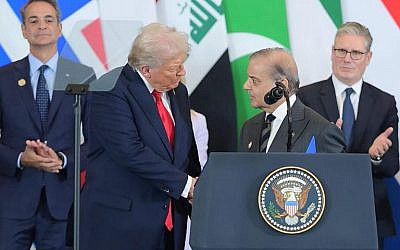
Picture a scenario that would have seemed absurd just three years ago: Pakistan’s Prime Minister standing alongside international leaders to endorse a peace framework that involves Israel. Shehbaz Sharif’s measured words at Sharm El Sheikh weren’t just diplomatic pleasantries — they signaled a willingness to abandon decades of reflexive positioning. When President Donald Trump singled out Field Marshal Asim Munir as “a very important guy,” the moment captured something deeper: a country finally confident enough to pursue its interests on the basis of pragmatic new realities.
In her thought-provoking Times of Israel blog, “Pakistan, Abraham Accords and the Radical Islamist Right,” writer Allia Bukhari captured a crucial truth about Pakistan’s internal struggle: the radical Islamist right remains one of the biggest impediments to the country’s progress. Their politics, she argued, are built on populist emotion and outdated narratives, detached from the pragmatic realities that now define global diplomacy.
Her observation arrives at a transformative moment for Pakistan. The state appears to be undergoing a quiet but profound shift — from ideological rigidity to pragmatic realism. In recent months, the country’s leadership has signaled that it wants to move forward with the world, aligning its policies with new geopolitical and economic realities rather than clinging to the rhetoric of the past.
The government’s actions to curb extremism and restore internal stability reflect this change. The banning of militant outfits, the clampdown on hate speech, and a reassertion of state authority under Field Marshal Asim Munir mark the beginning of a new chapter. Operation Azm-e-Istehkam, launched under his command, stands as more than a counterterror campaign — it is a comprehensive effort to uproot the ideological and financial structures that sustain extremism.
The government’s decision to proscribe Tehreek-e-Labbaik (TLP) Pakistan under anti-terrorism legislation speaks volumes. Not so long ago, such groups could paralyze entire cities, extract concessions through violence, and claim to speak for the nation’s conscience. Now they’re being systematically dismantled — their assets frozen, their infrastructure shuttered, their leaders designated under terror watch lists.
This isn’t just about one organization. It’s about whether Pakistan will continue tolerating movements that weaponize religion for political disruption and call it piety.
This internal transformation has been accompanied by a strikingly mature and measured approach to foreign policy. When U.S. President Donald J. Trump unveiled his Gaza peace plan — an ambitious initiative aimed at ending years of conflict and reviving the spirit of the Abraham Accords — Pakistan’s inclusion among supporting states surprised many. Prime Minister Shehbaz Sharif’s endorsement of the plan as a “path toward durable peace” and his emphasis on economic interdependence in the region signaled a clear shift in tone.
More significantly, Pakistan’s civilian and military leadership appeared united in embracing diplomacy over dogma. Field Marshal Asim Munir’s engagement with global partners, and Trump’s description of him as “a very important guy” and his “favorite field marshal,” symbolized a new confidence in Pakistan’s global posture — one grounded in strategic balance and pragmatic statecraft.
Domestically, extremist voices such as the TLP and other extremist organizations continue to oppose any hint of normalization with Israel or alignment with Western-led peace frameworks. Yet, their once-dominant influence seems to be fading. The public’s appetite for confrontation and chaos has waned, replaced by fatigue and a growing recognition that progress demands stability, not agitation.
Amid this changing atmosphere, key government figures have begun articulating a more nuanced stance on the Abraham Accords. Rana Sanaullah, the Special Assistant to the Prime Minister on Political Affairs, recently asserted that Pakistan “should follow the position of the Arab world” regarding the accords — a notable statement suggesting Islamabad is willing to move in concert with broader Muslim consensus rather than in defiance of it.
Meanwhile, Defense Minister Khawaja Asif emphasized that Pakistan “will look after its national interests” if pressured to take a position on the Abraham Accords, adding that internal consultations were already underway. His words carried weight; Pakistan won’t remain a spectator to the whole development. Pakistan is a player, not a spectator.
These remarks capture the essence of Pakistan’s quiet revolution — a state no longer content with reactionary rhetoric or symbolic defiance, but one seeking to define its own role in a changing world. Islamabad’s intent to act as a key player in the evolving Middle East peace process reflects both confidence and maturity. The country is learning that participation, not isolation, is the path to relevance and respect.
The new approach accepts that influence requires participation. When leaders suggest Pakistan should follow the Arab world’s lead on the Abraham Accords, they are acknowledging that isolation is a choice, and usually a poor one. When the government endorses peace initiatives it might have reflexively condemned before, it’s choosing engagement over empty defiance.
This doesn’t mean abandoning principles — it means distinguishing between principles and posturing. Supporting Palestinian statehood and economic prosperity doesn’t require permanent hostility toward Israel. Standing with the Muslim world doesn’t require mindless opposition to Western diplomacy. Maturity lies in recognizing complexity.
Pakistan’s reorientation is not without challenges. The ideological remnants of past decades — nurtured by populism, militancy, and political opportunism — still attempt to influence public discourse. But there is now a discernible will within the establishment to separate faith from fanaticism, nationalism from nativism, and diplomacy from dogma.
Allia Bukhari’s critique of the radical right thus fits neatly into a larger picture — one of a state redefining itself after years of drift. The Pakistan emerging today is not turning its back on its principles, but reinterpreting them through the lens of realpolitik. It is a shift from reactive emotion to strategic engagement, from isolation to integration, and from populist rhetoric to pragmatic statecraft.
What we are witnessing may well be Pakistan’s most important transformation in decades — not loud, not revolutionary in the streets, but revolutionary in thought and intent. A quiet revolution that seeks to reclaim Pakistan’s place in the world, not as a follower of the past, but as a participant in shaping the future.
As Pakistan redefines its domestic order and expands its diplomatic horizons, it stands at the threshold of a new era — one that promises a terror-free, extremism-free, and diplomatically vibrant Pakistan, aligned with the evolving realities of a complex world.
The future belongs not to the populists of the past, but to the pragmatists of the present. And Pakistan, at long last, is becoming one of them.