Pakistan’s Proactive Diplomacy: Seizing the Initiative in a Time of War
As the US-Israel war on Iran enters its fourth week, Pakistan is once again in the world’s spotlight—this time as an increasingly central diplomatic actor. What is unfolding is a calculated and coordinated effort by Islamabad to position itself as a key intermediary between Washington and Tehran, at a moment when the risk of a wider regional conflict remains dangerously high.
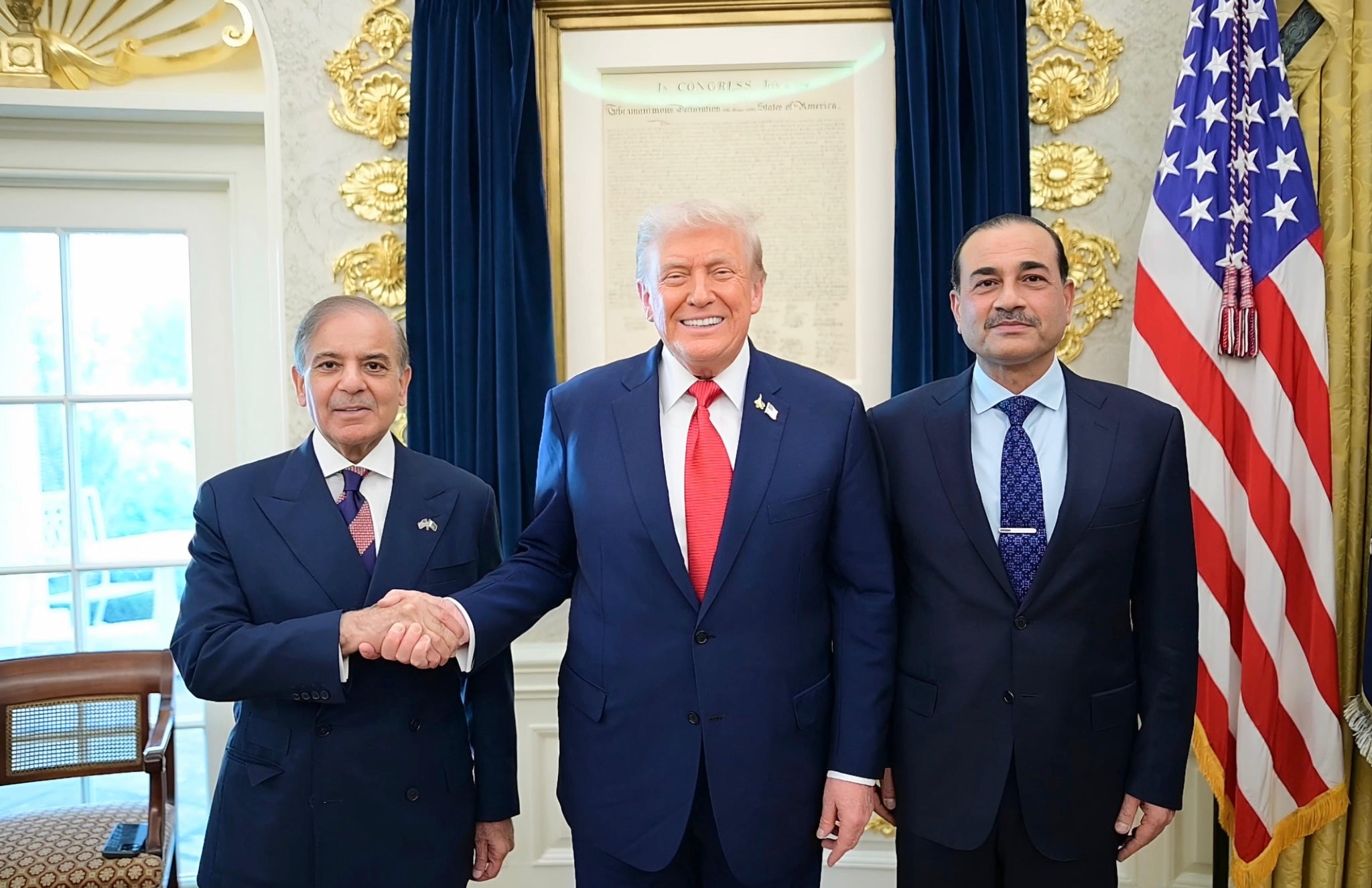
Reports suggest that Pakistan is eager to step in as a mediator to help resolve the conflict. The country leverages its unique position: strong connections with Tehran and a growing personal rapport with President Trump, who has often referred to Field Marshal Asim Munir as his “favorite Field Marshal.” This is just the latest chapter in a clear progression: facilitating the Gaza ceasefire in 2025, engaging in the Gaza Peace Plan, joining Trump’s “Board of Peace” (BoP) in January 2026, and now working towards de-escalation between Iran and the US.
According to the Financial Times @FT, Field Marshal Syed Asim Munir, NI (M), HJ, Chief of Army Staff (#COAS) & Chief of Defence Forces (CDF) of #Pakistan held direct contact with US President Donald Trump in what has been described by some outlets as a discussion about ending the… https://t.co/aky4ADvS6Z pic.twitter.com/Y6dmQlGHjV
— Pakistan Armed Forces News ???????? (@PakistanFauj) March 23, 2026
Recent developments suggest that this approach is already yielding results. A coordinated diplomatic push involving Pakistan, alongside regional players such as Turkiye and Egypt, has contributed to a limited but significant breakthrough: US President Donald Trump’s decision to pause planned strikes on Iran’s energy and power infrastructure for five days. While hostilities have not ceased, the pause is being widely viewed as the first tangible outcome of intensified back-channel diplomacy—an early indication that engagement, however quiet, is beginning to create space for restraint.
Good morning, Asia. While you were sleeping, one of our most-read stories was about Pakistan’s mediation push. What do analysts and diplomats make of the move? https://t.co/tT8uSZ6eRu? pic.twitter.com/zcUVs9PevJ
— Financial Times (@FT) March 24, 2026
The scope of this effort is becoming clearer with each passing day. The Financial Times report noted that Pakistan has been working to facilitate communication between Washington and Tehran, with senior officials quietly managing back-channel exchanges involving key figures. At the highest level, Field Marshal Syed Asim Munir, as Chief of Defense Forces and Chief of Army Staff, held a direct conversation with US President Donald Trump, underscoring the seriousness of Islamabad’s intent.
The Iran ???????? ceasefire negotiations will take place in a third country, most probably Pakistan ???????? or Turkey ???????? .
My friends in Washington DC tell me it may not be Witkoff & Kusner who Iran doesn’t trust, but someone else from Trmp Admin.
Israel ???????? is on board.
This is good news…— Tony Ashai (@TonyAshai) March 23, 2026
Equally significant is the role of the civilian leadership. Prime Minister Shehbaz Sharif has maintained continuous contact with regional and global counterparts, ensuring that Pakistan’s diplomatic messaging remains consistent: de-escalation, dialogue, and a peaceful resolution. This dual-track engagement—military and civilian—has given Pakistan an unusual degree of coherence in its foreign policy at a time when clarity is often in short supply.
Lahore: March 23, 2026.
Prime Minister Muhammad Shehbaz Sharif held a telephone conversation with H.E. Dr. Masoud Pezeshkian, President of the Islamic Republic of Iran, today.
The Prime Minister extended Eid ul Fitr and Nowruz greetings to the Iranian President, and the… pic.twitter.com/y2WFuYmMjr
— Prime Minister's Office (@PakPMO) March 23, 2026
Prime Minister Shehbaz Sharif stated in a post on X that Pakistan welcomes and fully supports ongoing efforts to promote dialogue aimed at ending the war in the Middle East, emphasizing the importance of peace and stability both regionally and globally.
Pakistan welcomes and fully supports ongoing efforts to pursue dialogue to end the WAR in Middle East, in the interest of peace and stability in region and beyond. Subject to concurrence by the US and Iran, Pakistan stands ready and honoured to be the host to facilitate…
— Shehbaz Sharif (@CMShehbaz) March 24, 2026
There are growing indications that these efforts are having an impact. President Trump’s decision to pause further military strikes on Tehran is increasingly being viewed, in diplomatic circles, as linked to behind-the-scenes mediation. While such outcomes are rarely attributable to a single actor, Pakistan’s role in sustaining communication channels at a critical juncture appears to have contributed to creating space for restraint.
Having stressed the need to stop #Iran's attacks on Arab states, #Pakistan PM Shehbaz Sharif uses the occasions of Nowruz and Eid to encourage Iranian President Pezeshkian to de-escalate. The Iranian president is not influential within the regime but the message is getting… https://t.co/s36oTzo6El
— Ahmed Quraishi (@_AhmedQuraishi) March 23, 2026
What sets Pakistan apart is not just its activism but the credibility it has recently built across various divides. With deep-rooted connections to Arab nations and Iran, along with a rapidly warming relationship with Washington, Pakistan finds itself in a unique position. It can engage with both sides without raising immediate suspicions. Plus, its lack of direct involvement in the ongoing conflict bolsters its claim to neutrality, allowing Islamabad to step up as a credible platform for dialogue.
Why talks in Pakistan? Because Islamabad is the only place Iranians would be comfortable despite Pakistan being in KSA-Pak Strategic Agreement, Trump’s Board of Peace and more. The Americans see Pakistani role as possible leverage over Tehran too. This is the power of… pic.twitter.com/d2QadeMotU
— Ali K.Chishti Official (@thewirepak) March 23, 2026
This isn’t the first time Pakistan has taken on such a role. Its previous efforts in facilitating the Gaza ceasefire and participating in peace initiatives like the Board of Peace have given it both experience and confidence. Those past actions showed that Islamabad can play a significant role in complex diplomatic discussions. However, the current crisis is much more volatile, with higher stakes and less room for mistakes.
The strategic reasoning behind Islamabad’s approach is hard to overlook. The stability of the Middle East has a direct impact on Pakistan’s economic and security interests, influencing everything from energy prices to regional dynamics. More generally, there’s a growing understanding that in today’s geopolitical landscape, real influence is held by those who can foster dialogue instead of just watching conflicts unfold.
Peace and prosperity within the Arab and Gulf Countries is the objective of Pakistan.
Stable and Peaceful GCC & Middle East is in benefit of Pakistan.
— Fishel BenKhald (@Jew_Pakistani) December 31, 2025
Pakistan’s approach to peace is as much about strategic positioning as it is about finding solutions. By stepping up at a crucial time, it’s showing a readiness to take on responsibilities that extend beyond its borders. It’s also testing whether the diplomatic goodwill it has built through recent interactions can lead to real, positive outcomes.
Even now, Pakistan’s involvement is already changing the narrative. It has placed itself in the middle of a significant international crisis, proving that it’s prepared to take action rather than just respond. In a time when tensions are rising, Islamabad’s focus on engagement provides something increasingly rare: a genuine path toward dialogue.
BREAKING
FO gives first reaction to reports about Pakistan possibly hosting Iran-US talks.
In an Exclusive talk with me, FO spokesperson Tahir Andrabi aknowledges Pakistan's efforts but stresses such matters require confidentiality.
The spokesperson said: "Pakistan, consistent…
— Kamran Yousaf (@Kamran_Yousaf) March 24, 2026
This moment highlights a broader change in Pakistan’s perspective—one that values taking initiative over waiting and prioritizes diplomacy over distance. By stepping up when others are still considering their options, Pakistan is not only enhancing its own position but also reinforcing the importance of dialogue in a divided world.