
Palestinian Hostility Toward Kurds
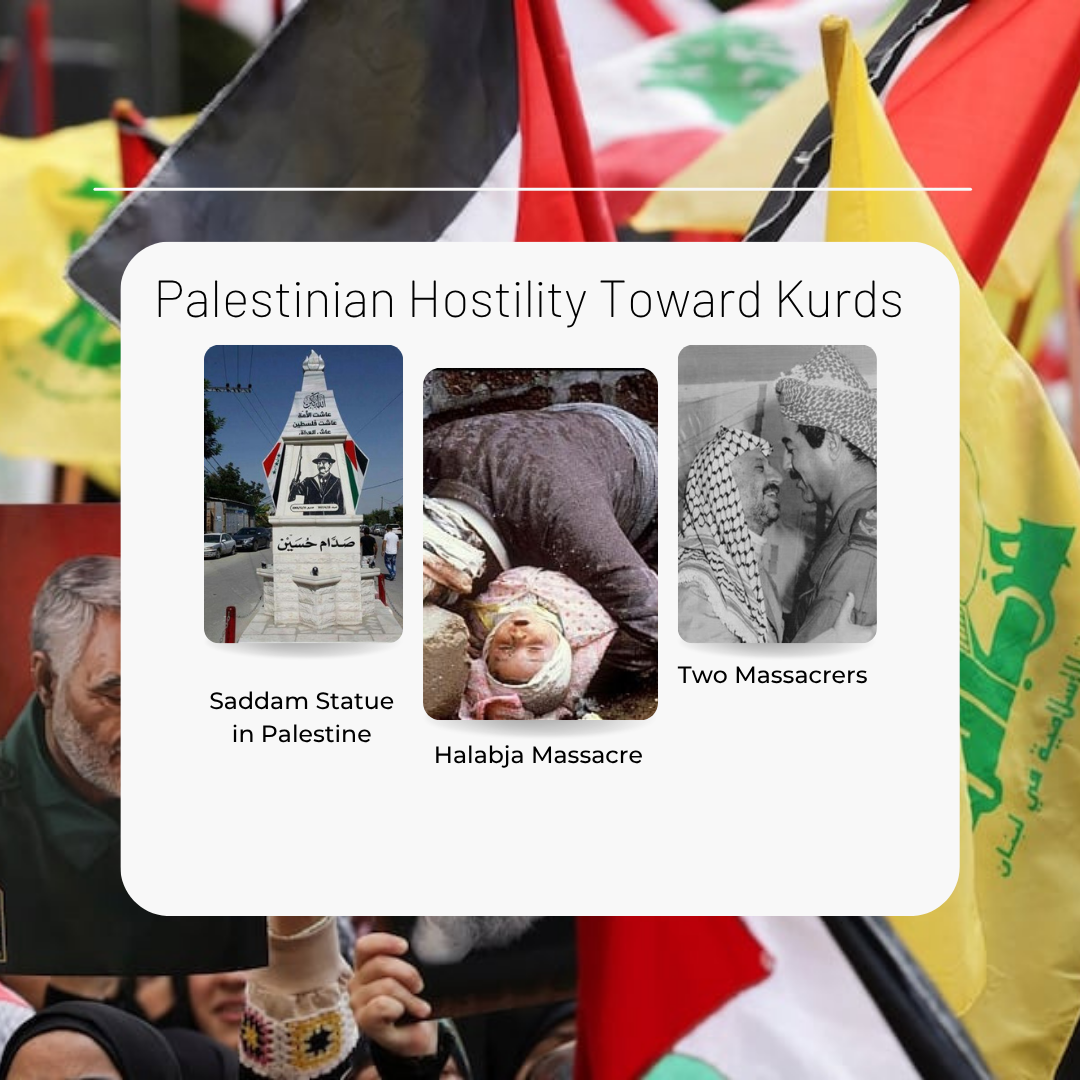
On 16 March 1988… That day, in northern Iraq, children woke up to the smell of apples and followed that scent straight into death. On that dark day, later known as the Halabja Massacre, Saddam Hussein used chemical weapons against the Kurdish people; more than five thousand Kurdish civilians were instantly torn from life. The effects of the gas did not remain limited to that day alone. Survivors struggled with genetic diseases for generations.
The poisonous gases used were deliberately produced with an “apple scent.” The aim was for children to approach the sites where the bombs fell out of curiosity—so that more Kurdish children would die. Saddam carried out these massacres under the name of the “Anfal Campaign.” Al-Anfal is the eighth surah of the Qur’an and contains rules about the distribution of spoils of war after the Battle of Badr in the year 624. The surah states that the property of “infidels” killed in battle may be considered spoils for Muslims. The Baghdad regime acted with an ideology so dark, jihadist, and Arab-chauvinist that it regarded the lives and property of Kurds as “booty.”
Hamas’s Role in Halabja and the Fatwas Supporting the Massacre The strongest support for Saddam’s genocidal and racist policies came from certain Palestinian clerics and politicians of the time. These circles, known as Palestinian Islamic scholars, issued fatwas justifying the killing of Kurds in the name of “the unity of the ummah.” Sheikh Osman, founder of the Kurdistan Islamic Union Movement in Iraq, recounts this openly in his memoirs:
“While we were waging jihad against Saddam, some of our friends in the Muslim Brotherhood offered salaries to persuade our fighters to abandon the struggle. Hamas issued a fatwa permitting the killing of Kurds. Their justification was: ‘Kurds are weakening the Islamic army that stands against Israel.’”
These fatwas were not only religious but also had a clear political background. Saddam labeled the resisting Kurds as “allies of Israel,” thereby rallying support from Arab-Islamist circles. Indeed, the strongest public support for Saddam came from Hamas, which today frequently speaks of “human rights” while violating them the most.
Palestinian Volunteers in Torture and Rape Centers
Iraqi writer Kanan Makiya, in his book Cruelty and Silence, describes in detail the role of Palestinian volunteers who joined Saddam’s army. Makiya states that Palestinian jihadists were actively involved in the systematic sexual torture centers known as “rape rooms.” He recounts that the severe torture and rape inflicted on Kurdish women in these facilities were repeated during the 1990 invasion of Kuwait. According to Makiya, during that period, some Palestinian jihadists raped and tortured virgin women and then wrote “Free Palestine” on the walls using the victims’ blood.
The affection Palestinians held for Saddam and their hostility toward Kurds was never concealed. It is now clearer how Palestinian leaders, especially those influencing leftist circles with images of “humanism” and “solidarity,” concealed deeply inhumane sentiments.
The Rescue of an Ezidi Kurdish Girl in Gaza
Another example was revealed when a Yazidi Kurdish girl abducted by ISIS in 2011 resurfaced in Gaza. Kidnapped at the age of 11 by a Palestinian ISIS member for the purpose of sexual slavery, repeatedly raped, she was rescued in 2025 during an Israeli military operation in Gaza. This event alone serves as a stark summary of the entire story.
Fawzia, a Yazidi girl kidnapped by ISIS from Iraq and brought to Gaza at just 11 years old, has finally been rescued by the Israeli security forces.
For years, she was held captive by a Palestinian Hamas-ISIS member.
She has now been reunited with her family. Her story is a… pic.twitter.com/nkVotqYdov
— David Saranga (@DavidSaranga) October 3, 2024
Israel: The Country That Publicized the Halabja Massacre
The Kurdish scholar İsmail Beşikçi, who spent 17 years in prison for his academic research on Kurds and whose 36 books—32 of which are banned in Turkey—states that the Islamic world supported Saddam, while the U.S. and European countries remained silent. The only country that condemned the massacre was Israel. Beşikçi elaborates:
“Those who remained silent about the Halabja Massacre were not only Europe and America. Three days after the massacre, 53 member countries of the Organization of Islamic Cooperation met in Kuwait, yet none of them even condemned Halabja. It is a crime against humanity, but the only reaction to this genocide came from Tel Aviv, and it was from there that it was communicated to the worl. ”
Anti-Kurdish Statements by Palestinian Leaders
The political support for Saddam’s attacks on Kurds is confirmed by historical records:
Yasser Arafat, responding to criticism over Halabja, asked: “Should he throw roses at them?”
Ahmed Aqel, the Palestinian Ambassador to Iraq, described the 2017 Kurdistan Referendum as an “Israeli conspiracy.”
Saeb Erekat, Secretary-General of the PLO, described an independent Kurdish state as “a poisonous dagger stabbed into the Arab nation.”
Hamas leader Khaled Mashal congratulated Turkey on its Afrin operation and publicly supported Erdoğan.
Mahmoud Abbas described an independent Kurdistan as “a dagger stabbed into the backs of Arabs.”
A Confession of Regret
A striking example of confronting these realities came in a recent statement by Süleyman Akkoyun, a former PKK militant, who expressed regret for once fighting for Palestine “because they fought against Israel.” He confessed:
“As a Kurd, I realized years later that going to Palestine and fighting for Palestinians was a mistake.”
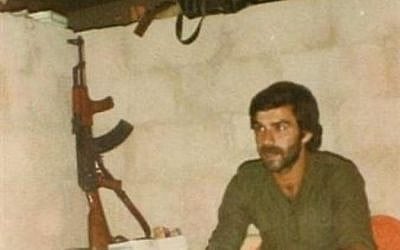 This confession is one of many signs that the bitter truths behind the long-romanticized narrative of “solidarity with Palestine” are finally coming to light.