
Author and Global Affairs Commentator
Palestinian Rejectionism Is the Harder Problem
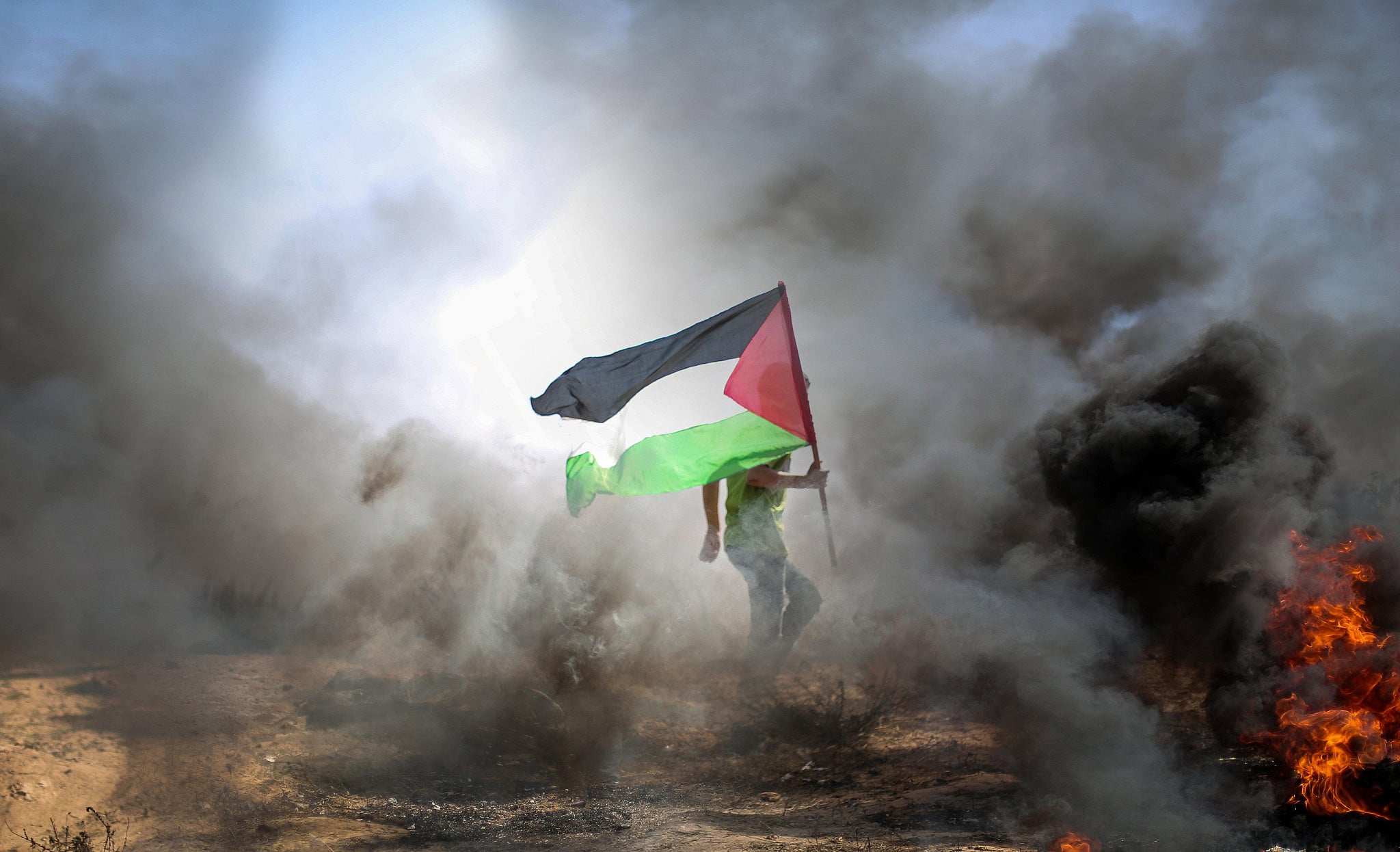
Greater Palestinian autonomy and economic cooperation are not sufficient to prevent a return to mass violence. (Hosny Salah via Pexels)
If poverty, unemployment and restricted movement were the principal causes of Palestinian violence, why have repeated periods of greater economic opportunity, international aid, political autonomy and diplomatic engagement failed to produce lasting peace? The uncomfortable answer is that material deprivation may intensify conflict, but it does not fully explain it: alongside legitimate Palestinian grievances exists a persistent political and ideological rejection of Israel’s permanence, and until that problem is confronted, prosperity alone is unlikely to end the conflict.
Why Prosperity Alone Won’t Bring Peace
For years, one explanation for the Israeli-Palestinian conflict has enjoyed considerable appeal: improve Palestinian living standards and violence will diminish. Give people jobs, better infrastructure, greater freedom of movement and a stake in economic prosperity, and they will have more to lose from conflict. By contrast, poverty and humiliation, the argument goes, provide fertile ground for extremism.
There is some obvious logic to this. Prosperity can strengthen institutions, broaden political horizons and make stability more attractive. But as an explanation for the persistence of the Israeli-Palestinian conflict, it is incomplete. Economic deprivation may aggravate political grievances. It does not explain the longevity of a conflict in which rejection of Israel has repeatedly survived periods of diplomatic opportunity, economic assistance and improved living conditions.
The historical record matters.
For more than a century, Palestinian and Arab leaders have rejected a succession of proposals that envisaged some form of territorial partition or coexistence between Jewish and Arab states. The Peel Commission proposed partition in 1937. The United Nations Partition Plan of 1947 envisaged separate Jewish and Arab states. Arab governments and Palestinian leaders rejected the plan, and war followed Israel’s declaration of independence.
After the 1967 war, the Arab League’s Khartoum summit became associated with its famous “three no’s”: no peace with Israel, no recognition of Israel and no negotiations with Israel.
Later opportunities met a similar fate. The Camp David negotiations in 2000, the Clinton Parameters and subsequent proposals associated with Israeli prime ministers Ehud Barak and Ehud Olmert all failed to produce a final settlement.
The details of those proposals differed greatly, and it would be simplistic to suggest that every Palestinian rejection had the same motivation. Questions of borders, refugees, Jerusalem, settlements, security and sovereignty were—and remain—genuinely difficult. But the cumulative record suggests that the conflict cannot be understood solely as a dispute over material conditions.
The limits of the economic explanation
The experience of the Oslo era is particularly instructive. The agreements of the 1990s created the Palestinian Authority, transferred significant governing responsibilities to Palestinians and generated new possibilities for economic cooperation. Yet the decade also witnessed a wave of suicide bombings and other attacks, culminating in the Second Intifada.
More than 1,000 Israelis were killed during the violence, along with thousands of Palestinians. Whatever its many causes, the uprising demonstrated that greater Palestinian autonomy and economic cooperation were not sufficient to prevent a return to mass violence.
Israel’s 2005 withdrawal from Gaza provides another uncomfortable example for those who regard Israeli control as the principal explanation for violence. Israel dismantled its settlements and withdrew its soldiers from the territory. Hamas subsequently consolidated its power, and Gaza became the base for an expanding arsenal of rockets and an extensive tunnel network. Israel and Hamas have since fought repeated wars.
None of this proves that economic conditions are irrelevant. They plainly are not. Poverty can create instability, and poor governance can make extremist organisations more attractive. Nor does the record absolve Israel of responsibility for policies that Palestinians regard as oppressive or humiliating.
But it does undermine the proposition that improving material conditions is, by itself, the missing key to peace.
Periods of relative calm have coincided with expanded work opportunities and international assistance. Periods of violence have occurred under very different economic and security conditions. The relationship between prosperity and peace is therefore considerably less straightforward than its advocates sometimes assume.
The problem is that political violence can be driven by ideas as much as by circumstances.
An ideology cannot simply be subsidised away
The wider history of Islamist militancy offers another warning against reducing extremism to economic grievance. Groups such as Islamic State and al-Qaeda have pursued political and religious objectives that cannot plausibly be explained by local poverty alone. Their ambitions have included establishing Islamic states, overthrowing governments considered illegitimate and resisting perceived Western influence.
Palestinian Islamist organisations are obviously products of their own history and circumstances. Hamas’s ideology is rooted in the Israeli-Palestinian conflict. But the broader phenomenon demonstrates that religious and political extremism can possess an ideological logic of its own.
That distinction matters because a movement motivated in part by the belief that Israel itself is illegitimate will not necessarily abandon violence simply because its supporters become more prosperous.
The story of Vivian Silver is a particularly stark illustration.
Silver, a Canadian-Israeli peace activist living on Kibbutz Be’eri, spent years promoting coexistence between Israelis and Palestinians. She co-founded Women Wage Peace and volunteered with The Road to Recovery, helping Palestinians obtain medical treatment in Israeli hospitals. Her life was, in effect, an argument that cooperation could humanise relations between the two communities.
On October 7, 2023, Hamas-led attackers crossed into Israel and killed her at her home. Her family initially believed she had been taken hostage; DNA testing later confirmed her death.
Silver’s murder does not settle the larger political argument. But it does expose the weakness of an explanation in which Israeli-Palestinian violence is primarily the product of deprivation or insufficient goodwill. Silver had spent years trying to improve Palestinian lives and build personal connections across the conflict’s divide. Her attackers did not treat her as a potential partner in coexistence.
They treated her as an enemy.
That is the distinction often missing from arguments that place economic development at the centre of the peace process.
Prosperity is necessary, but not sufficient
None of this implies that Israel should neglect Palestinian living conditions. Quite the opposite. A functioning Palestinian economy, competent institutions, better infrastructure and opportunities for ordinary people would be desirable in their own right. They could also make a future political settlement more viable.
But prosperity should be regarded as part of a peace strategy, not as a substitute for one.
A durable settlement requires more than the absence of poverty. It requires political acceptance of the other side’s legitimacy. Palestinians need a political leadership prepared to accept that Israel is a permanent part of the Middle East, just as Israelis need to accept that Palestinians have legitimate national aspirations.
That is a much harder proposition than building roads or expanding employment.
It also requires confronting the glorification of violence. Where attacks on civilians are celebrated rather than condemned, economic development alone will struggle to change political incentives. Where children are taught that national liberation requires the elimination of the other side, another round of infrastructure spending is unlikely to resolve the underlying dispute.
This should not be confused with an argument for collective punishment or indifference to Palestinian suffering. Civilians are not responsible for the decisions of Hamas or other armed groups, and Israel has obligations under international law to protect non-combatants and conduct military operations responsibly.
Nor should Palestinian grievances be dismissed as inventions. The conflict contains genuine disputes over territory, security, settlements, refugees, Jerusalem and political rights. Those questions will eventually have to be negotiated.
But peace negotiations also require confronting the possibility that one side may not yet have accepted the permanence of the other.
That is why the debate over Palestinian living standards, though important, can become a distraction when presented as the central explanation for the conflict. If poverty were the decisive cause of Palestinian violence, decades of aid, economic initiatives, employment inside Israel and diplomatic engagement should have produced a much more consistent decline in hostility.
They have not.
The lesson is not that better living conditions are useless. It is that they cannot substitute for political transformation.
The Israeli-Palestinian conflict is partly a struggle over land and sovereignty, partly a struggle over security and national identity—and, for some of its most committed participants, a struggle over whether the other side has a legitimate place in the region at all.
Economic development can help create the conditions in which peace becomes possible. It cannot manufacture the political decision to accept peace.
Until Palestinian political movements decisively embrace coexistence with a permanent Jewish state, the assumption that prosperity will automatically produce reconciliation will remain more comforting than convincing. History has provided plenty of evidence for that conclusion. The challenge now is to learn from it.
Related Topics
Related Posts