
Parashah Beshalach — The Soul Before the Sea
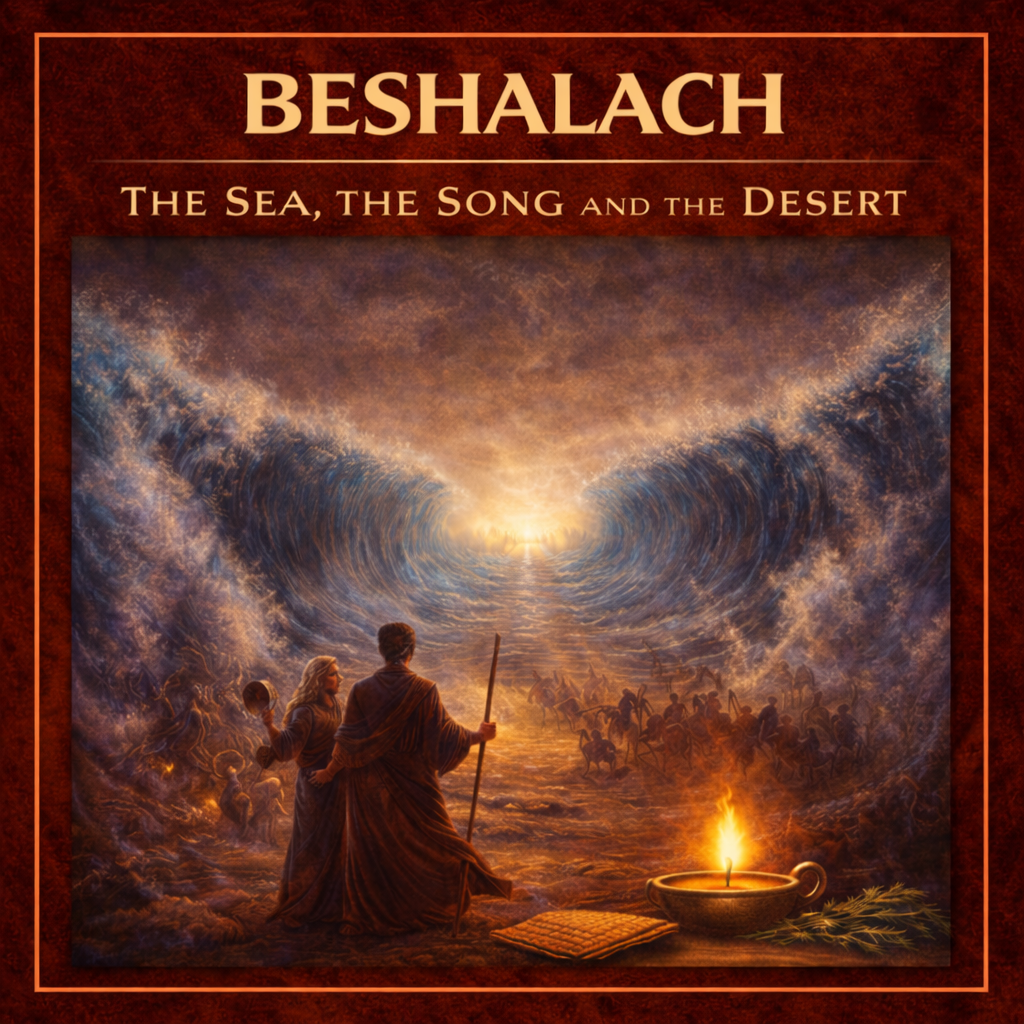
When Israel left Egypt, HaShem did not take them by the short way. He led them into the desert, around, slower, longer, because He knew something they did not yet know: the body can leave slavery in one night, but a slave mind needs a desert to die. By day, a pillar of cloud walked ahead of them. By night, a pillar of fire. Not distant signs, but companionship, a presence breathing with their fear, walking with the tremor still lodged in their bones when they looked back. Freedom had been born inside Egyptian houses, protected like a small flame. Now that flame stepped into the wind. It exposed itself. It walked.
Then came the moment that split history in two. The Egyptian army drew near. Chariots thundered against the earth. Israel lifted their eyes and saw dust, iron, death moving towards them. Ahead: the dark sea. Behind: the past returning with armour and swords. The people cried out. Some shouted at Moshe. Some shouted to heaven. Many shouted because terror needs a voice. “Were there no graves in Egypt, that you brought us here to die?” Fear cut the air sharper than any blade. Moshe raised the staff. He cried out to HaShem. And the answer came like a blow: “Why are you crying to Me? Tell them to move.” There was no time for more words, no space for more doubts. Only one step waiting. The sea does not open before the step. It opens with the step.
Nachshon ben Aminadav entered first. Not because he was brave, but because he chose to trust. The water rose. Ankles. Knees. Thighs. Chest. Neck. Breath tightened. Cold bit. Water touched his mouth. And he kept going. Then the sea listened, not to words, but to movement, to decision. Moshe stretched out his hand. The east wind blew all night. It did not scream. It insisted. And the waters split. A path appeared where only abyss had been. Israel entered. They walked on dry ground between walls of water. The sea held them like a mother holds a child learning to walk.
Egypt saw and followed. They entered with the same force they had used to enslave and crush. But the sea recognises intention, not power. What opens through trust closes on arrogance. Wheels jammed. Panic reversed direction. And when the last Israelite reached the far shore, Moshe stretched out his hand again. The waters returned. The army vanished under the weight of its own violence.
No one plans a hymn. Song is born when the chest breathes again. Moshe opened his mouth and words poured out: “I will sing to HaShem, for He has risen above the risen…” But it was Miriam who released the music. For years of mud and lashes, she had guarded a tambourine, hidden, protected, waiting. Now she lifted it. Shook it. And the women followed. Feet dancing. Hands rising. Throats singing what generations of tears had silenced. And the sea behind them answered with its murmur. When song returns, inner freedom has already begun.
Three days later, thirst came. They found water at Marah. They ran. They drank. And spat it out. Bitter. Unswallowable. The people complained. The joy of song evaporated like desert dew. “What shall we drink?” Marah was not punishment. It was a mirror. It revealed what Egypt had left inside: bitterness still living in them. HaShem showed Moshe a tree. He threw it into the water. The bitter changed. Not by magic, but by seeing, by facing, by learning that healing begins when you stop running from pain.
Then hunger came. “We should have died in Egypt, by the pots of meat…” Nostalgia lies better than anyone. It turns chains into golden memories. Then it fell. Manna. Bread from heaven. Effortless food, with one condition: only enough for today. Whoever stored it found worms and rot. Anxiety spoils everything it touches. They had to learn something deeper than political freedom: trust. To live today. To receive without hoarding. When Shabbat came, manna fell double the day before. For the first time since Egypt, they stopped without guilt, rested without fear, breathed without urgency. Trust is eating today. Creation is stopping.
Amalek came. Not from the front, but from behind, targeting the tired, the weak, the stragglers. Amalek is cold doubt, the voice that appears when you think you cannot go on. Joshua fought below. Moshe climbed the hill with Aaron and Hur. He lifted his hands. As long as they were raised, Israel prevailed. When they fell, Amalek advanced. His arms burned. Shook. He could not hold them alone. So they placed a stone under him and held his hands, one on each side. The battle was not won with swords. It was won in shared vulnerability, in supported faith, in community that refuses to let someone collapse alone. Faith held together does not fall.
This is transformation: where escape becomes song, where desert teaches presence, where the sea opens from within. The people who crossed were not the same who entered. They went in afraid. They came out singing. They entered as fugitives. They emerged as a people. They learned that fear loosens only when you walk inside it, that reality opens to surrender, that bread falls for today, that freedom is stopping without fear. And they learned one more thing: the sea opens to the rhythm of a heart that dares.
The desert continues. The road is long. But they no longer walk alone.