
Parashah Beshalaj — Existential Lessons
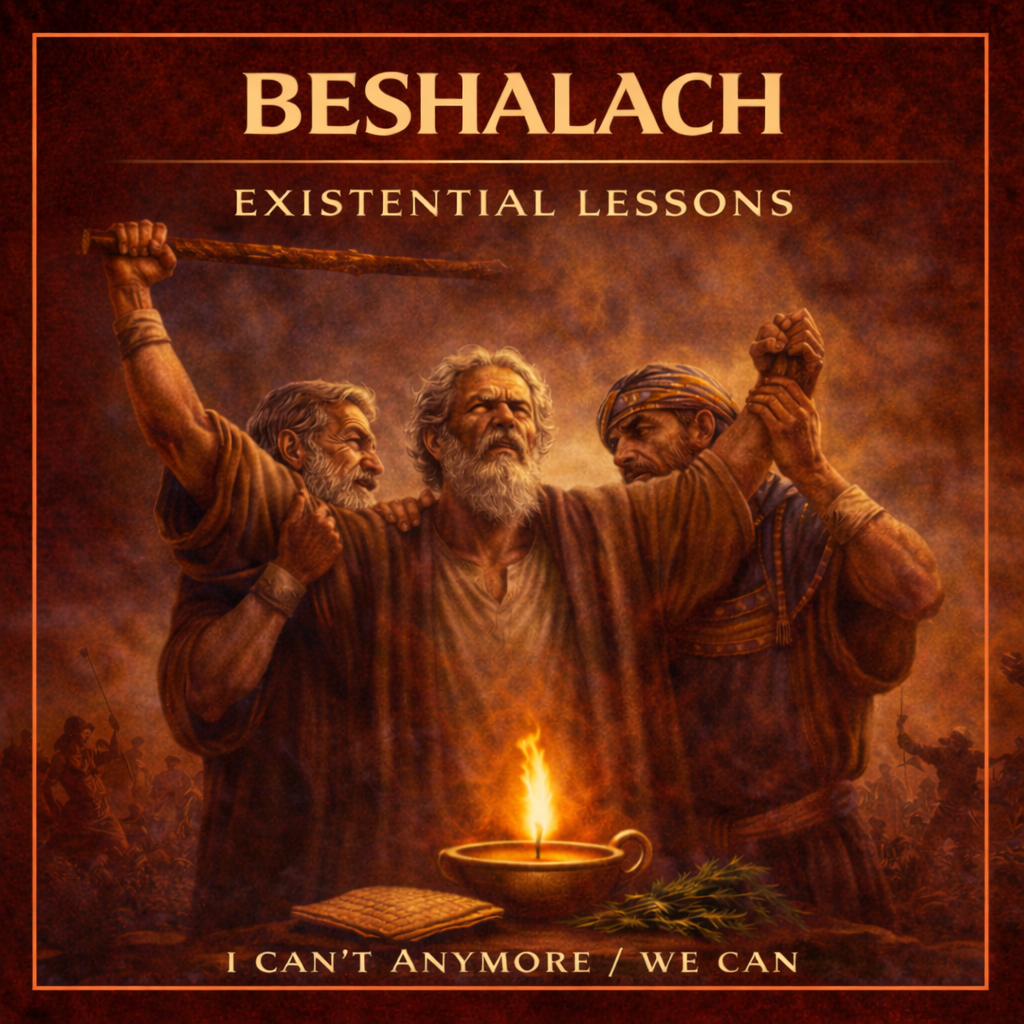
Parashah Beshalach — Existential Lessons
Learning to Be Free Without Running
The first lie of freedom is thinking that it ends when you leave prison. It does not. That is where it begins. Beshalach shows that the body can leave Egypt in one night, but the inner Egypt takes much longer to die. It walks with you. It whispers when you are afraid. It suggests going back when the road turns to dust in your mouth. That voice is familiar. That voice knows your name. That is why HaShem does not take the short road. Not as punishment, but as protection. Because freedom without process breaks in the first strong wind. A soul that skips the desert looks for chains when the first sea appears. The pillar does not give instructions. It stays close. It breathes with your shaking.
At the sea, Israel does not doubt out of ignorance. They doubt because they remember too much. The lashes. The hunger. The humiliation burned into their backs. When the past returns armed, memory becomes an enemy. They cry not because they are ungrateful, but because fear needs an exit. When the future disappears and the sea is black and closed, the past becomes shelter — even if it was hell. “Were there no graves in Egypt?” That is not sarcasm. That is panic. HaShem says something hard: not everyone who wants freedom is ready for uncertainty. Desire is not enough. Intention is not enough. You need feet. The sea does not open to calm you. It opens to force a decision.
Nachshon walks in before there is a path. Water rises. Knees. Thighs. Chest. Breath shortens. Cold bites. Neck exposed. No sign. No voice from above. Only dark water. He does not negotiate with fear. He walks into risk. That soaked body before the miracle reveals the most uncomfortable truth about faith: first you step, then you understand. Faith is not intellectual certainty. It is bodily exposure. It is placing your body where there is no ground yet. It is feeling yourself drown and still moving. That is why the miracle answers the step, not the prayer. Prayer without movement floats. Movement without guarantees opens paths.
Song does not appear at the edge. It appears after. When the body confirms it is still alive. When the throat swallows without terror. When the soul catches up with the body. Miriam kept her tambourine in Egypt because she knew the night was not final. She did not know when. She did not know how. She just knew it would end. That quiet hope, hidden between bricks, protected from lashes, carried generations. Now she releases it. And sound says what words cannot: we survived. True healing is not forgetting. It is singing without lying. It is letting the mouth that screamed in terror sing joy without denial.
Marah comes quickly, three days after the miracle, as if life says: do not fool yourself, there is still work. They find water. Run. Drink. Spit. Bitter. Impossible. The bitterness is not outside. It is inside. What Egypt left embedded: distrust, resentment, exhaustion, waiting for blows. That does not vanish with a song. It sticks to the ribs. HaShem does not erase it with a snap. He shows a tree. Moshe throws it in. And bitterness changes. But the tree is bitter too. Healing is not deleting wounds. It is learning to look at them without choking. It is learning that pain does not have to rule you.
Manna destroys an old logic: store to survive, hoard to feel safe, control to avoid fear. But stored manna rots. Worms. Stench. Anxiety turns blessing into waste. Beshalach reveals something brutal: not everything you accumulate will sustain you; much of it will poison you. Living on manna means living in the present. Receiving today. Releasing tomorrow. Trusting it will fall again. Shabbat seals the lesson. Double falls before. Then you stop. Without guilt. Without panic. Resting without guilt is an act of faith.
Amalek does not come when everyone is singing. He attacks when you are tired, when you have given a lot, when nobody claps, when only dust remains. Then comes the voice: was it worth it? wasn’t it better before? Not an external enemy. Exhaustion turned into a question. He bites from behind, the slow, the lonely, the worn out. That is why the battle is decided above, in raised hands, in supported faith, in community. No one defeats Amalek alone.
Moshe does not win because he is strong. He wins because he admits he is not. Arms burn. Shake. He sits. He lets himself be held. No shame. Beshalach breaks the myth of the invulnerable leader. True authority is born when someone says, I can’t anymore, and others answer, we can. Mature faith is not self-sufficiency. It is conscious interdependence.
The greatest risk after Egypt is not returning. It is living in the exit story. I left. I woke up. I broke free. And staying there. Displaying scars. Building altars to old pain. Not walking. Beshalach teaches: leaving is the threshold, not the journey. Do not turn your wound into a flag.
They cross. They sing. They fail. They complain. They learn. They fall. They rise. Again. No straight line. Only zigzag. Freedom is not a state. It is a muscle. It is trained. Choosing trust. Choosing presence. Choosing community. Again and again.
Beshalach does not glorify miracles. It glorifies slow transformation. Steps in water. Songs after tears. Rest without guilt. Hands that hold. And it engraves this in the body: freedom is not having no fear; it is walking with fear without obeying it. Stepping while water rises. Singing while bitterness remains. Resting while anxiety screams. Letting yourself be held when you want to be strong.
Because the sea opens once.
But the desert…
The desert is crossed every day.
With thirst.
With fatigue.
With shared hands.
And crossed anyway.