Parashah Bo — Freedom born in darkness
PARASHAH BO — Freedom born in darkness
History doesn’t always move forward in light. Sometimes it moves in the dark — the kind of dark where you feel stupid even hoping. Bo lives there. That second before dawn when the night gets so thick it almost hurts to breathe.
Egypt isn’t a shining empire anymore. It’s cracked. The Nile stinks. The land is scraped clean. The sky feels shut. And Pharaoh still says no — not because he’s strong, but because he’s terrified. Because surrender doesn’t just mean losing power. It means dying as the person who needed power to exist.
And that’s the thing: ego would rather drown inside a known hell than step into an unknown freedom.
“Bo el-Paró”: go in
The parashah opens with a command that’s honestly unsettling:
בֹּא אֶל־פַּרְעֹה — Bo el-Paró.
Not “go.” Not “speak.” Not “try.”
Enter.
Enter Pharaoh. Enter the centre of the thing that denies you. Go right into the machinery of it. Don’t stand outside analysing it like it’s a documentary.
Moshe has trembled in front of that palace his whole life. But now he’s told to step inside anyway. Not because he suddenly became fearless. But because the time for circling is over.
And here’s Bo’s brutal truth: freedom doesn’t start when you feel brave. It starts when you stop negotiating with your fear.
You can’t leave Egypt without meeting your own Pharaoh — the part of you that clings to what destroys you because at least it’s familiar. The voice that says, quietly, “Better this pain than that unknown.”
Moshe enters.
And something shifts — not in Pharaoh (not yet), but in Moshe.
Because you discover something weird when you walk into what you’ve avoided for years:
Fear doesn’t kill you.
It shakes you.
Then it passes through you.
And you’re still there.
Locusts: when control eats everything
The locusts come like a living storm. They swallow what’s left — crops, trees, anything green, anything that still looked like tomorrow.
It’s not only punishment. It’s exposure.
A system built on control eventually eats itself. Pharaoh tried to control time, bodies, labour, even the inner life of the Hebrews. Now that same impulse turns on Egypt. Because when you squeeze life too hard, you don’t preserve it — you crush it.
His advisers are begging him: “Do you not see Egypt is ruined?”
But he can’t hear. Because hearing would mean letting go of the throne.
And some people would rather burn down the whole world than admit they were wrong.
Darkness: paralysis
Then comes the plague that hits even deeper — darkness you can touch. Not poetic darkness. Heavy darkness. The kind that sticks to your skin and makes you forget direction.
For three days Egypt can’t move.
Not “won’t”. Can’t.
That’s terrifying, honestly. There are states like that in human life too. You can be alive and still be stuck. You can be moving and still not be going anywhere. Your body works. Your mind talks. But your soul is frozen.
And here’s the detail that breaks me every time:
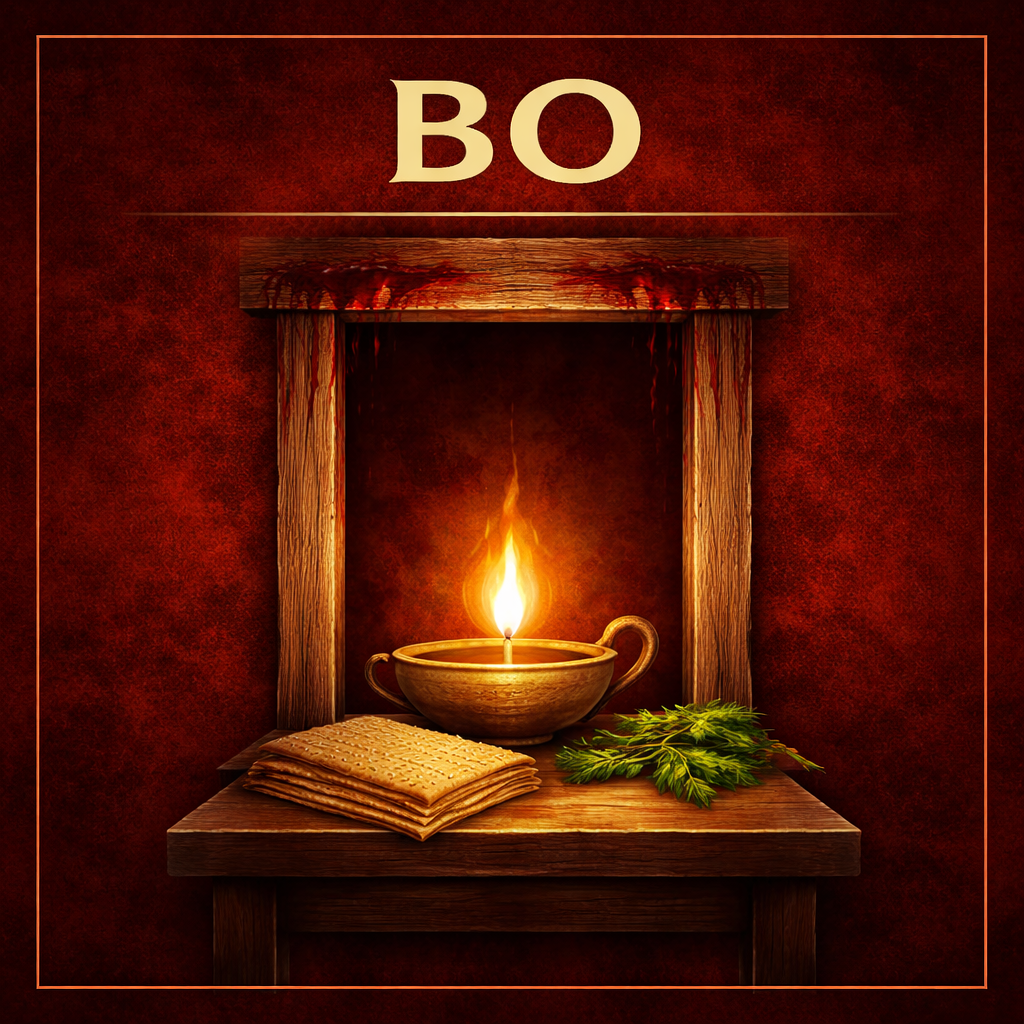
In the houses of Israel, there is light.
Not fireworks. Not divine theatre. Just… domestic light. A small flame. A table that stays a table. People eating. Children asking questions. Someone cutting food while outside the world is falling apart.
That’s how redemption begins. Quietly. In the home. In the smallest faithful place.
What must die
Midnight comes in silence. Then the scream hits — the firstborn of Egypt die. From the palace to the last house. No one escapes it.
It’s the most terrible blow, and also the most symbolic: the firstborn is continuity. Future. The claim that “I will last forever.”
That night, the centre collapses. The ego’s promise collapses.
And Pharaoh finally yields — not because he gained wisdom, but because the illusion finally shattered.
A meal in the middle of chaos
While Egypt screams, the Hebrews are… cooking.
That detail is insane. But Torah does it on purpose.
The first communal commandment is: prepare Korban Pesach. Take a lamb. Let it live among the children for days. Then slaughter it, roast it, paint the doorway with blood, eat in haste — shoes on, staff in hand.
This isn’t only ritual. It’s rebellion.
The lamb is sacred to Egypt. Slaughtering it is saying: your gods don’t own us.
The blood on the threshold is saying: this house has a boundary now.
Freedom needs a border. Not a feeling. A border.
Time changes hands
Then HaShem resets the calendar:
“This month shall be for you the first of months.”
That’s not a cute spiritual detail. It’s liberation.
If your time belongs to Pharaoh, you’re still enslaved. If your days are counted in quotas and exhaustion, you’re still inside Egypt. Torah gives the people their time back. Their rhythm. Their beginning.
Tell your son
And then Torah ends Bo with something that almost sounds ordinary:
“And you shall tell your son.”
Because humans forget.
And forgetting is how slavery returns wearing a new costume.
Freedom isn’t a one-time event. It’s a practice. A story you live again.
Not “they left.”
“I left.”
Entering to leave
Bo is the paradox: to leave, you must enter.
Enter your fear. Enter your darkness. Enter the part of you that refuses to yield.
Because true exit doesn’t begin when doors open.
It begins when you mark your threshold and say:
This is where Egypt ends.
And even if your knees shake, you step in anyway.
And you don’t go back.