
Paris-Washington: The clash of diplomatic paradigms
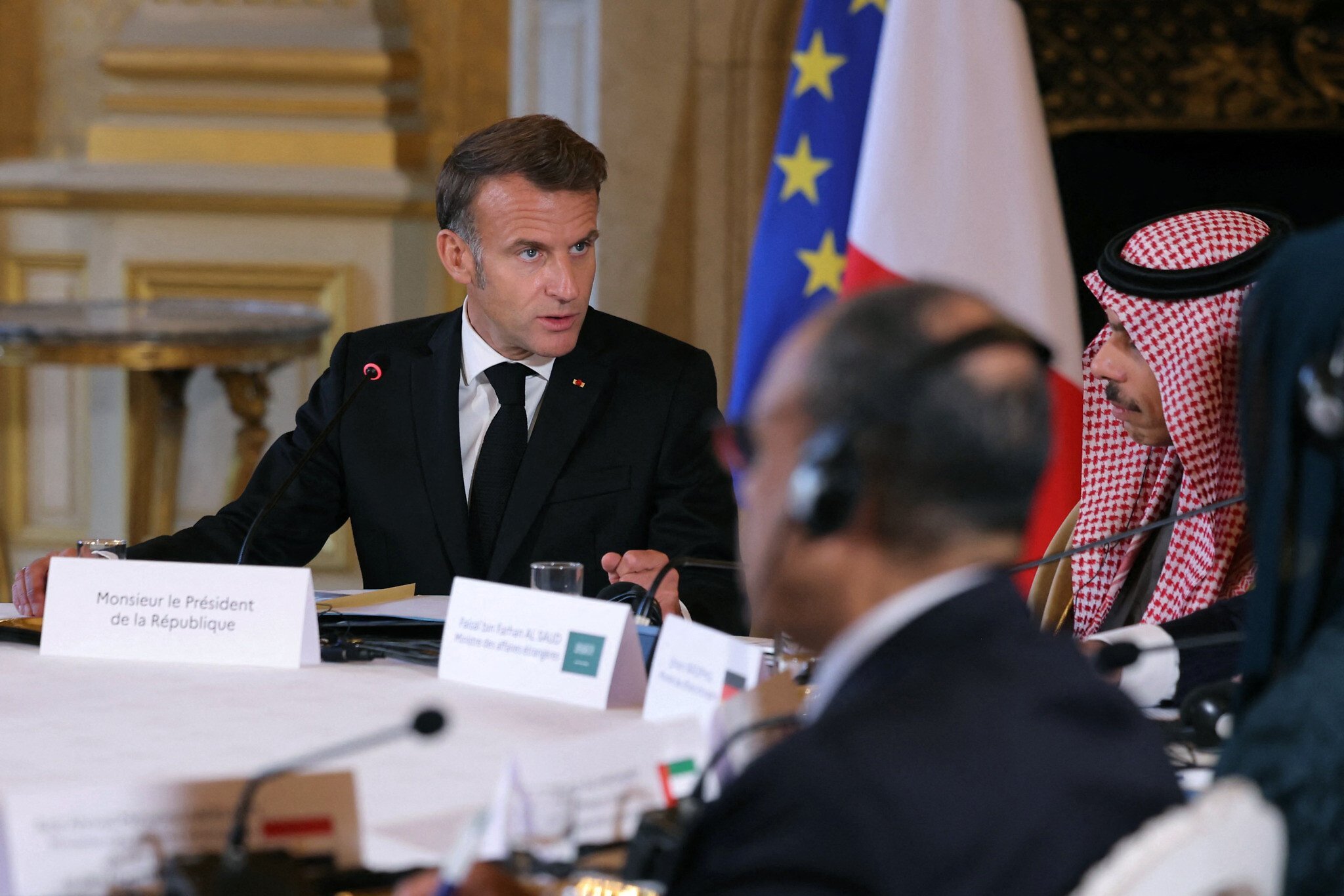
The paradox is striking: at the moment when Donald Trump, back in the center of the Middle East game, manages to snatch an agreement between Israel and Hamas around a plan for ceasefires and hostage exchanges, French diplomacy claims to be the inspiration. Emmanuel Macron and his foreign minister claim that “the American plan is inspired by the French initiative” and that the recognition of the State of Palestine by Paris would have contributed to creating “a climate conducive to peace.”
Yet, everything in the philosophy of this plan contradicts the French paradigm.
Two visions of the world face-to-face
For twenty years, Europe—and France in particular—has been anchored in a ‘symbolic’ approach to the Israeli-Palestinian conflict: political recognition as a prerequisite for peace.
The idea, inherited from the Oslo Accords, is simple: to give the Palestinians the perspective of a state, even before security conditions are met, to consolidate the moderates and marginalize the radical factions. From this perspective, recognizing Palestine is not a reward: it is a bet on moderation, a gesture of faith in the performative power of the diplomatic symbol.
Donald Trump has adopted the opposite logic: that of brutal realism, assumed balance of power, and reverse sequencing.
For him, recognizing Palestine today would be like ‘offering a bonus to Hamas.’ Recognition only has value after an agreement, never before. Its approach is based on a triptych: deterrence, transaction, and legitimation.
In other words: security first, politics next. It is only once Hamas has been neutralized and the hostages released that a reconnaissance can eventually come into play.
Two paradigms, two diplomacies
The European paradigm is based on the normative: making legal and moral legitimacy the basis of a political process.
The Trump paradigm is based on the balance of power: do not concede anything before proof of a concrete change on the ground.
Behind these two diplomatic schools lie two visions of the world.
For Europe, international stability is based on law: UN resolutions, recognition of borders, and primacy of the symbolic.
For Trump, it relies on deterrence: respect is earned; he does not declare himself.
In French doctrine, the recognition of Palestine was supposed to reopen a political horizon, restore visibility to a torn people, and offer a framework for moderation.
In the current American doctrine, premature recognition is only an incentive to blockage: it weakens the negotiating levers and strengthens radical actors who feed on the status of victims.
French opportunism: not being a spectator
When Paris claims today to have inspired Washington, the objective is not so much to assert intellectual paternity as to avoid strategic marginalization.
French diplomacy, weakened in the Near East since the failure of European mediation attempts, seeks to remain visible in a file where the Americans, the Israelis, and the Egyptians have taken control.
Recognizing Palestine, as France did in 2025, was part of a logic of moral positioning: asserting loyalty to international law, recalling that Europe does not renounce the two-state solution, and distinguishing itself from Washington.
But when the Trump plan succeeded, Paris found itself faced with a dilemma: recognizing that the American approach—the one it considered cynical—was producing tangible results.
An inversion of diplomatic sequencing
The heart of the divergence lies in the sequencing of the peace process.
France prioritizes politics to enhance security, while Trump prioritizes security to influence politics.
The US plan imposed on Hamas a ceasefire under Egyptian supervision, gradual disarmament supervised by a regional coalition, and a partial return of the Palestinian Authority to the Gaza Strip under international supervision.
It is only at the end of the chain—and under conditions—that a political recognition or status of the territories could be considered.
In European doctrine, the reasoning is reversed: recognition precedes stabilization because it is supposed to create the psychological conditions for peace.
But the Trump sequence demonstrates that psychology is not enough: first there must be a stabilized balance of power, without which all political legitimacy dissolves into chaos.
Trump and the return of realism
The «Trump plan» is not meant to change international law; instead, it is meant to briefly get around it so that there is some order again.
This method shocks the Europeans, accustomed to procedural multilateralism, but it seduces a number of regional actors: Egypt, Jordan, the Emirates, and even Saudi Arabia.
Everyone sees it as effective pragmatism: getting results that can be measured before starting up big political debates again.
For Trump, peace is not an ideal: it is a negotiable diplomatic product.
He has made diplomacy an extension of management, where efficiency takes precedence over morality, and recognition is earned.
In this context, France, by insisting on the recognition of principle, seemed to offer a moral bonus to an actor still armed and violent, which the American doctrine considers counterproductive.
This diplomatic shock also reveals the crisis of European multilateralism.
The European Union continues to speak the language of law and symbols, but its real influence in contemporary conflicts has been considerably reduced.
The war in Ukraine, the fragmentation of the Middle East and the emergence of regional powers (Turkey, Iran, Saudi Arabia, and Israel) have shifted the diplomatic center of gravity.
Peace according to Trump: constraint, deterrence and political bonus
The American plan marks the return of an instrumental and hierarchical diplomacy:
Ceasefire and release of hostages.
Military neutralization of Hamas.
International supervision of reconstruction.
Opening of a political process under conditions.
The recognition of Palestine is not excluded, but it becomes a currency of exchange, not a prerequisite.
It will only be possible once the security of Israel is guaranteed and the Palestinian governance is restored. This is the logic of the ‘deal’: nothing is free; everything is conditional.
This pattern contrasts with French philosophy, where recognition precedes action in the name of a certain idea of international justice. But in the most unstable region of the world, Trump imposed a simple principle: justice without security is an illusion.
A sustainable geopolitical turning point
The battle of narratives between Paris and Washington goes beyond the Israeli-Palestinian question. It illustrates a historical shift: that of the Western diplomatic leadership. Europe talks about law; America acts on facts. One seeks legitimacy; the other seeks efficiency. And, for now, it’s efficiency that scores.
France wants to remain on the side of morality while taking advantage of the effects of a diplomacy of force that it publicly condemns. But the observation is there: the Trumpian paradigm now dominates the Middle Eastern scene. And if peace were indeed to be consolidated in the coming months, it would be the victory of an approach that Paris considered ‘cynical’ yesterday—and which, paradoxically, is today producing the initial tangible results.
The Macron-Trump duel in the reading of the peace plan is not just a diplomatic ego dispute. It is the confrontation of two visions of international politics: the first seduces consciences, and the second shapes facts.