
Parshah Through the Mediator’s Lens: Naso
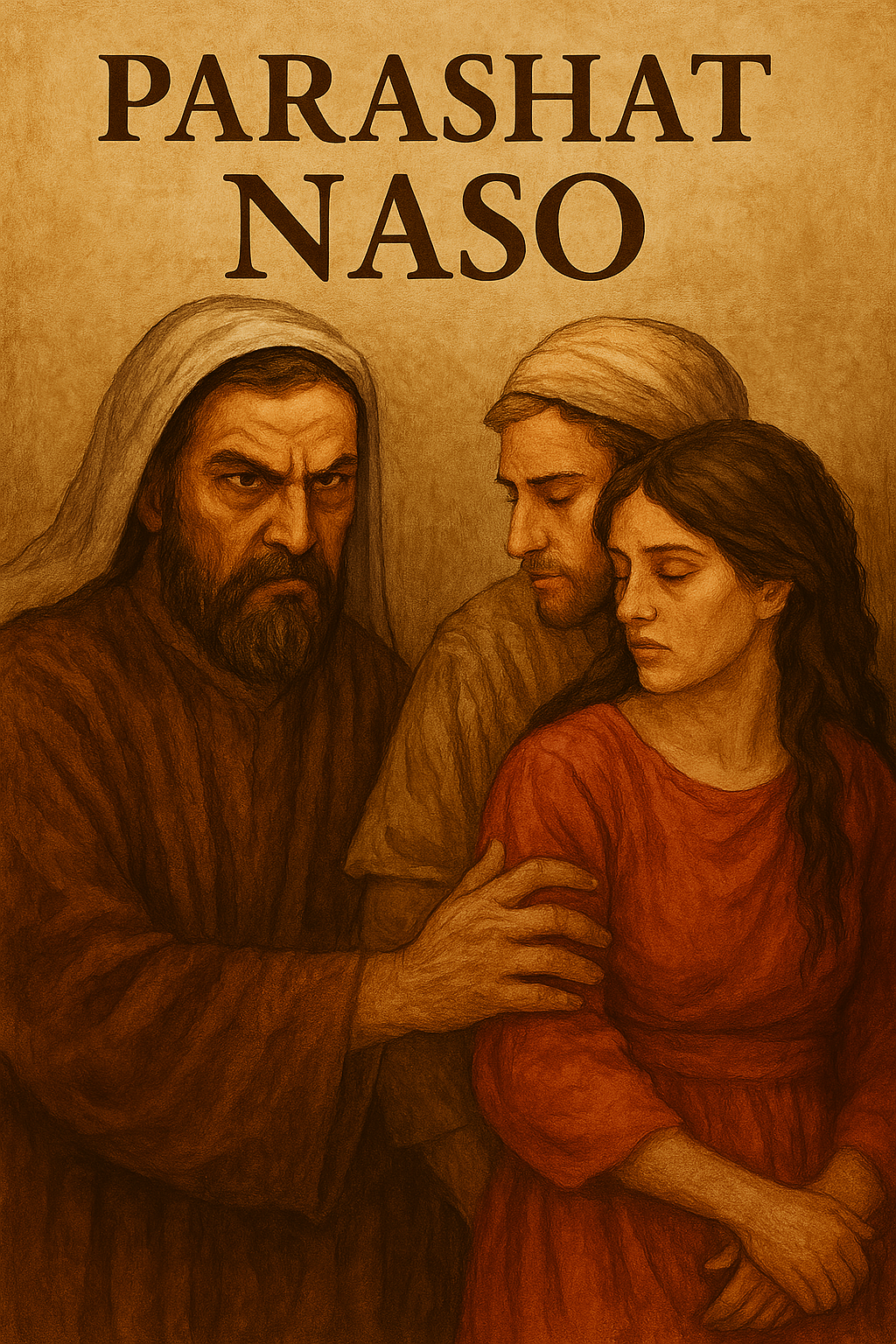
In the Torah portion Naso (Numbers 4:21–7:89), we encounter one of the more emotionally and legally complex sections: the Sotah ritual, which provides a procedure for resolving a husband’s jealousy and suspicion of infidelity where there are no witnesses and no clear evidence. This passage presents a deeply complex conflict: a husband, overcome by jealousy, suspects his wife of infidelity, leading to a public and ritualized resolution.
Understanding the Conflict
The Sotah ritual is a response to suspicion without proof rather than proven wrongdoing. The husband, unable to resolve his doubts, brings his wife before the priest, where she undergoes a trial by ordeal, drinking bitter waters that will reveal her innocence or guilt. While the ritual is ancient and divine in nature, the emotional core is modern: suspicion corrodes relationships, and unresolved accusations can destroy trust, reputations, and peace of mind. This process raises profound ethical and legal questions: How do we handle accusations when evidence is lacking? How do we balance justice with dignity?
Applying Naso’s Conflict to Modern Mediation
As a mediator, I see parallels between the Sotah ordeal and contemporary disputes rooted in mistrust. Whether in family law, workplace conflicts, or business disputes, unresolved suspicion can be as damaging as actual wrongdoing. The Torah’s approach teaches us several lessons:
- The Danger of Assumptions while Addressing the Underlying Emotions – The Sotah ritual highlights how unchecked suspicion can escalate into formal proceedings. In mediation, we emphasize fact-finding over assumption, ensuring that emotions do not simply dictate outcomes. At the same time, we cannot ignore feelings of fear or betrayal. As mediator, I must help parties acknowledge emotions before any resolution occurs.
- Public vs. Private Resolution through a Safe, Structured Process – The Sotah process is public, exposing the accused to communal scrutiny. Modern mediation, in contrast, prioritizes confidentiality and neutrality, allowing parties to resolve disputes without unnecessary humiliation.
- Restoring Trust through Restorative Outcomes – If the woman is found innocent, the marriage is expected to continue. However, trust, once broken, is difficult to rebuild. Mediation focuses on reconciliation strategies, helping parties move forward with mutual understanding rather than lingering resentment.
Conclusion
Parashat Naso reminds us that conflict resolution is not just about determining right and wrong; it can be about restoring relationships. Whether in ancient Israel or today’s legal landscape, the key to resolution lies in communication, fairness, and the pursuit of truth without unnecessary harm.
—
Each week, Ari Sliffman, a Jewish legal mediator in Philadelphia, Pennsylvania discusses the week’s Parshah “through the lens of a mediator.” Ari focuses on one or two sections of the Parshah and discuss how a mediator could have assisted with the relevant conflict.