Parshah through the Mediator’s Lens: Vayera
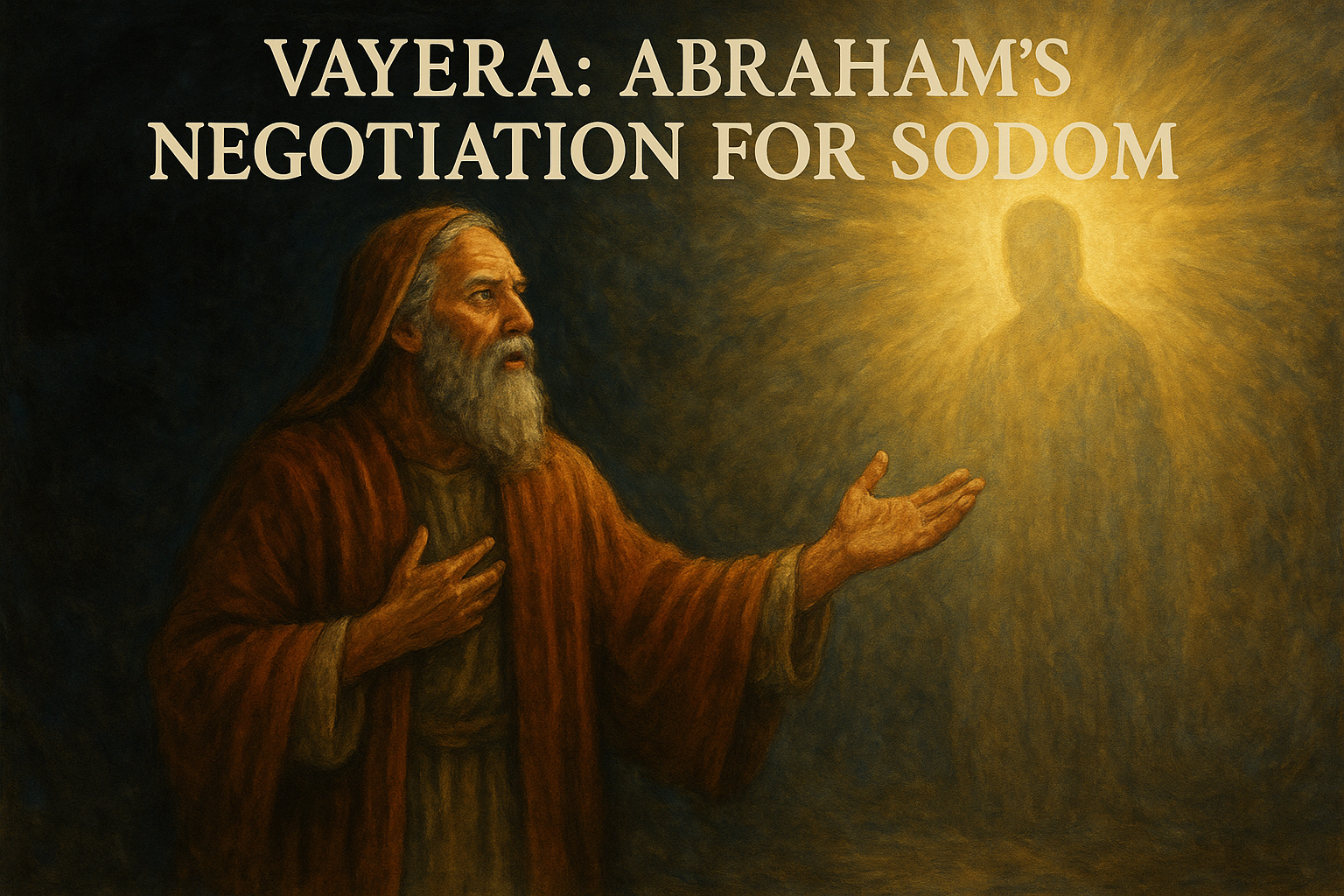
The Torah portion Vayera (Genesis 18–22) is filled with dramatic episodes including divine visits, destruction, birth, and near-sacrifice. But beneath the miracles and moral tests lies a reflective story about negotiation and advocacy: Abraham’s dialogue with G-d over the fate of Sodom and Gomorrah.
While other portion sections may dominate our Rabbi’s d’var, Abraham’s plea for Sodom offers one of the Torah’s earliest examples of principled negotiation that resonates deeply with modern conflict resolution.
The Conflict: Abraham and Divine Justice
When G-d reveals plans to destroy Sodom for its wickedness, Abraham responds not with silent obedience, but with moral courage. He asks, “Will You indeed sweep away the righteous with the wicked?” (Genesis 18:23). Then begins a remarkable negotiation:
Abraham starts boldly by asking, “Suppose there are fifty righteous within the city; will You spare it?” G-d agrees. Then Abraham gradually lowers the numbers to forty-five, then forty, thirty, twenty, and finally ten, each time securing G-d’s assurance that the city will be spared for that number of righteous individuals.
Abraham’s persistence is not defiance; it is compassionate advocacy. He seeks justice, not only mercy. He balances respect for divine authority with a passionate concern for human life.
Lessons for Modern Conflict Resolution
Abraham’s negotiation with God offers timeless lessons for mediators, advocates, and anyone seeking peace amid conflict.
- Engage with Courage and Respect
Abraham models what skilled negotiators do: speak truth to power with humility and firmness. In mediation, parties can learn that assertiveness and respect are not opposites; they can coexist. Productive dialogue often arises when people feel safe enough to respectfully express difficult truths.
- Appeal to Shared Values
Abraham’s argument rests not on personal interest but on shared moral principles such as justice, fairness, compassion. In modern mediation, appealing to shared values (integrity, loyalty, or fairness) can bridge divides. Rather than focusing solely on outcomes, mediators help parties reconnect with the values that unite them.
- Incremental Problem-Solving
Abraham doesn’t demand that G-d overturn the plan entirely. He proposes step-by-step compromises, a hallmark of effective negotiation. Modern mediators encourage this same approach: break down big disputes into smaller, manageable questions, where incremental progress builds trust and buy-in.
- The Power of Persistence
Abraham doesn’t quit after the first concession. He continues, carefully and respectfully, until he reaches the lowest possible number. Persistence in negotiation, when paired with empathy, can uncover solutions that seemed impossible at first glance.
- Seeking Justice with Compassion
Abraham’s advocacy isn’t about winning, it’s about protecting the innocent. Similarly, the goal in many mediation settings is not victory but restoration. A good mediator channels Abraham’s blend of justice and compassion, helping parties balance fairness with forgiveness.
Seeing Justice as Relationship
The name of the portion, Vayera (“He appeared” or “He was seen”) reminds us that justice begins when we see one another. Abraham’s encounter with G-d transforms justice from an abstract principle into a relationship grounded in conversation, empathy, and moral clarity.
In modern disputes, whether between business partners, family members, or communities, the same principle applies: justice cannot thrive without communication. When we pause to listen, question, and seek fairness with humility, we bring divine qualities into human conflict resolution.
Final Thought
Abraham’s dialogue with G-d over Sodom is more than a biblical episode; it’s a blueprint for mediation. It teaches us that advocacy can be compassionate, fairness requires dialogue, and even the most entrenched positions can move through respectful persistence.
In every mediation, whether between business partners, family members, or colleagues, the spirit of Abraham’s negotiation lives on urging us to seek justice through empathy, and to approach every dispute not as a battle to win, but as an opportunity to understand, repair, and rebuild.
—
Each week, Ari Sliffman, a Jewish legal mediator in Philadelphia, Pennsylvania discusses the week’s Parshah “through the lens of a mediator.” Ari focuses on one or two sections of the Parshah and discuss how a mediator could have assisted with the relevant conflict.