
Educator, Mother, Learner, Wife — Guided by Torah
Parshas Vayechi and an Old World Truth About Chinuch
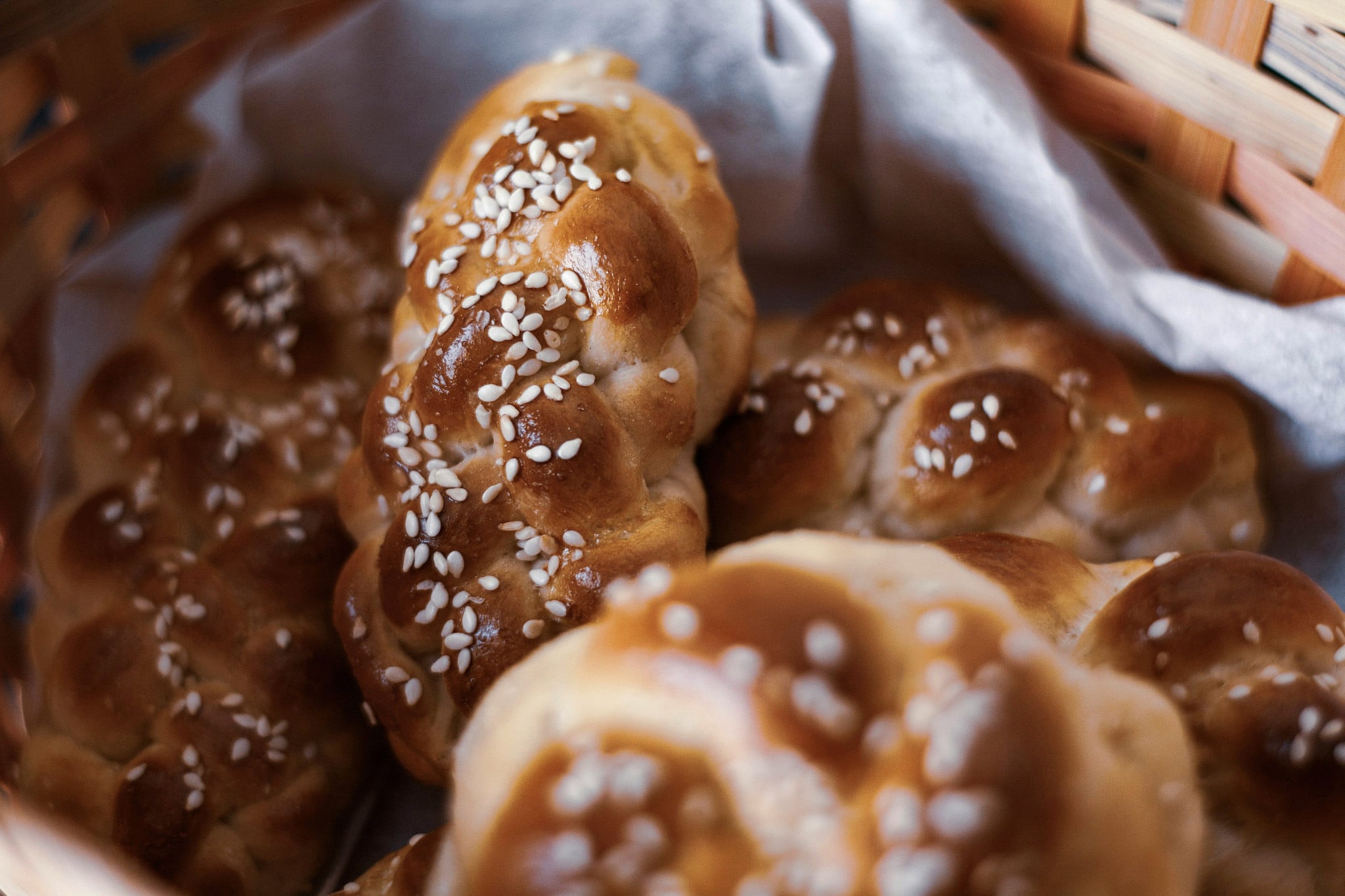
Let's not fix what isn't broken — like warm and heimishe challah (Svetlana, Unsplash).
Yaakov Avinu’s last words recover a maternal and conservative ethic of guidance, inheritance, and restraint.
Parshas Vayechi is not a loud parsha. It does not announce itself with fire or spectacle. There are no miracles that suspend nature, no journeys that begin anew, no moments of visible triumph. Instead, it unfolds quietly — around bedsides and within families, amidst whispered instructions, unresolved tensions, tears that are not hurried away, and words spoken carefully because there will not be another chance to say them.
And — perhaps — that is why it feels so close to real life.
Yaakov Avinu, nearing the end of a life filled with struggle, displacement, and spiritual intensity, does not use his final days to speak about himself. He does not recount his suffering, though he suffered greatly. He does not frame his life as a story of resilience or achievement. Instead, he gathers his children and speaks about them — who they are, what they carry within them, what their strengths are, and where their weaknesses may yet undo them.
This is not how we are trained to think about legacy today. Modern culture teaches us that legacy is about visibility — about being remembered, about leaving a mark, about ensuring that our presence lingers loudly even after we are gone. Parshas Vayechi teaches something older, quieter, and far more demanding: that a life well lived is measured not by self-expression or reinvention, but by how faithfully you prepare others to continue without you. Thus, the focus of this parsha is not the individual at the centre, but the future that will unfold in their absence.
As a yeshivish mother and a morah, this parsha does not remain abstract for me.
In the classroom, I see boys and girls every day who are desperate for clarity. Not affirmation — they receive plenty of that — but orientation. They want to know what is expected of them, what matters, where the lines are drawn, and whether the adults around them actually believe in what they are teaching. I have watched students test limits not out of rebellion, but out of uncertainty. I have seen how a child settles when expectations are stated plainly, and how anxiety grows when everything is endlessly negotiable.
What I see in my classroom does not end when the bell rings. I meet it again at home — when my daughter tests the very boundaries that, in truth, help her breathe.
There is a kind of chinuch today that prides itself on stepping back entirely, mistaking non-interference for wisdom — but Parshas Vayechi assumes, without apology, that adults are meant to stand in front of the next generation, not disappear behind it.
Yaakov Avinu does not leave his sons unanchored. He speaks to each one differently, according to who they are. He does not flatten them into a single vision of success, nor does he pretend that every path is equal. But neither does he abandon them to confusion. He gives them language for themselves — and then entrusts them with it.
Rov Samson Raphael Hirsch zt״l writes that chinuch is not the cultivation of originality, but the faithful transmission of a trust — the careful handing forward of something that does not belong to us alone. Parshas Vayechi embodies this vision. Yaakov Avinu does not innovate at the end of his life. He conserves. He preserves. He ensures that what he received is passed on intact, even as it will now be carried by others.
The Malbim sharpens this further, explaining that a brocha is not merely a hope for the future, but a moral assignment — a delineation of role and responsibility. Yaakov’s words are not predictions; they are charges. He tells each son not only what may befall him, but what is being asked of him. This is not softness. It is trust.
There comes a moment in motherhood — usually when one is utterly exhausted — when it becomes painfully clear that your children will not always need you in the same way. One evening you are tying shoes and cutting food; another, you realise they are watching how you decide what matters when no one is watching you. You begin to understand that much of what you give your children will only bear fruit long after you stop being central to their lives.
Yaakov Avinu understands this instinctively. His final acts are not about control or reassurance. They are acts of preparation. He blesses, he clarifies, he instructs — and then he lets go. There is profound restraint in this, and even deeper faith.
The brochas themselves are striking precisely because they are not soft. Yaakov does not offer vague encouragement or generic hope. He names what is dangerous as clearly as what is promising. He speaks honestly about impulse, temperament, and consequence. Love, in this parsha, does not mean smoothing things over. It means telling the truth while there is still time for it to matter.
This is something Jewish mothers understand instinctively.
An alte-velt Yiddishe mama did not speak in therapeutic language, but she understood reality. She knew that protection has an expiration date. You cannot always stand between your child and the world. You cannot intercept every disappointment or soften every blow. At some point, your role shifts. Your task is no longer to shield, but to equip.
You give direction.
You give memory.
You give a sense of where a child comes from and what they answer to.
On a Friday afternoon, standing in the kitchen in stockings with tired feet, my skirt brushing the cabinet as I move between counters, sheitel pinned securely, a goose roasting slowly in the oven, hands working almost automatically, this truth settles quietly. There is no audience for this work. No one applauds the repetition, the patience, or the discipline of tznius that shapes both posture and priority. Children drift in and out of the room, absorbing more than they realise — the seriousness, the calm, the way Shabbos is treated not as performance but as obligation.
This is not sentiment. This is transmission.

A rebbetzin once remarked that the loudest faith is often lived in kitchens, not speeches. Parshas Vayechi understands this. What lasts is rarely theatrical. What lasts is what is done faithfully, again and again, without fanfare.
As a morah, I recognise this same dynamic in the classroom. Children learn far less from what we announce than from what we repeat consistently. They are shaped not by grand speeches, but by whether we mean what we say and live accordingly. Yaakov Avinu does not confuse uniformity with continuity. He does not demand sameness from his sons. Each child is addressed as an individual, with a different task, a different struggle, a different destiny. What he insists upon is that the chain not be broken — even as it passes through very different hands.
This is why his insistence on being buried in Eretz Yisroel matters so deeply. Mitzrayim was not merely a place of exile; it was where Yaakov lived his final years, where his family found stability and function, where life went on. Sforno explains that Yaakov’s request was not a rejection of life in galus, but an act of orientation — a refusal to allow the present to define the ultimate direction. A person may live fully in Mitzrayim, yet still ensure that his feet are facing home.
Orientation matters. Direction matters. This is especially true when permanence is so tempting. Amongst parents today, there is enormous anxiety about outcomes. We hover. We intervene. We manage. We fear what might happen if we loosen our grip. We confuse involvement with responsibility and control with care. Parshas Vayechi offers a different model altogether: speak clearly, model consistently, and then trust what you have planted.
Not every child will flourish in the same way. Not every story will resolve neatly or according to plan. Yaakov Avinu knew this. He did not wait for perfection before blessing his children. He did not delay until outcomes were certain. He blessed them as they were, not as he wished them to be.
That, too, is chinuch.
Parshas Vayechi closes Sefer Bereishis quietly. There is burial. There is grief. There is uncertainty. The family remains in Mitzrayim, and exile is no longer theoretical. Nothing is resolved neatly, and nothing is celebrated prematurely.
Only afterwards do we say chazak.
As if to remind us that strength is not volume, not reinvention, not constant motion. Strength is continuity. Strength is restraint. Strength is the ability to hand something intact to the next generation and trust them to carry it forward.
This parsha leaves little room for the fantasy that boys and girls raise themselves, that values transmit automatically, or that a civilisation survives on good intentions alone. It insists — gently but firmly — that adults must choose to stand for something stable, even when it is unfashionable to do so.
As a chareidi mother and a Bais Yaakov morah, this is where I stand. I believe boys and girls need direction more than endless choice, inheritance more than novelty, and adults who are willing to remain present long enough to be quietly authoritative. Nevertheless, I know this stance will not always be popular, and that does not trouble me.
Parshas Vayechi teaches us that living well is not about how loudly you express yourself, but about what remains steady after you step aside.
That is not a modern lesson.
It is an old one.
It is the one I am trying — albeit imperfectly — to pass on.
Related Topics
Related Posts