
A Correspondent in Tel Aviv
Partner or Pirate? Turkey can’t be both
(AI)
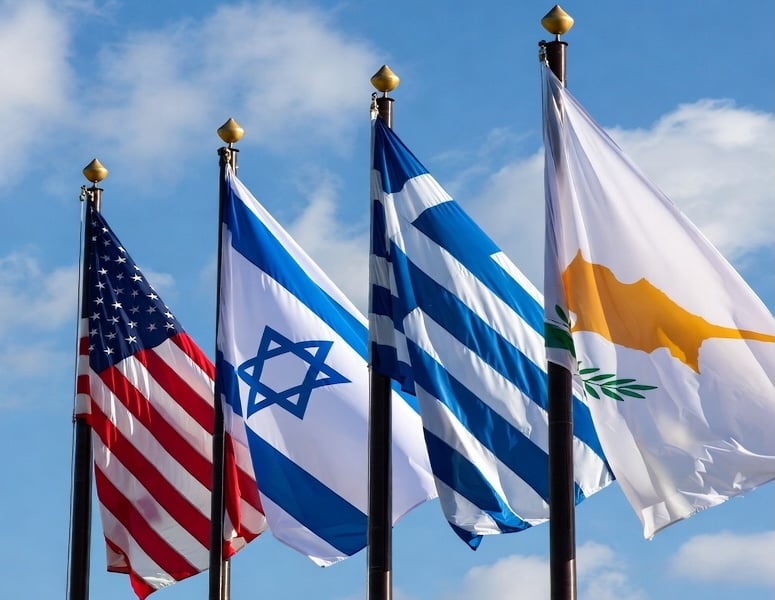
In the days following the 3+1 Energy Summit in Athens on November 6, which brought together the US, Israel, Greece and Cyprus, something was undeniably missing.
Since the first trilateral meeting between Israel, Greece, and Cyprus back in 2016, Ankara has steadily reacted by issuing statements denouncing these encounters as an attempt to exclude the country from regional energy planning. On many occasions Turkey also issued clear threats, primarily against the weakest part: Cyprus. Of course, Ankara also made threats against Athens as well as Jerusalem.
This time, Turkey remained silent.
It would be naive to assume that this unusual silence was due to anything other than US participation in the summit in Athens. After all, it was barely a month ago when, following the arrival in Cyprus of the Israeli air and missile defense system, Barak MX, Turkey’s foreign minister Hakan Fidan —the former head of Turkish intelligence and presumed successor of Recep Tayyip Erdoğan — called for the dissolution of the alliance, threatening that “Turkey will strike first” and labeling Cyprus “an Israeli base.”
And it would be even more foolish to assume that the U.S. took sides in the Southeastern Mediterranean by participating in the November 6 Summit.
However, one distinct reality cannot be ignored. Since the first Trilateral Summit nine years ago, Israel, Greece, and Cyprus have quietly and methodically built a strong partnership. A bond that, against all odds, withstood these past two years of tremendous pressure amid the systematic vilification of Israel and Jews worldwide.
With the critical support of the Jewish lobby in the U.S., Israel, Greece and Cyprus have turned this alliance into an important pillar in Washington’s plans for a definitive return to the Middle East, something which will allow the US to achieve stability and to pave the way for projects of historic importance and magnitude, such as the IMEC, the India-Middle East-Europe Corridor as well as a number of immense energy projects involving the majority of countries in the region.
Turkey is undoubtedly of great importance to the United States. However, it remains an anomaly within the region’s broader web of partnerships, which often require transcending history. Definitely not sad neo-Ottoman delusions that evoke bitter memories for Arabs and Greeks alike, nor selfish and aberrant behavior and constant provocations.
The new reality in the region does not favor this type of hegemony, all the more when the United States is the dominant power.
Turkey could very well become a partner if it chooses to stop acting like a pirate.
It must stop undermining stability, fomenting terrorism and promoting the malignant ideas of the Muslim Brotherhood.
It may or may not do so, of course.
But this new reality is also there.
Related Topics
Related Posts