Rabbi, Spiritual Director, Meditator & Dancer —
Pass-Over from the ‘I’ to the ‘We
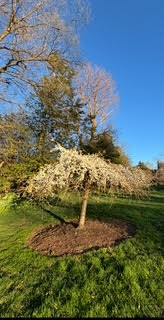
This is a photo I took nearby my house
From His-Story to Our Story
We hold so many stories—of our families, friends, ancestors, and, most of all, of ourselves. Some stories once supported or protected us, but are they still relevant to who we are becoming?
When do we bring an old story forward, and when do we reshape it—adding to it, tinting it with the colors of our lived experience today?
Research shows that much of this is formed through attachment relationships and limbic system development: positive caregiver interactions build secure trust, while trauma can embed lasting patterns of protection or hypervigilance. These felt experiences shape how I express myself—yet I can still discern and choose which stories I wish to carry forward, even when familiar narratives arise. Familiar doesn’t always mean true for this moment. And in this moment, I can and do feel safe in the adult becoming of the story I choose to be part of.
I can’t help but wonder: when do we come together to share a story we can all find ourselves within?
What is the story you are co-creating with me right here, right now, as you read these words?
Notice what arises.
What feels familiar in my language? What resonates? What does it bring up in you?
Can the story your mind is writing now become a shared story—you, me, and the words between us?
Similarly, the familiar Jewish Exodus and Passover story from the Hebrew Bible—retold and reimagined for thousands of years by people like you and me, sharing, listening, co-creating relevance for their time—evolves from personal enslavement to discernment, from an Abrahamic promise toward collective freedom. Jews have observed Passover since the Exodus (traditionally dated to the 13th century BCE), in Egypt’s Ramesside period, when powerful New Kingdom pharaohs ruled and the story of the Exodus is commonly set.
In that world, pharaoh was seen as divine or semi-divine, and Egypt’s large labor system helps explain the biblical memory of Israelites as forced workers. Passover also sat within a broader Near Eastern setting of seasonal cults, royal treaties, and spring death-and-rebirth myths that shared some features with liberation stories, even while differing in meaning.
So as we better understand the diverse stories of the ecosystems in which the Jewish tradition of the Exodus took part, we understand that many humans and storytellers invited their people to move from the “I” of enslavement under a leader (Pharaoh) to the freedom of the people—the “We.”
In Jewish terms, from a single family (Abrahamic) to a spiritual family of seekers (Israelites). It’s a story of freedom—of continually becoming. How are we moving today from the “I” of illness and monarchic models to the “We” of wellness and collective power?
In an age that urges individuality, self-branding, and recognition, can we pause to rewire, relearn, and remember?
Can we bridge differences and reconnect through what our words, feelings, and thoughts awaken, while honoring our shared ancestral lineage—threads of personal and collective freedom that weave us together?
As one mindful teaching from the Ānāpānasati Sutta (Discourse on the Full Awareness of Breathing, Majjhima Nikāya 118) reminds us:
“Breathing in, I liberate my mind.
Breathing out, I liberate my mind.
Breathing in, I observe the impermanent nature of all things.
Breathing out, I observe the impermanent nature of all things.”
How do you free your mind from what your story was—recognizing that it held a teaching for you, yet is no longer the whole truth of who you are becoming?
How might you hold and balance what still binds you—whether biological, spiritual, or ancestral—your family, values, respect, honor, and continuity—while growing from one story into another?
When do you grant yourself permission to free your mind from your personal story—to let go of His-story or Their-story—so you can unfold into the Our-Story, a shared story of honoring your ancestral past while stepping into the fuller story of who you are today?
May this be a season of telling, retelling, and becoming the tellers of the story we wish to take part in.
Rabbi Yonatan provides spiritual guidance and mindfulness coaching, as well as facilitates Men’s Circles and Men’s Work, at flexible, affordable rates.
To learn more and schedule a complimentary Zoom consultation, please visit www.yonatan-arnon.com
Related Topics