Passover’s Most Important Line?
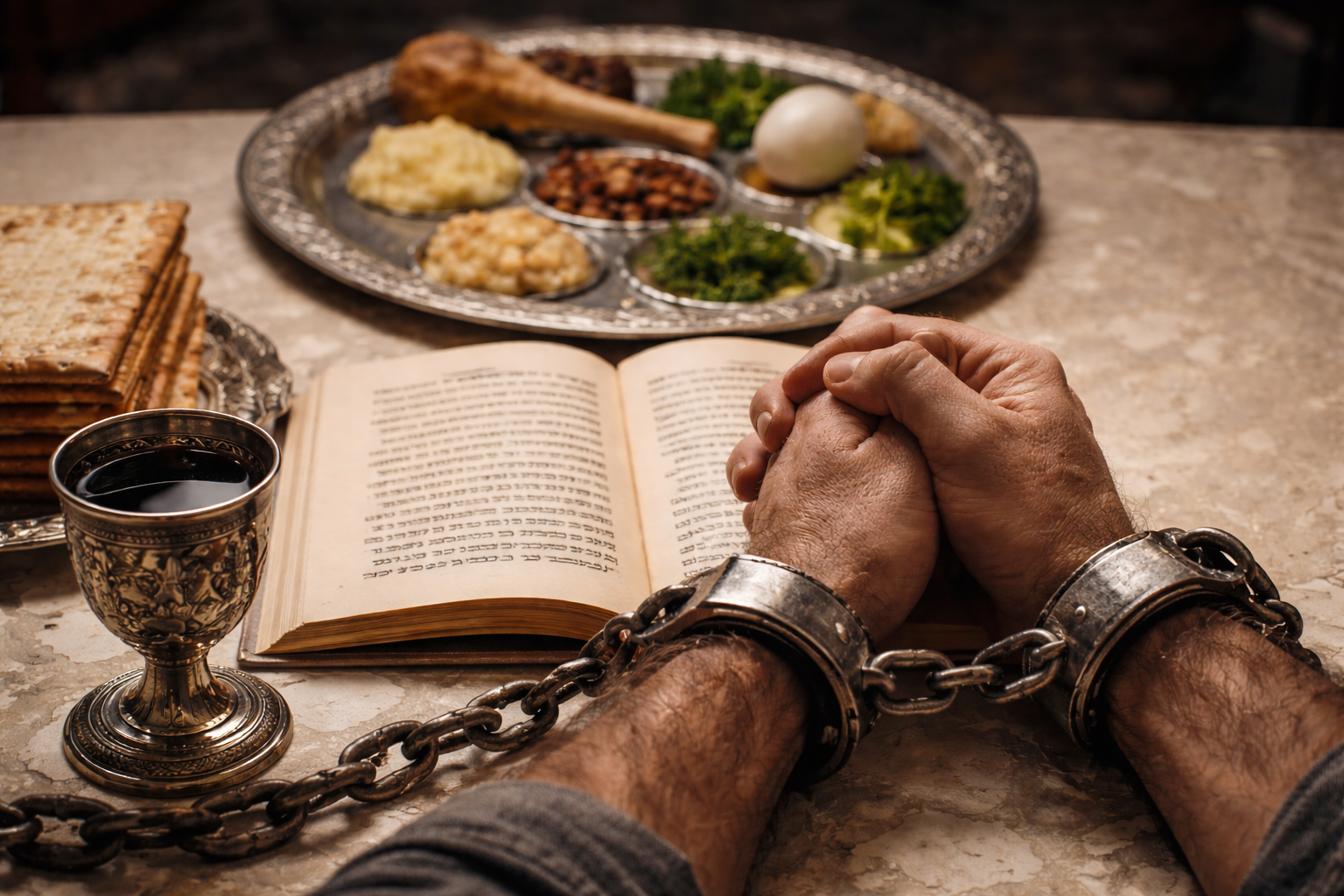
We are not free (generated by ChatGPT)
At the Seder, we end the Ha Lachma Anya (“This is the bread of affliction”) paragraph with a puzzling declaration:
הָשַּׁתָּא עַבְדֵי, לְשָׁנָה הַבָּאָה בְּנֵי חוֹרִין
“This year we are slaves; next year—liberated people.”
But we are not slaves. We are free people, living in free societies. Why do we say this?
Perhaps a deep insight is embedded here: freedom is not a private possession of individuals; it is a moral condition we are responsible for, collectively. As long as there are people who, because of our actions, live under oppression and are denied fundamental rights and basic liberties, then we are not free.
As the great abolitionist Frederick Douglass said:
“No man can put a chain about the neck of his fellow man without at last finding the other end fastened about his own neck.
When a society justifies domination, rationalizes brutality, and normalizes ethnic cleansing, it compromises its own freedom and severely corrodes its moral fabric.
Pesach has ended. But if we don’t demand an end to these destructive policies, we have missed its point entirely. We refuse to wait for a “next year” that will never come so long as we remain silent in the face of these atrocities. Only then can we truly be free.
Related Topics
Related Posts