Patrick Tudoret Interview | Alexandre Gilbert #306
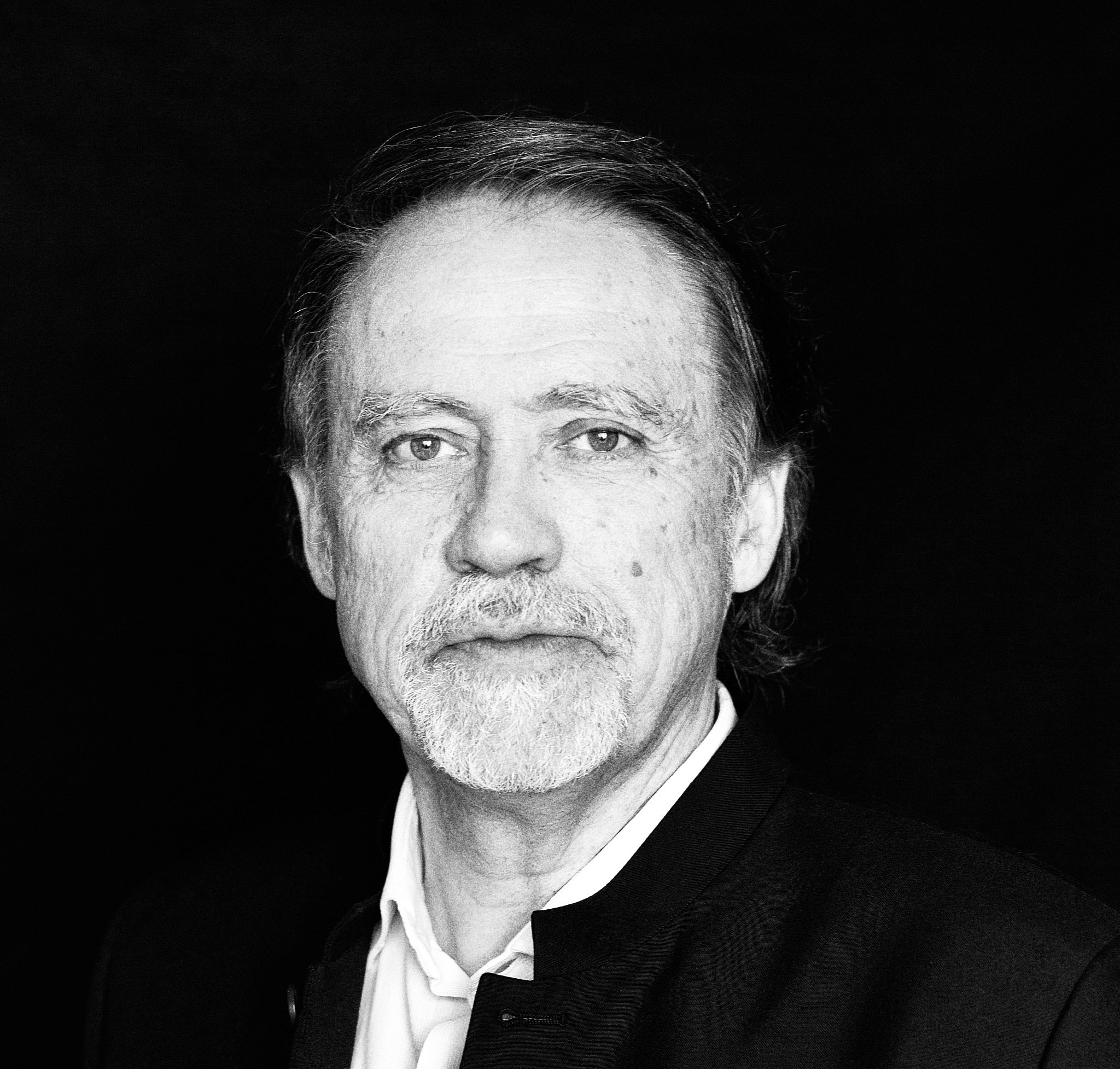
Let me say first: I’m one of those readers in his basement reading Patrick Tudoret who will save the planet, as Frédéric Beigbeder put it.
Patrick Tudoret: (Laughs) Ah, the great oracle of humanity, Beigbeder — the one who predicts destinies! I really thank him.
The terms oracle, prophecy, metaphysics, even preacher, all of which you associate with what Umberto Eco called neo-television following paleo-television, mark a shift contributing to what Barthes called “the death of the author.”
Patrick Tudoret: Yes, absolutely. It’s a political science study of power dynamics. I described what I called a tectonics of plates — borrowing from geology — between two constantly shifting continents: the televisual continent and the editorial continent. At first, the editorial world dominated, with the figure of the great writer commanding reverence and respect. This was the hallmark of paleo-television — a term I borrowed from Umberto Eco, one of my intellectual masters. Eco was both a novelist and a semiologist — from him I adopted the distinction between paleo-television and neo-television. Hosts like Pierre Dumayet or Pierre Desgraupes were deeply cultured — people steeped in the humanities — who approached authors with genuine reverence. They visited Claudel, Gide, or Mauriac on their home ground.
Then came a reversal. Structuralism and Barthes’ concept of “the death of the author” helped overturn that order. Neo-television emerged, honoring writers by inviting them onto television sets — but at a cost. The writer was summoned publicly to be heard. Some accepted the system; personally, I’ve refused certain invitations when they didn’t align with who I am. More recently, I’ve participated, even if television isn’t my preferred medium — precisely because I know it too well.
This new visibility created a chemical reaction: the author became overexposed. Like an overexposed photograph, the form remains, but the substance fades. The author’s image was everywhere, but the work itself receded. I remember debating this with Bernard Pivot when my book came out. Pivot admitted: “I never set out to celebrate literature. My only goal was to promote books.” He crawled over shards of glass to get Julien Gracq on one of his shows, but Gracq always refused, like Blanchot, Michaux, or Deleuze. That confession shows the shift — from celebrating art to promoting the market. But Pivot was a rather exceptional journalist and a kind of maïeuticien.
And that’s where economics took over. Authors invited onto television were those deemed bankable — those who could attract an audience. Literary merit became secondary. I predicted literary and cultural programs would decline after their 1990s golden age — which is exactly what happened. Today, on French television, there’s almost nothing left.
Patrick Tudoret: : Exactly — those were structuralists and post-structuralists. Even today, few fully grasp “structuralism” or the “death of the subject,” but Barthes, Foucault, Derrida, and others were central. Nietzsche announced the death of God — and contrary to popular belief, he didn’t rejoice; it was catastrophic. If God dies, man dies — and with him, the author. Foucault expressed it well: if God and man are dead, what remains is a hollow caricature — Nietzsche’s “last man.” There is something apocalyptic in this: the more the author is illuminated, the more he disappears. Writers often write books precisely so they don’t have to talk about them.
Like Salinger or Émile Ajar.
Patrick Tudoret: Yes. Jules Renard said it best: “Writing is the best way to speak without being interrupted.” Television reverses that logic. The “Seen on TV” label becomes absurdly powerful. In my thesis, I quote an editor who recounted hearing a woman at a book fair say to an author: “Now that I’ve seen you on television, I don’t even need to buy your books!”
(Laughs) That’s both funny and tragic.
Patrick Tudoret: Indeed. And that’s the absurd endpoint with writers who are more seen than read:
Amélie Nothomb, Fabrice Luchini, Michel Houellebecq or Bernard-Henri Lévy are authors we prefer to watch rather than read. Isn’t Sylvain Tesson like Romain Gary a writer who bridges both worlds, using that double-identity ?
Patrick Tudoret: Exactly. Tesson is fascinating because he belongs to both traditions. He understands market demands — the neo-television side — yet remains deeply tied to the paleo spirit of adventure and solitude. He even refuses to own a cell phone. He plays both games but stays anchored in an older ethic.
Michel Houellebecq is similar: visible yet able to withdraw. They’re “media” writers only in the sense that every appearance becomes an event, but they maintain distance. Others, by contrast, are writers only because television made them so.
That’s where sur-television begins — when visibility itself replaces substance. It’s the age of The Voice and reality shows, where ordinary people become instant icons. The old hosts such as Pivot served writers. Now the hosts, or even contestants, are the product. It’s a kind of cultural coup d’état.
This same mechanism invades literature. Some authors, celebrated for a debut, burn out as fast as they rise. I call them “effervescent writers” — they sparkle, then go flat. It’s what I describe as “the assumption of the author”: an ascent followed by disappearance, like the Virgin rising into heaven — beautiful, but gone.
Like winning a Prix Goncourt or an Oscar, and vanishing.
Patrick Tudoret: Exactly. Édouard Dujardin, author of Les Lauriers sont coupés and inventor of the concept of stream of consciousness, himself called it an “assumption” that fizzled. Paulo Coelho, for instance, represents what I call “literature of assent” — books that comfort rather than challenge. My thesis distinguishes literature of dissent, resentment, and assent. Today, the last dominates: harmless, agreeable, changing nothing. Hans Robert Jauss called it “domestic literature” — the art of the well-off. Real writers, as Barthes said, create conflict. Octavio Paz put it best: “Literature is saying no.” True writing begins with refusal — with resisting the world’s cheerful stupidity.
Patrick Tudoret: We’re living through a Promethean moment, convinced we can outwit death itself. Artificial intelligence is our new Frankenstein — potentially benevolent, possibly catastrophic. Cinema already foreshadowed this. In Gladiator, Oliver Reed’s image was digitally resurrected after his death. Today, we could re-create Julien Gracq and make him appear on a talk show — something he refused in life.
Patrick Tudoret: It’s both Faustian and grotesque. When my book L’Écrivain sacrifié. Vie et mort de l’émission littéraire (INA/Le Bord de l’eau, editorial form of my thesis) first appeared, it was the only one to analyze this shift — the capture of the author by the screen. Since then, many researchers have expanded the idea. It’s gratifying to see the debate continue. The 1970s and the 1980s were a golden age. There were a dozen shows devoted to books. That era’s grace has vanished. Today, someone like Augustin Trappenard fights bravely within a shrinking niche. Jean-Jacques Brochier belonged to the age of real critics like Renaud Matignon, Jean-Louis Ezine, Robert Kanters and Angelo Rinaldi, who could change a writer’s life. Now, criticism survives in fragments – Jérome Garcin or Frédéric Beigbeder, a talented publicist-turned-novelist, who is both neo-television’s child and paleo-television’s heir. Amélie Nothomb, also fell, to return stronger, learning to navigate sur-television with intelligence.