
People of Gaza Steadfast and Brave?
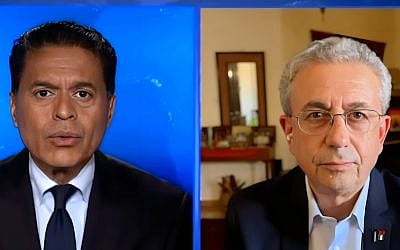 On October 8, Dr. Mustafa Barghouti appeared on Fareed Zakaria GPS on CNN and praised the people of Gaza for their “steadfastness and bravery.”
It sounded noble — dignified, even consoling — but it left me uneasy. What kind of steadfastness are we talking about? The endurance of hope or the endurance of misery? And who, exactly, leads this exhausted population whose suffering has become the world’s favorite metaphor?
I’ve heard sumud — steadfastness — spoken in refugee camps from Hebron to Rafah. It can mean courage. It can also mean paralysis. When endurance becomes the only policy, it ceases to be a virtue; it becomes a sentence.
Two Barghoutis, Two Moral Worlds
The surname Barghouti captures the contradictions of Palestinian leadership.
Marwan Barghouti, born 1959 in Kobar, once a Fatah organizer, led the Tanzim faction and was linked to the al-Aqsa Martyrs’ Brigades during the Second Intifada. He’s been imprisoned since 2002, convicted of directing attacks that killed civilians, and sentenced to five life terms. Yet two decades later, polls still crown him the most popular successor to Mahmoud Abbas — proof that in Palestinian politics, imprisonment can confer legitimacy.
Mustafa Barghouti, born five years earlier in the same village, trained as a physician in Moscow and at Stanford. He founded the Palestinian National Initiative (al-Mubadara), preaching civic resistance, transparency, and democratic reform. He has no militant past, ran against Abbas in 2005, and still argues for non-violence and international law over armed struggle. Mustafa Barghouti helped me to make a donation to the Palestinian Medical Relief Society when I visited Ramallah in 2020.
Two men, one family, two vocabularies — the fighter and the reformer — neither able to summon a leadership structure the Palestinian people can rally behind.
A Political Landscape in Ruins
Since 2007, Hamas has ruled Gaza after violently expelling Fatah. Its government mixes welfare, religious control, and an army: the Izz ad-Din al-Qassam Brigades. Beneath them, smaller factions — Islamic Jihad, the Popular Resistance Committees, Mujahideen Brigades — compete for scraps of power. Foreign patrons (Iran, Qatar, Turkey) fund them; Egypt guards the Rafah crossing; Israel controls the air and sea.
Gaza functions less like a state than a sealed compound — part war-zone, part fiefdom, part hostage. Beneath it runs another city: more than 500 kilometers of tunnels by Hamas’s own boast, possibly 700 by Israeli count — longer than the London Underground.
These are not rough burrows but fortified corridors — wired, ventilated, lit — a metro for war beneath the ruins of its own people. The cost, hundreds of millions of dollars, perhaps a billion, all dug under the feet of the poor. One can only marvel — or despair — at a movement that built a subway to hell before building a functioning city above it.
In the West Bank, the Palestinian Authority still governs with the title but not the trust of its citizens. No elections since 2006; corruption and dependency have hollowed it out. Militias in Jenin and Nablus now claim the revolutionary mantle the PA long ago dropped. Between Hamas’s theocracy and the PA’s bureaucracy, ordinary Palestinians endure — but endurance alone is not a strategy.
Trump’s 20-Point Plan: A Flicker of Structure
Into this vacuum came Donald Trump’s 20-Point Gaza Peace Plan (October 2025): a cease-fire, hostage exchange, technocratic interim rule under international oversight, phased Israeli withdrawal, demilitarization, and a multibillion-dollar reconstruction program. A “Board of Peace,” chaired by Trump, would oversee compliance before handing authority to a reformed Palestinian body.
Critics call it paternalistic, light on rights. Supporters call it a framework — a chance to stop the bleeding and rebuild institutions. Either way, it revives the question Palestinian leaders avoid: Who governs Gaza when the guns fall silent?
Moral Reckoning After October 7
Before negotiation, there must be a moral baseline. On October 7, 2023, Hamas fighters murdered, tortured, and kidnapped Israeli civilians. No cause sanctifies that horror.
Has Mustafa Barghouti — the reformer who preaches non-violence — ever said this plainly? In English sources, he condemns violence “on all sides,” yet one searches in vain for an unequivocal statement naming October 7 as what it was: a crime against humanity. Perhaps he spoke more clearly in Arabic; if so, the world should hear it. If not, the omission matters. Leadership demands moral precision. To lead, one must be able to say: slaughtering families is not resistance — it’s barbarism.
The Other Half of the Ledger
Moral clarity cuts both ways. Israel’s right to self-defense is unquestionable, but defense is not license. When entire neighborhoods vanish under bombardment, when aid is delayed or politicized, when civilians die by the thousands, a moral line is crossed.
Intent and context differ — Israel does not seek extermination — but the effect can still be catastrophic and self-defeating. The tragedy deepens when one remembers what lies beneath Gaza’s streets: an army’s labyrinth, not a shelter. Billions poured into war architecture while schools crumble. Condemnation must name this too. Moral reckoning cannot flow in only one direction.
To name these truths is not to equate Israel with Hamas; it’s to insist that moral law is universal or it’s nothing at all. A leadership worthy of both peoples must be able to say: The deliberate killing of civilians is barbaric — whoever does it, whatever flag it flies.
Recognition and Its Missing Half
Palestinian leaders demand international recognition of a state — a just plea from a stateless people. But recognition can’t be a one-way ritual. Peace begins when a Palestinian leader can also say, without caveat: We unconditionally recognize Israel’s right to exist.
Marwan Barghouti hinted at it in 2006 with the Prisoners’ Document, which implied mutual recognition along 1967 lines. Mustafa Barghouti speaks instead of justice and equality, tying recognition to Israel’s behavior. The result is stalemate — moral symmetry deferred. Until someone speaks both halves of recognition aloud, “peace” remains a placeholder.
The Hard Questions
Can Palestinians generate leadership built on competence and conscience instead of charisma and guns? Can any movement demand justice from Israel while reforming itself? Will Trump’s technocratic plan nurture real civic renewal or just rebrand old elites? And can reformers like Mustafa Barghouti finally say the two sentences that might change everything:
October 7 was a crime. Israel has the right to exist.
And the killing of innocents in Gaza is a tragedy no democracy should ever repeat.
A Closing Thought
The Palestinian people deserve more than pity — and more than applause for suffering well. They deserve truth-telling leadership, functioning governance, and an international community that holds everyone — Israelis, Palestinians, and outsiders — to the same moral standard.
When Mustafa Barghouti praises “steadfastness,” he should also name its cost: generations raised under siege, taught to survive rather than to build. When the world applauds resilience, it should also demand responsibility. And when we speak of peace, let it mean something reciprocal — not a pause between wars but the recognition of life on both sides as sacred and non-negotiable.
Only then will steadfastness cease to be a euphemism for suffering well.