
Performative Statehood: When Recognition Becomes Costume-Play
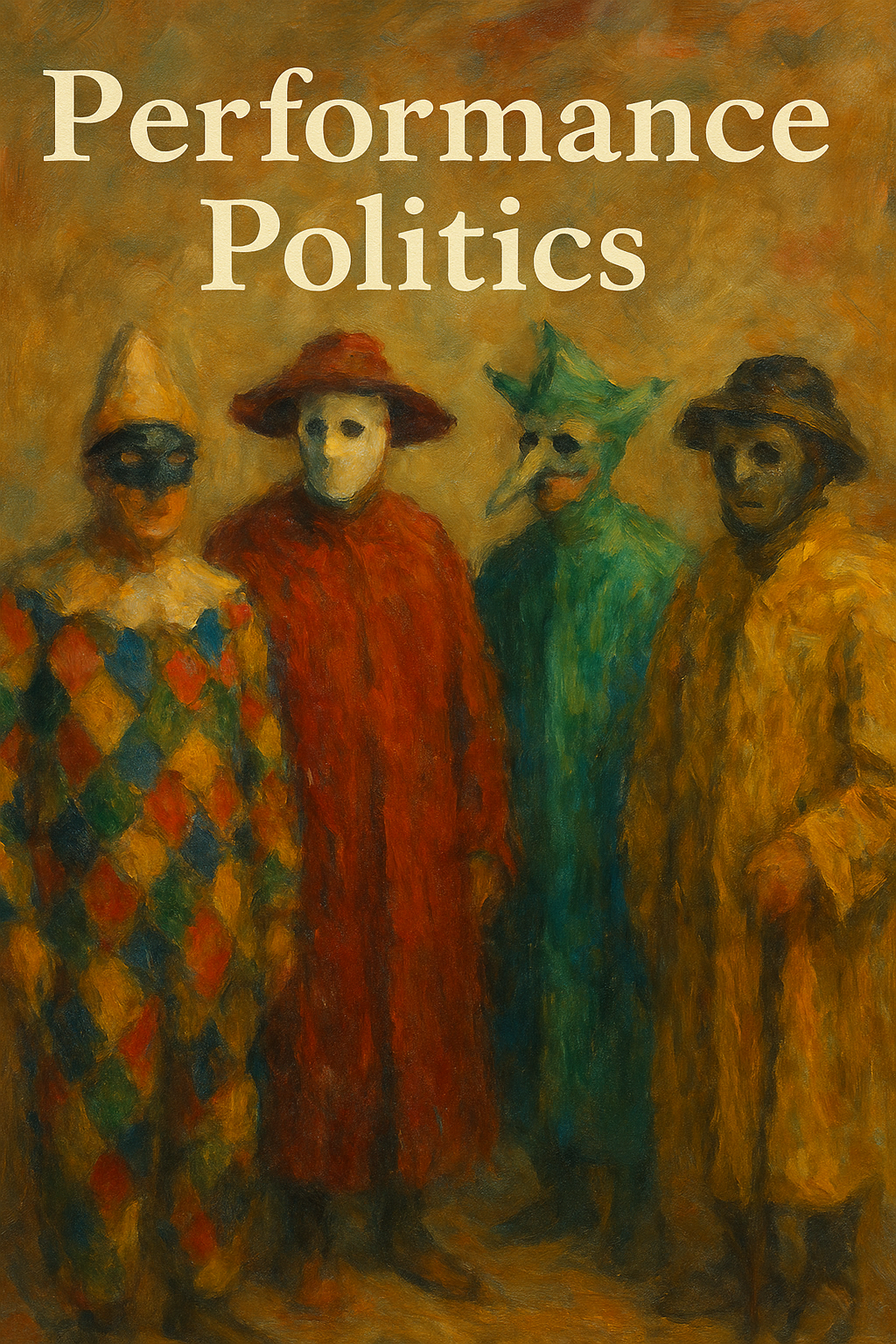
Performative Statehood: When Recognition Becomes Costume-Play
Over the weekend, a wave of capitals—London, Ottawa, Canberra, and Lisbon—rushed to “recognize” a State of Palestine. The choreography was tight, the language uplifted, the timing theatrical—days before the UN General Assembly. Leaders insisted the move wasn’t a gift to Hamas. But declarations don’t change who holds the guns, the hostages, or the ministries. And recognition without preconditions risks rewarding the absence of governance while Hamas still wields a veto over Palestinian political life.
What “performative support” means (and why it fails)
Performative support is high-visibility, low-leverage politics: actions that center the doer’s virtue but don’t alter incentives on the ground. You see it when governments reach for verbs like “signal,” “affirm,” and “symbolize” instead of “disarm,” “verify,” “audit,” and “secure.” It feels righteous; it rarely moves facts.
Three tells of the performative approach:
- Skipping the accountability clause. The recognitions were not paired with verifiable conditions: one monopoly on force, demobilization of militias, credible elections, independent courts, or anti-corruption guardrails. Without enforceable benchmarks, recognition becomes an award for intent, not a contract for behavior.
- Pretending Hamas is a footnote. Hamas initiated the war with the October 7 massacre, took hostages, and still holds 48 captives—while broadcasting threats. A state that cannot exclude an armed theocracy from its politics cannot deliver peace to its people or its neighbor. Recognition that tiptoes around this is not peacemaking; it is peacemaking costume play (cosplay).
- Confusing headlines with leverage. UK, Canada, Australia, and Portugal gained big headlines. On the ground, nothing in these statements disarms a single battalion, secures a crossing, or frees a hostage. Optics are not obligations.
The thing recognition cannot magic away
Hamas is not a zoning dispute; it is an armed movement whose founding texts reject Israel’s existence and sanctify violence. One can argue about how those texts are interpreted today, but October 7 was not a metaphor. Any pathway to Palestinian self-determination must first end Hamas’s armed veto—by disarmament, exile of commanders, or verifiable demobilization under a unified, lawful security force. Anything less is theatrical mercy that prolongs the war.
A non-performative roadmap (if you’re serious)
If capitals genuinely want to advance Palestinian statehood and civilian safety on both sides, recognition should be a capstone, not a curtain-raiser:
- Benchmarks first, ribbons later. Tie recognition to measurable steps: unified Palestinian security services, militia disarmament, audited ministries, and a credible electoral calendar that excludes terrorist groups from office.
- Hostages + ceasefire package. Condition any diplomatic upgrade on phased hostage releases with third-party monitoring, durable deconfliction, and enforceable border arrangements.
- Technocratic interim authority. Back a reformed, audited PA with real payrolls, independent inspectors general, and procurement transparency—so services outcompete militias.
- Reconstruction as demobilization. Every dollar tied to labor standards and demobilization incentives; jobs are counter-recruitment.
Israel, for its part, should welcome any framework that shrinks Hamas’s power, secures hostages, and professionalizes Palestinian governance—and say so loudly. Saying “no” to theater should come with a bigger “yes” to enforceable security and civilian protections.
Conclusion: Unmasking the Performers
Let’s say it plainly. Much of this recognition rush is not solidarity; it is stagecraft. It costs politicians nothing, buys applause at home, and leaves Palestinians trapped between a corrupt authority and an armed theocracy. It asks Israelis to accept a pretend partner while rockets still fly and hostages remain underground. That isn’t courage; it’s moral outsourcing in borrowed robes.
There’s a one-line test for sincerity: Do your actions reduce Hamas’s power, raise accountable Palestinian governance, protect civilians, and move hostages toward daylight? If not, the robes of virtue are costumes.
Performers love the verbs signal, affirm, symbolize. Builders use various methods: disarm, verify, fund transparently, train, audit, secure, release, and rebuild. The first set fills press releases. The second changes facts. Until leaders are ready to condition recognition on disarmament, unified lawful security, clean institutions, and the return of every hostage, they are not advancing peace—they are subcontracting it to a hashtag and sending the bill to Israelis and Palestinians alike.