Pharaoh, Iran and the battle for human dignity
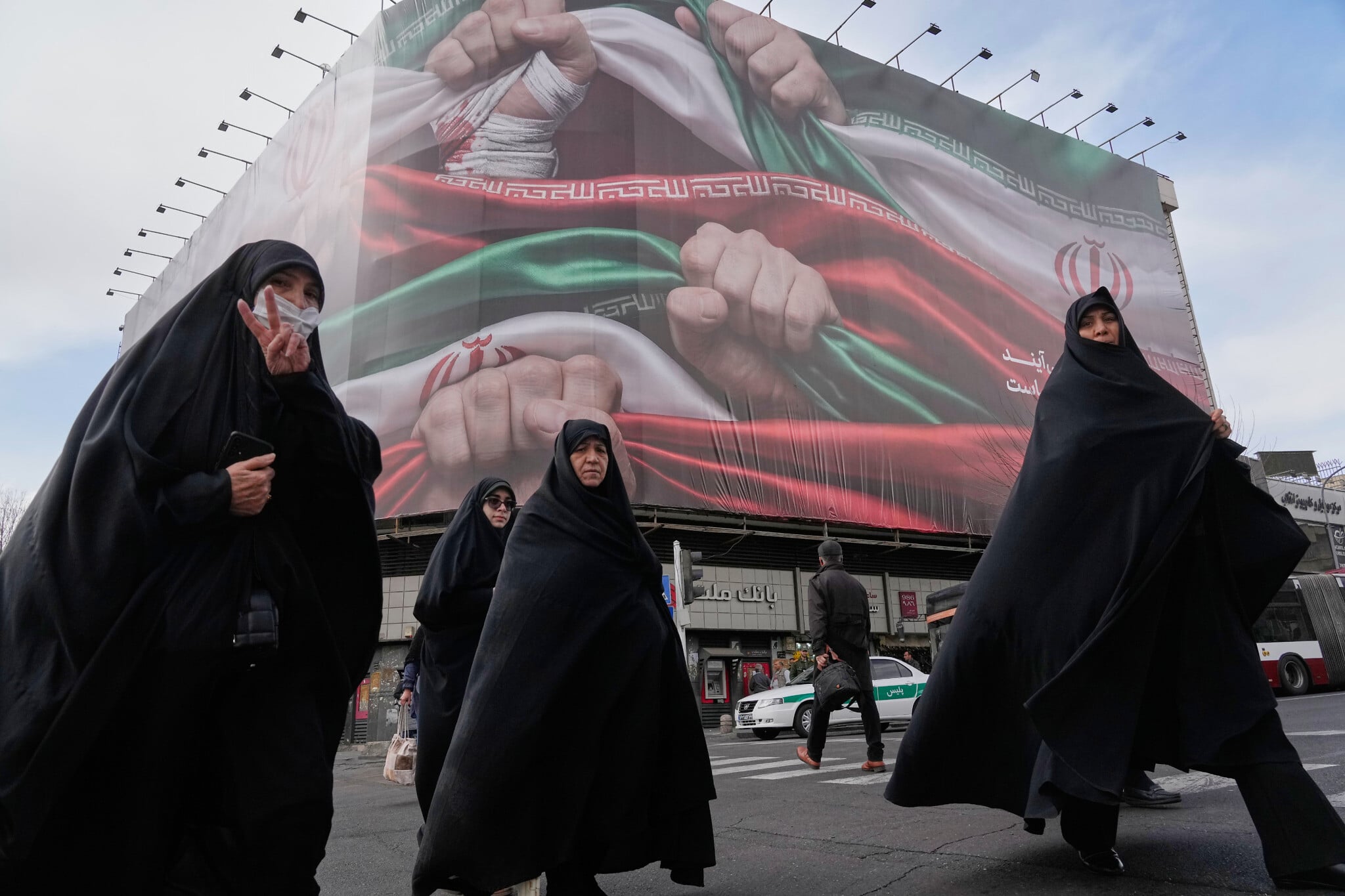
This morning, like every morning for the past two weeks, the first thing I did upon waking was search for news of Iran. Have the protests continued? Will they get the help they so desperately need? I was sure I would wake up to news of American intervention. Now it’s unclear whether that will happen.
I’ve been so inspired by the brave men and women of Iran taking to the streets, calling for the ouster of the Islamic regime. Thousands keep protesting at risk of death. But I also feel deep dread. It hurts to see so many killed. Will all this courage end in more slaughter?
If this movement fails, it will be disastrous not only for Iranians, but for everyone watching to see whether freedom can still triumph over tyranny. At the same time, my family and friends in Israel are again bracing for sirens and shelters, because tyranny never contains its violence neatly within borders.
My connection to Iran goes beyond geopolitics. I spent my teenage years in a Persian Jewish community in Great Neck, NY, and I have relatives from Mashhad and Tehran. I love Persian Jewish culture, its music, its cuisine, its warmth. The pain over Iran is compounded by the ugly hypocrisy of much of the global left, which cannot bring itself to support Iranians. No campus protests. Barely any Hollywood voices. No Jews, no news.
But Jewish tradition offers no such luxury of looking away. This week’s parasha, Vaera, reframes what is at stake. It teaches that tyranny is not a foreign tragedy we merely witness, but a moral reality that makes a claim on us. To be a Jew is to belong to a tradition that denies divine status to human power. To be a Jew is to refuse indifference to those fighting for their freedom.
* * *
Vaera, this week’s Torah reading, contains the central confrontation between God — acting through Moses — and Pharaoh, and introduces the first seven plagues. What is easy to miss is how marginal the Israelites themselves are.
The primary drama in Vaera is not Egypt versus Israel, but Pharaoh versus God. At the heart of this confrontation lies monotheism as political truth. The Torah insists that there is one God not embodied in any human form. All humans, created in God’s image, stand in a horizontal relationship to one another. Slavery, genocide, and tyranny cannot be legitimate if you believe in one God.
By contrast, when a ruler presents himself as godlike, claiming control over life and death, he creates a vertical society and destroys the possibility of resistance. If Pharaoh stands above nature, then to resist him is to resist the very order of the world.
The Midrash captures this with dark irony. In this week’s haftarah, the prophetic reading, from Ezekiel, God describes (and mocks) Pharaoh’s self-proclaimed power: “The Nile is mine; I made it myself.”
The sages explain that Pharaoh carefully cultivated his image as a god, claiming to have created the very source of Egypt’s life. So committed was he to this illusion that he would rise early each morning and go secretly to the Nile to relieve himself, so that no one would ever see him perform a basic human function and maintain his pretense to be godlike. Pharaoh’s divinity was manufactured. And his tyranny depended on maintaining that fiction.
According to the midrash, Moses is instructed to confront Pharaoh precisely at that moment, at dawn by the Nile. Catch him there. Expose the lie. Rabbi Samson Raphael Hirsch describes the Egyptian worldview that followed from Pharaoh’s lies with unsettling clarity: some humans were divine and others enslavable, disposable.
This is the logic that tyrants throughout history, even those who falsely claim to be monotheists, have followed. Once you see this logic, it becomes impossible not to recognize it elsewhere. Khamenei, Iran’s supreme ruler, has positioned himself above his people, ruling them as a despot who controls life and death.
This is why God acts in Vaera with such drama and supernatural force. The plagues are not only punishments; they shatter the very frameworks of Egyptian reality. They shatter the illusion that any human being stands above nature or beyond accountability. Only God commands creation. All the rest of us are bound to one another in shared dignity.
God had to bring down Pharaoh to teach a great truth: In the language of the American founders, resistance to tyrants is obedience to God.
* * *
I want to close with a song that feels like a prayer. In September 2022, a 22-year-old Kurdish Iranian woman named Mahsa-Jina-Amini was arrested by Iran’s morality police for not wearing her hijab “correctly.” Within hours, she was in a coma. She died the next day. Her murder ignited the Women, Life, Freedom movement.
Out of that moment came a song the regime immediately recognized as dangerous. A 25-year-old Iranian musician named Shervin Hajipour wrote a ballad called “Baraye” — “For,” or more precisely, “for the sake of.” He selected 29 tweets from ordinary Iranians explaining why they were protesting and turned them into lyrics. He recorded it alone in his room and uploaded it to Instagram.
Within days, it had tens of millions of views. The regime arrested him and forced the song to be taken down. They understood what tyrannies always understand: art threatens power when it exposes lies. “Baraye” is nothing more than a list of reasons explaining the protests:
For dancing in the streets.
For the fear that comes with a kiss.
For my sister, your sister, our sisters.
For the shame of being unable to provide.
The reasons have multiplied since 2022. They are why millions of Iranians are willing to risk everything today. As I write these words, I am praying that help will come. The few videos emerging from Tehran are staggering. Even with the internet cut, even after mass arrests and murders, people are still marching.
We are not going to see plagues raining down from heaven. History does not work that way anymore. The Exodus was singular, but it was written to establish a precedent. The Torah wants us to understand that tyranny survives by convincing people that some humans are above nature, above accountability, above resistance. Liberation begins when that illusion shatters.
I pray for the safety of those protesting in Iran. I pray for the fall of the Islamic regime. And I pray that we remember what our tradition has always taught us: Faith in God cannot coexist with Pharaoh. It cannot coexist with Khomeini. And it does not allow us to look away.
Baraye. For the sake of life. For the sake of freedom.