
The Disconnection of JD Vance
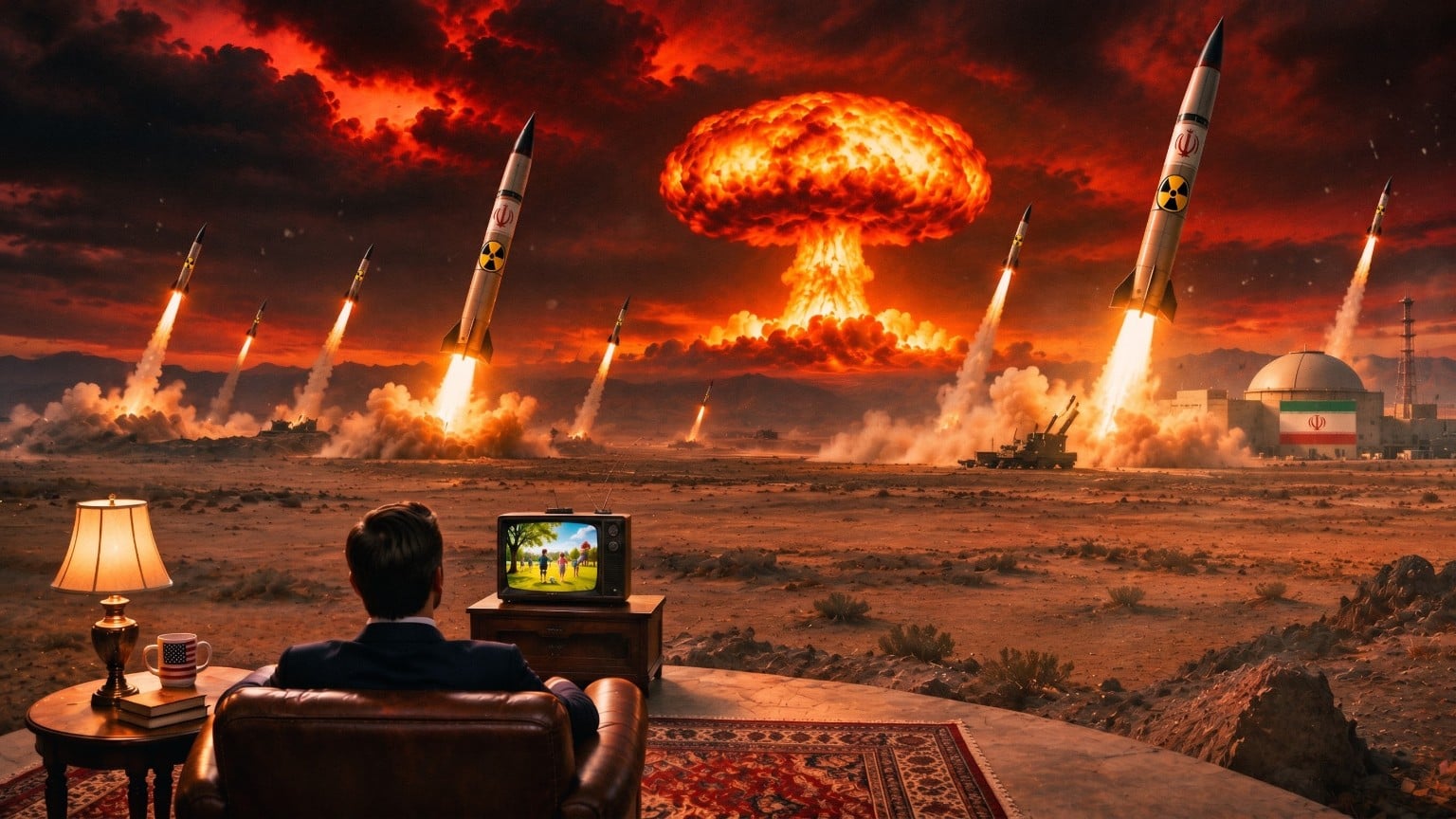
May 7, 2025. Speaking at the Munich Leaders Conference in Washington, JD Vance declared that allowing Iran to acquire a nuclear weapon was out of the question.
June 22, 2025. On ABC News, Vance stated: “There is no way that the United States is going to let Iran have a nuclear weapon.”
June 22, 2025. That same day, on NBC’s Meet the Press, he reiterated that preventing Iran from obtaining a nuclear weapon was a vital American national interest.
June 24, 2025. At a Republican gathering in Ohio, Vance repeated: “Iran can’t have a nuclear weapon.”
October 21, 2025. During a press conference in Israel, he insisted once again: “They cannot have a nuclear weapon.”
April 7, 2026. Speaking in Hungary, Vance defended confronting Iran’s nuclear threat and warned about the consequences of allowing Tehran to acquire such a weapon.
April 11, 2026. Following nuclear negotiations in Islamabad, Vance demanded lasting guarantees that Iran would neither pursue nuclear weapons nor retain the ability to acquire them rapidly.
May 19, 2026. At the White House, he reiterated that Iran could not possess a nuclear weapon and warned about the danger of nuclear proliferation beyond the Middle East.
June 9, 2026. In an interview with CBS News, Vance expressed his desire for an agreement durable enough to ensure that his children could grow up knowing Iran would not possess nuclear weapons.
October 7, 2026. Challenging Tehran’s nuclear intentions, Vance asked: “If you don’t want a nuclear weapon, then why do you need 60% enriched fuel?”
Ten occasions. Seventeen months. One unmistakable position.
Iran must never acquire a nuclear weapon.
Then came November 3, 2026.
Following the Republican defeat in the midterm elections, Vice President JD Vance attributed the electoral setback to the war with Iran and questioned whether the conflict had been worth its political consequences, including the prospect of losing the Senate for six years.
The contrast is striking.
Opposing a particular war does not mean accepting a nuclear-armed Iran. A military campaign can be costly, poorly executed, or strategically counterproductive even when its objective is legitimate. Vance is entitled to question its effectiveness.
But what exactly did he expect Iran to do?
Wrap its stockpile of highly enriched uranium in gift paper, attach a thank-you note, and ship it to the White House?
The International Atomic Energy Agency estimated that Iran possessed approximately 440.9 kilograms of uranium enriched to 60 percent in June 2025. Subsequent restrictions on international verification have left serious uncertainty about the material’s present whereabouts and condition.
Uranium enriched to 60 percent is already dangerously close to weapons-grade material. In terms of the separative work required, reaching 90 percent from 60 percent requires only a fraction of the effort needed to enrich natural uranium to 60 percent. At 90 percent enrichment, Iran would possess weapons-grade uranium, the essential fissile material for a uranium-based nuclear weapon.
And what do we know about the current enrichment level of Iran’s unverified stockpile?
What if some of that uranium has already reached 65 percent?
We do not know.
70 percent?
We do not know.
75 percent?
We do not know.
80 percent?
We do not know.
85 percent?
We do not know.
89.99 percent?
We do not know.
Perhaps none of these scenarios has occurred.
But what if one has?
Uncertainty is not proof that Iran has secretly enriched uranium beyond 60 percent. Yet neither is it proof that the material remains exactly as it was when inspectors could last account for it.
And then there is Pickaxe Mountain.
Buried deep beneath the mountains near Natanz, this heavily fortified complex has the potential to become one of the world’s most formidable incubators of nuclear weapons production, exceptionally difficult to neutralize through conventional airstrikes. There is no publicly verified evidence that Pickaxe is currently producing nuclear weapons, but its potential is precisely what makes it so concerning.
Together, the unverified uranium and the possibility of an increasingly protected nuclear infrastructure raise a strategic question that cannot be answered by election results.
What would be the economic, military, and human cost of confronting a nuclear-armed Iran five or ten years from now?
The costs of the present conflict are real. Energy prices, disrupted shipping, military expenditures, lives lost, and the risk of regional escalation all deserve serious consideration. But so do the consequences of allowing a dangerous nuclear uncertainty to persist while Iran potentially strengthens the infrastructure needed to exploit it.
There is still a peaceful way out.
Iran could surrender its stockpile of highly enriched uranium, accept comprehensive international inspections, and return to enrichment levels consistent with a strictly civilian nuclear program, around 3.6 percent, under credible safeguards. It could also accept meaningful limitations on its ballistic missile program.
The Strait of Hormuz could remain open to international shipping. Sanctions relief, investment, and renewed economic engagement could help create the conditions for greater prosperity among the Iranian people.
But would Tehran willingly accept such an agreement?
Those 440 kilograms represent far more than nuclear material. They embody decades of investment in infrastructure, centrifuges, scientific expertise, and industrial capabilities, alongside the enormous economic burden of sanctions and international isolation. Although the precise cost of producing that stockpile cannot be reliably calculated from public information, its strategic value to the Iranian leadership is considerable.
Iraq was compelled to accept extensive disarmament obligations after its military defeat in 1991.
Would Iran willingly drink from a similar cup?
And would that cup not be even more bitter after everything Tehran has invested in its nuclear ambitions?
This brings us to a question JD Vance should consider carefully.
What does the Iranian leadership actually want?
Peace? Economic development? Prosperity for its people? Or the preservation of military capabilities that could eventually bring another war?
These objectives are not necessarily mutually exclusive. Tehran may seek prosperity while also prioritizing deterrence, regional influence, and the survival of its political system. That is why negotiations must test intentions through verifiable commitments rather than reassuring declarations.
A refusal to surrender highly enriched uranium would not automatically prove that Iran wants war. Its leaders could invoke sovereignty, national security, or distrust of Washington. Nevertheless, without credible alternative guarantees, the nuclear danger would remain unresolved.
Is this apparent disconnection in Vance’s reasoning a matter of denial, cognitive dissonance, motivated reasoning, or defensive avoidance? Psychology offers several possible explanations for the human tendency to minimize uncomfortable realities. We cannot know whether any applies to him. His position may instead reflect a calculated political judgment or a sincere belief that diplomacy can achieve more than military force.
But whatever the explanation, one question remains.
If diplomacy fails, how does JD Vance intend to prevent Iran from acquiring the very weapon he has repeatedly declared it must never possess?
He does not need to demonstrate that war with Iran is expensive. Everyone can see that. Nor does he need to prove that American voters are concerned about inflation, energy prices, and another prolonged military engagement.
He needs to explain how he intends to achieve his declared objective without accepting the risks and costs he now questions.
Perhaps JD Vance genuinely believes that diplomacy will eventually persuade Tehran to abandon its nuclear ambitions. Perhaps he is convinced that the economic and political benefits of ending the confrontation outweigh the dangers of leaving the Iranian nuclear question unresolved.
Or perhaps he simply sees what he wants to see.
We cannot know.
What we do know is that Iran’s nuclear capabilities cannot be wished away, that uncertainty about its enriched uranium remains, and that the consequences of getting this calculation wrong could extend far beyond the next election, the next administration, or even the next generation.
Peace cannot be measured solely by the absence of war. It must also be measured by the dangers that peace leaves behind.
And perhaps that is the most troubling aspect of JD Vance’s disconnection: the possibility that he understands perfectly well the world he wants to see, but has lost sight of the world he is actually dealing with.