Photography from Israel and around the world
Photo Essay – The Skies That Never Close
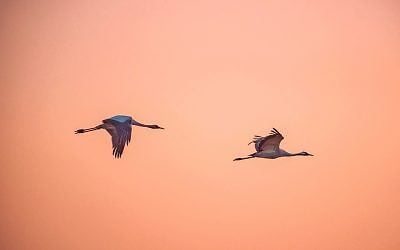
Twice a year, through quiet days and days when the region’s headlines are difficult to ignore, migrating birds cross the skies over Israel on their migration routes between Europe, Asia and Africa,. And sometimes, as a photographer , the best thing I can do is put the camera down and look up.
This time last year, the night before our wagon ride through the Hula Valley, I dropped my camera in the sea. I went on the ride without it. At first, I kept reaching for it, mentally framing shots I would never take. Then, slowly, I stopped. I watched the landscape pass and let myself simply be there. I have no pictures of that sunset ride, but I remember all of it.
This year I went out with my new camera again, first to the Hefer Valley to photograph the pelicans, and ten days later, to the Hula Valley. I thought about that ride both times.
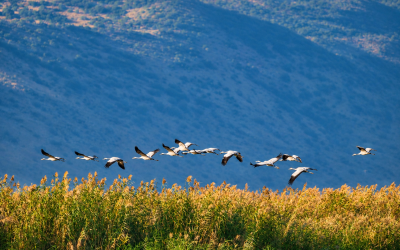
In a region where headlines often focus on conflict and borders, I found myself thinking about a different kind of map. Twice a year, hundreds of millions of birds cross Israel on one of the great migration routes between Europe, Asia and Africa, according to the Israeli Aeronautical Information Publication. Autumn migration runs mainly from late August to mid-November, and spring migration from early March to the end of May. Most of the traffic flies below 3,300 feet, which is why civilian air traffic control, the Israeli Air Force and radar networks must coordinate so closely.
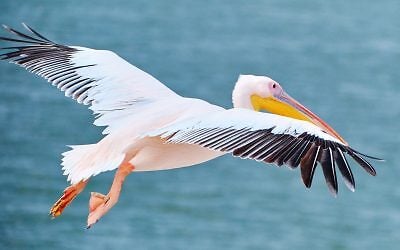
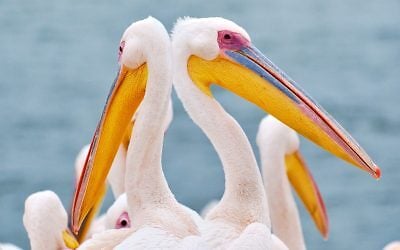
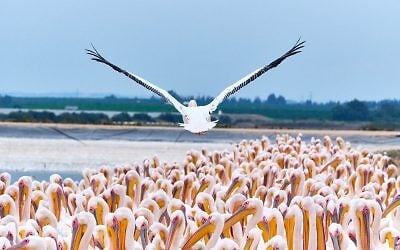
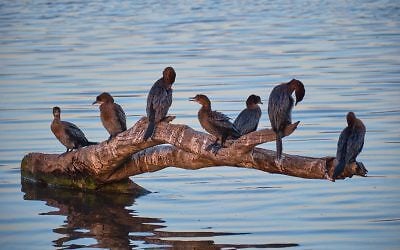
I started in the Hefer Valley, at the Mishmar HaSharon reservoir beside the Alexander River. KKL-JNF says pelicans and cormorants gather there, especially in autumn. I had come for the pelicans.
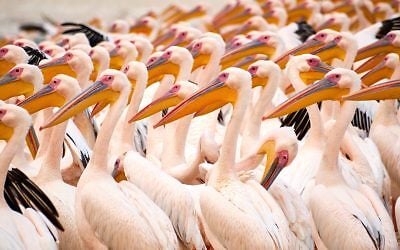
The birds followed their route overhead while I stood in the Hefer Valley, at the Mishmar HaSharon reservoir beside the Alexander River. KKL-JNF says pelicans and cormorants gather there, especially in autumn. I had come for the pelicans. Watching them rest together before continuing their journey, I thought again about the wagon ride. The pelicans weren’t posing. They didn’t know I was there. They were simply passing through, and for a short while I was lucky enough to be passing through beside them.
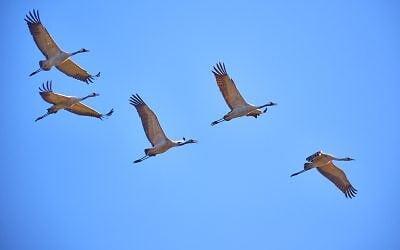
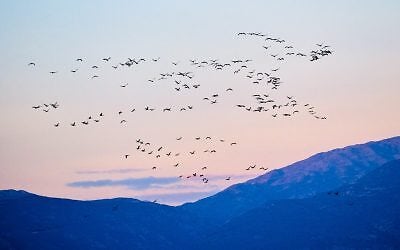
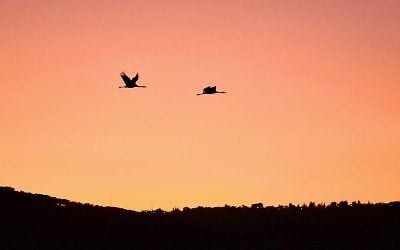
Ten days later I was in the Hula Valley, back where the wagon ride had taken me the year before. Then the cranes came. Thousands flew over my head, filling the sky with a wild, crazy and beautiful sound, their calls rising from every direction at once. It is hard to describe: standing under that moving sky, surrounded by that noise, I felt as if I had stepped into another world.
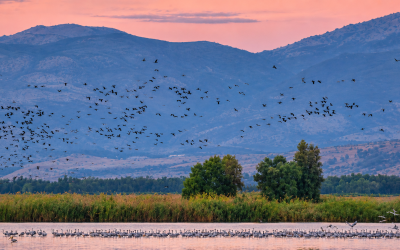
The Hula Valley has changed dramatically. Much of its wetland was drained in the 1950s to create farmland and combat malaria. The drainage caused ecological damage. Parts of the area were restored as wetlands in the 1990s, and today the valley again gives migrating birds water, food and room to rest. KKL-JNF on the Hula’s rehabilitation
In one early-season count, observers recorded 10,600 cranes at Hula Lake Park. The count was reported on October 22, 2026; the number of birds changes through the season.
I took photographs at both places, and I’m glad I did. But they are only a small glimpse of something much larger. The best moment of that trip may have been the one I couldn’t photograph.
To discover more of Israel’s beauty — its landscapes, people, beaches, cities, and spirit through my lens, please visit my website www.photography-israel.com
Related Topics
Related Posts