PIJ never left
A woman in upstate New York is charged with funding the terror group that murdered my daughter in 1995. The organization survives. Will this prosecution?
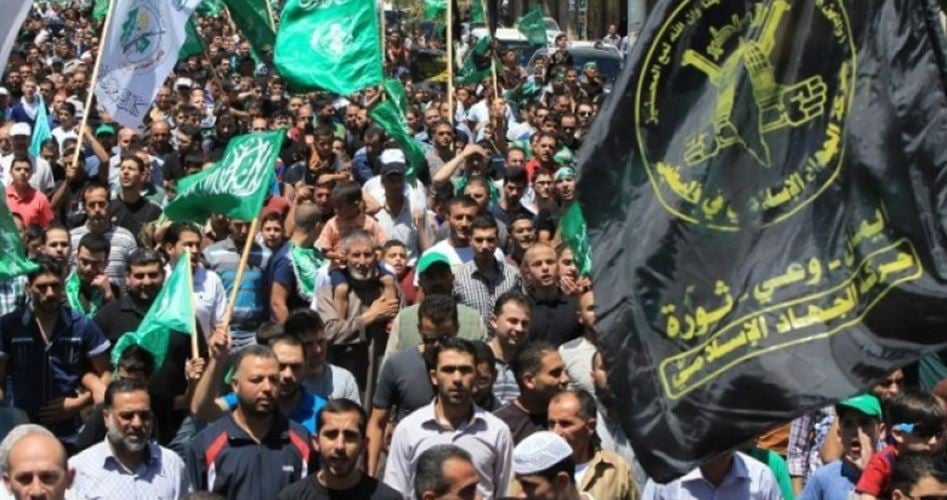
Palestine Islamic Jihad (PIJ) does not need a state. It does not need an army. It needs a wire transfer and someone willing to send it. That has been true since before most people reading this were born, and it is true again this month in Irondequoit, New York.
Catherine Beth Washburn, 37, was arrested and charged with attempting to provide material support to PIJ. According to the Justice Department, Washburn — a leader of a post-October 7 extremist group called the Direct Action Movement for Palestinian Liberation — exchanged messages with someone she believed to be a PIJ fighter in Gaza. She told him she wished every day were October 7th. She said she hated Jews “very much.” She said she wished Israel would “disappear.” Records show roughly 80 crypto transfers to the account, totaling about $30,000. There is a photograph of her posing with hand grenades in front of a Hamas flag.
I read that complaint the way most people cannot. My daughter Alisa was murdered in 1995 on a bus near Kfar Darom, by a Palestine Islamic Jihad suicide bomber. Thirty years is a long time to watch one organization keep finding new Americans willing to serve it.
My first columns on this subject were about Sami al-Arian, a University of South Florida professor who spent the 1990s running a think tank the FBI eventually identified as a PIJ front. It took the government the better part of a decade to build that case. When it finally went to trial in 2005, the jury deadlocked on the most serious counts. Al-Arian pleaded to one count of conspiracy in 2006, served his time, and was deported to Turkey in 2015 — where he still lectures on “dismantling” Israel. I learned something from that outcome: the organization survives even when the individual doesn’t. PIJ didn’t need al-Arian. It needed the next one.
In March, I wrote here about Asif Merchant, an Iranian Revolutionary Guard operative convicted of plotting to assassinate an American official on US soil. Different flavor of threat — a state operative, not a homegrown sympathizer — but the same lesson I’d already learned from al-Arian: the infrastructure doesn’t stay “over there.” It comes here, and it waits for people willing to fund it, house it, or carry it out.
Washburn is the next name in that line, and her case looks more straightforward on paper than al-Arian’s ever was. This isn’t a professor’s think tank buried in decades of academic grants. It’s direct messages, a crypto trail, a photograph. If the evidence holds up the way the complaint reads, there is no reason this should take a decade and end in a plea to a lesser charge. It should be fast. It should be complete.
I say that without much confidence, because my history with this department watching this organization doesn’t inspire it. But PIJ is not an abstraction to me, and neither is the pattern: a respected academic in the ’90s, a private citizen radicalized online after October 7 today — different decades, different profiles, same organization, same willingness among some Americans to hand it money and cover.
The lesson from al-Arian was never really about him. It was about how long an organization can keep finding hosts inside an open society, and how much patience it takes to stop even one of them. Thirty years after PIJ took my daughter, it is still finding hosts. I would like, just once, to see the government close the loop before it becomes someone else’s 30-year story.