
Polarization Will Kill the “Jewish Solidarity”
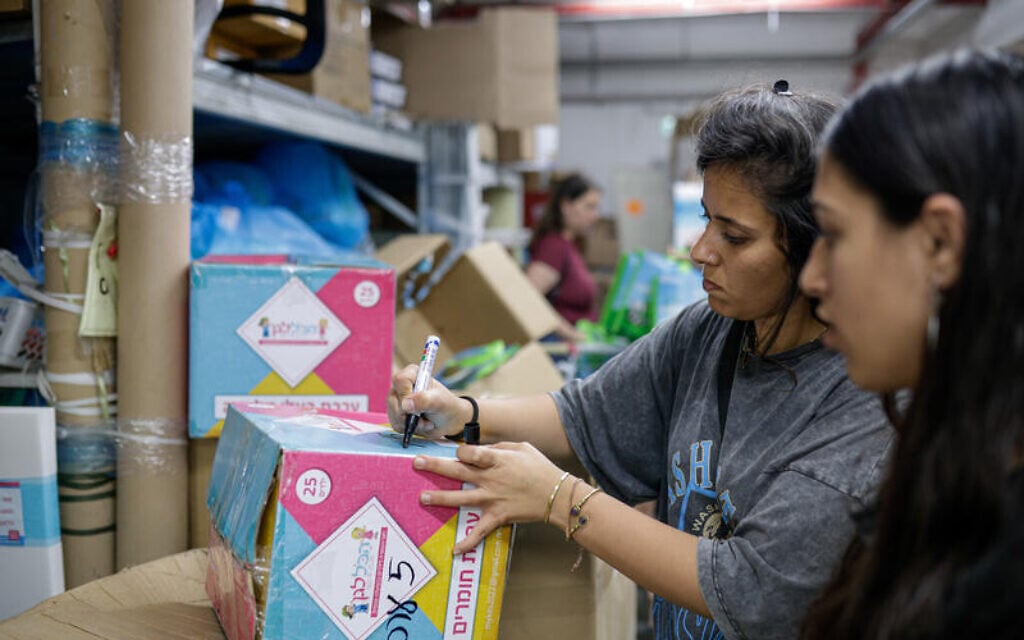
Now that we seem to be nearing the end (at least partially) of one of the darkest chapters in the nation’s history, we can take a moment to breathe and reflect on everything we have been through over the past two years. One of the distinct positives we experienced since the outbreak of the war has been the incredible support from civil society. This support was manifested in the social mobilization to aid the injured, the displaced, the soldiers and reservists, and of course, the families of the hostages. The spontaneous mobilization of Israeli society was impressive in its scope and diverse, and to a large extent, it created a support network that enabled Israeli society to continue functioning reasonably well even during the difficult days following the horrific attack of October 7.
Over the past two years, many statements have been made suggesting that this mobilization is what distinguishes the People of Israel, the Jewish People, but this is where I disagree. While risking an unpopular opinion (UPO), I will argue that the accepted claim that this mutual aid and communal mobilization are unique to Israeli society is fundamentally wrong. However, as I aim to show, it is extremely important.
In sociological research, there is a social phenomenon called disaster solidarity and collectivism, which is expressed through spontaneous cooperation and generosity in the wake of a community disaster. Rebecca Solnit published her book A Paradise Built in Hell in 2009, demonstrating that the common social phenomenon whereby significant disasters lead to community unity was evident, among other places, even at the beginning of the 20th century in the US (in the San Francisco earthquake). However, this phenomenon is expected to manifest only in a community that was based on strong bonds to begin with. Further studies show that such communal support even creates an economic and psychological buffer layer for those affected by the disaster and and, to a large extent, prevents capitalist exploitation of the disaster by powerful corporations.
Reality shows that the government cannot independently cope with all the immediate challenges created by a wide-scale disaster, whether due to poor preparation, bureaucracy, budgetary problems, or logistical difficulties. In such cases, the only way to cope adequately and prevent a descent into chaos is through social solidarity and communal action. Technological development and the existence of social networks have strengthened and amplified the ability to organize quickly and provide various types of support and aid.
Examples of this could be seen, for instance, during Hurricane Katrina in New Orleans (2005), where despite the absolute failure of the authorities, ordinary citizens used private boats to rescue tens of thousands who were trapped, and spontaneously established mutual aid networks. Similarly, following the devastating earthquake in Turkey and Syria (2023), millions of Turkish citizens traveled to the disaster areas with trucks loaded with aid and established civilian search and rescue groups, as well as feeding and lodging centers, demonstrating immense solidarity that transcended internal divisions.
This assertion—that communal solidarity is not a phenomenon unique to us as Israelis—is not intended to diminish the value of the aid given or the phenomenon itself. On the contrary, the communal mobilization and the ethos that accompanies it are a clear testament to the strength of Israeli society, and this is precisely the warning sign we must pay attention to. The processes of radicalization and social polarization that Israeli society has experienced in recent years across various spheres, including the political, religious, and economic, may damage the foundational social fabric of Israeli society.
If we do not halt the radicalization and seek ways to mend the rifts, if we continue the processes of polarization and distancing that are tearing Israeli society apart, we will reach a situation where, in the next disaster—a significant earthquake, an economic crisis, or another war—the level of solidarity will decrease, and it will be impossible to guarantee that the community will be strong enough to provide the required protective network. The national/religious basis of the “Jewish People” is not strong enough on its own, and without preserving our social fabric, we will wake up in the next disaster (which we hope will not come) without it.