Pope Leo Says G-d Rejects Prayers of Jewish Soldiers–A Rabbi Pushes Back
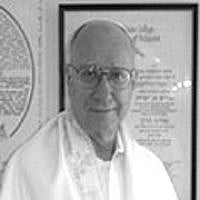
On April 21, Warren Goldstein, chief rabbi of the Union of Orthodox Synagogues of South Africa, spoke at a commemoration service in Johannesburg on Yom HaZikaron—Israel’s day of remembrance for fallen soldiers and victims of terrorism. Considering the Israeli blood that has been shed because of the ongoing terror campaign to cleanse every ethnic Jew from the land of Israel, there are thousands to be remembered on the solemn day of Yom HaZikaron.
In his sobering and heartfelt speech, Rabbi Goldstein referenced a sermon given by Pope Leo XIV a few weeks earlier on Palm Sunday in St. Peter’s square. Speaking of Israel’s war on terror, the Holy Father proclaimed that God “Does not listen to the prayers of those who wage war, but rejects them.” The prooftext for his proclamation was Isaiah 1:15: “Even though you make many prayers, I will not listen: your hands are full of blood.” Rabbi Goldstein had this to say about Pope Leo’s condemnation of Israeli and American forces who are fighting radical Islamism:
How dare he. His hands are dripping with blood because he makes no distinction between good and evil. He makes no distinction between the barbarians of Hamas, the genocidal maniacs of Tehran, and the noble and brave soldiers of the State of Israel who are defending civilization itself. To lack a moral insight to see a difference between good and evil is to disqualify yourself from religious leadership. They [Israeli soldiers] are holy and they are pure—those who fell—because they fell in a just war. If people are not prepared to bear arms, to defend civilization, then we hand the world to the barbarians. If the brave allied forces had not fought against Nazi Germany, the world would be engulfed in darkness forever. If the brave forces of the IDF together with the armed forces of the United States are not fighting the genocidal evil of Iran, there would be—G-d forbid—another Holocaust. Who can say that those who wage war have hands that drip with blood? There is a difference between good and evil.
Perhaps Rabbi Goldstein’s righteous indignation over Pope Leo’s charge against Jews who are defending themselves against religious zealots is a result of his knowledge of the long, brutal history of the unjust war the Catholic Church waged against the Jews of Europe—a history so ripe with murderous antisemitism that morally inspired popes like Pope John XXIII would repent for the organized assault on defenseless Jews the church allowed to run amuck for centuries.
In 1961, Pope John XXIII oversaw the publication of a prayer to be read by German Catholics for their complicity in the death of six million Jews. This prayer was the first public acknowledgement by the church of the murder of Jews during the Holocaust and of Christian responsibility for what took place. Pope John XXIII knew that if the church forgot what it had done to the Jews, it would be condemned to repeat the awful history of violence. The prayer made clear that all European Catholics were guilty of the Holocaust, whether they were perpetrators or bystanders. German Catholics would recite this prayer on the Sunday after the Feast of the Sacred Heart of Jesus in 1961:
Lord, God of our Fathers! God of Abraham, Isaac and Jacob! God of mercy and God of solace! We confess before you: Countless men were murdered in our midst, because they belonged to the people from whom the Messiah rose up in the flesh. We pray Thee: Lead all among us who became guilty through deed, omission, or silence, that we may see the wrong and turn from it. In the spirit of heartfelt atonement, we beg for forgiveness for the sins which were committed by our fellow citizens. We beseech that the spirit of peace and reconciliation return to all homes and we pray for the peace of Israel among the nations; on the borders of its state and in our midst.
Pope John XXIII made many decisions to clean up centuries of antisemitism embedded in the thinking of the church. He changed the Good Friday Prayer which accused Jews as “perfidious” and as “blind and obstinate for not recognizing Jesus as the Messiah.” He would also say, “Whoever despises or persecutes the Jews inflicts an injury on the Catholic Church.”
Not long before his death in 1963, Pope John XXIII would compose this prayer—a prayer that has been a building block ever since in Christian and Jewish relations and which confesses the fact that the Catholic Church waged an unjust war against innocent Jews for centuries, murdering them with reckless abandon as did Cain his brother Abel, resulting in the hands of the church being stained with Jewish blood:
We realize now that many, many centuries of blindness have dimmed our eyes, so that we no longer see the beauty of Thy Chosen People and no longer recognize in their faces the features of our firstborn brother. We realize that our brows are branded with the mark of Cain. Centuries long has Abel lain in blood and tears, because we had forgotten Thy love. Forgive us the curse which we unjustly laid on the name of the Jews. Forgive us that, with our curse, we crucified Thee a second time.
Following in the footsteps of Pope John XXIII was Father Edward H. Flannery, the first director of Catholic-Jewish Relations for the US Bishops’ Committee for Ecumenical and Interreligious Affairs. Flannery once said that the Christian community should be the first to rejoice over the creation of the State of Israel because of its legitimacy as a “liberation movement, the greatest in history” and because of the responsibility of Christians for the persecution of Jews. He said a good Christian attitude toward Israel is the acceptance of the “existence of Israel within secure borders and a commitment to the survival of Israel.” Father Flannery reminds us, “It was Judaism that brought the concept of a God-given universal moral law into the world . .. . the Jew carries the burden of God in history and for this has never been forgiven.”
Father Flannery also wrote the book The Anguish of the Jews: Twenty Three Centuries of Antisemitism. The book painstakingly chronicles the history of the unjust war the Catholic Church waged against Jews.
Starting with Pope John XXIII, there has been much progress made in Catholic and Jewish relations. The first step was repentance for the ages-long unjust treatment of Jews by the church. The church has in her wake a long history of blood libels, forced baptisms, church racial laws that discriminated against Jews, and inquisitions—all of which led to slaughter. By accusing Jewish soldiers of having their hands stained with blood and making them morally equivalent to Hamas butchers, Pope Leo may have caused a major setback in Catholic and Jewish relations.
Perhaps Rabbi Goldstein is concerned like many of us that in the last few years the church is backtracking from the progress made by great Catholic moral leaders like Pope John XXIII and Father Edward H. Flannery. Perhaps by speaking out, Rabbi Goldstein will open up the conversation and reverse the trend that seems to be going in the wrong direction. For the sake of the future of the Catholic Church, I hope Pope Leo follows in the footsteps of Pope John XXIII in regard to Jews. May he realize the church has no identity outside of Israel. I pray the Holy Father remembers the words of Saint Paul concerning Christianity’s relationship with the root of Israel in Romans 11:18: “remember it is not you who support the root, but the root that supports you.”
Rabbi Goldstein rightly instructs us that Israel is fighting against an evil enemy that desires to destroy the western world. The barbarians are at the gate and civilization hangs in the balance. It is a miracle that Israel is defeating the Iranian giant along with its proxies. Could it be, contrary to Pope Leo’s declaration that G-d does not hear the prayers of Israeli soldiers, those prayers are miraculously being heard and answered because the soldiers are fighting a just war? It would seem so.
Deuteronomy 20:3-4 makes it clear that when Israel faces an unjust enemy in war, G-d fights along side of the soldiers of Israel: “Hear, O Israel, today you are drawing near for battle against your enemies: let not your heart faint. Do not fear or panic or be in dread of them, for the Lord your God is he who goes with you to fight for you against your enemies, to give you the victory.” The song of Moses in Exodus 15 commemorates G-d’s victory over the Egyptian army that had attempted to slaughter His people: “Then sang Moses and the children of Israel this song unto the Lord, and spake, saying, I will sing unto the Lord, for he hath triumphed gloriously: the horse and his rider hath he thrown into the sea…The Lord is a man of war: the Lord is his name” (Exodus 15:1,3). When it comes to a just war, G-d is certainly not a pacifist but a “man of war.” Solomon reminds us that there is a time for everything: “A time for war, and a time for peace” (Ecclesiastes 3:8). Though filled with heartache, war is sometimes necessary to create a lasting peace.
I pray Pope Leo thinks soberly about the centuries old unjust war the church he represents waged against defenseless Jews before he once again proclaims that the prayers of Jewish soldiers are rejected by G-d. Thoughtful repentance and reconciliation with his elder Jewish brothers and sisters will go a long way in having his prayers answered.