Pope Leo XIV Shows Why Interfaith Harmony Is Essential for Middle Eastern Peace
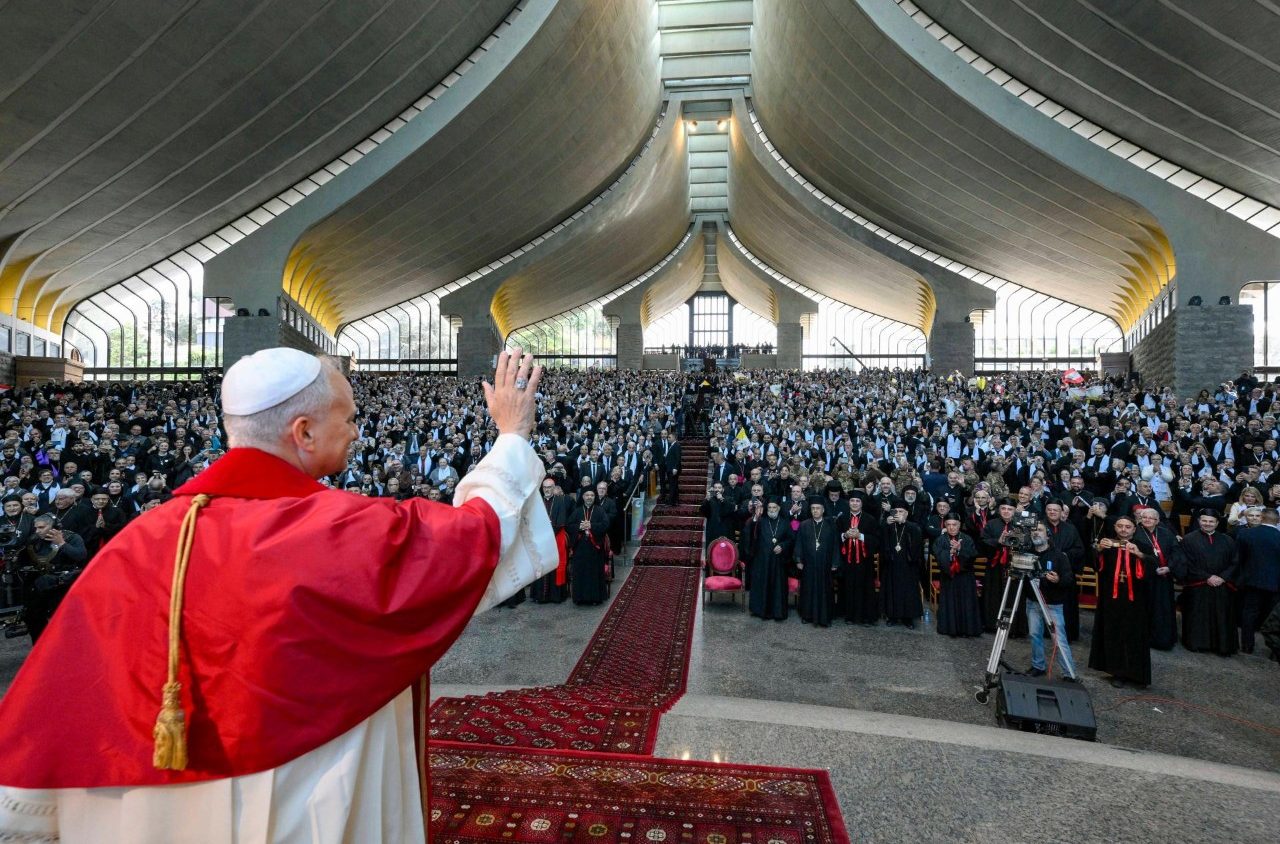
Pope Leo XIV’s three-day visit to Lebanon wrapped up on December 2, but the impact of his message—focused on coexistence, mutual respect, and the urgent need for interfaith collaboration—will likely resonate for much longer in a region scarred by conflict.
For the first American pope, Lebanon wasn’t just another stop on his first international trip. Coming straight from Turkey, where he commemorated the 1,700th anniversary of the Council of Nicaea, his visit served as a poignant reminder that the Middle East’s deep-seated wounds—political, economic, and spiritual—can only begin to heal through sincere dialogue among different faiths.
Pope Leo XIV became the first pope to visit and pray at Saint Charbel’s tomb in Annaya, Lebanon. On the second day of his visit to this beautiful country, he spent a few minutes in silent prayer and lit a lamp at the saint’s burial place, which is visited daily by thousands of… pic.twitter.com/u1q0qCW5z3
— EWTN Vatican (@EWTNVatican) December 1, 2025
“The path of mutual hostility and destruction in the horror of war has been travelled too long, with the deplorable results that are before everyone’s eyes,” Leo said. “We need to change course. We need to educate our hearts for peace!”
A Nation in Crisis, A Message of Hope
Pope Leo XIV, born Robert Francis Prevost in Chicago and the first Augustinian to ascend to the papacy in centuries, arrived in a country still grappling with its challenges. Lebanon is still feeling the effects of the devastating 2020 port explosion, a struggling economy, and the repercussions of the Israel–Hezbollah conflict. The Pope didn’t shy away from acknowledging the pain. Throughout his visit, he emphasized that Lebanon’s rich tapestry of religions—Christian, Sunni, Shiite, Druze—holds a vital lesson for a region caught in cycles of distrust.
“Unity, reconciliation, and peace are possible,” he shared with an interfaith gathering at Martyrs’ Square, “when we choose to disarm not just our weapons, but our hearts.”
“In an age when coexistence can seem like a distant dream, the people of Lebanon, while embracing different religions, stand as a powerful reminder that fear, distrust and prejudice do not have the final word.
Sacred Sites, Symbolic Gestures
The Pope’s schedule was thoughtfully crafted to bridge religious divides. His quiet prayer at the tomb of St. Charbel in Annaya—a site where both Christians and Muslims seek healing—was one of the most symbolic moments of his visit. Despite the pouring rain as he made his way up the mountain monastery, the bells rang out, underscoring the spiritual significance of his pilgrimage.
At the tomb, he prayed for peace “especially for Lebanon and the entire Levant,” using words that transcended denominational lines.
He voiced his hope for peace in the region and issued ‘a heartfelt appeal: May the attacks and hostilities cease.’
‘We must recognize that armed struggle brings no benefit,’ he said. ‘While weapons are lethal, negotiation, mediation and dialogue are constructive. Let us all choose peace as a way, not just as a goal!’
BREAKING
Pope Leo XIV has been given an INSANE welcome at the Shrine of Our Lady of Lebanon
Turn up the volume, this is crazy pic.twitter.com/d9PtvvMLpQ
— Catholic Arena (@CatholicArena) December 1, 2025
Interfaith Leadership Under One Tent
The most memorable moment took place on December 1, when Christian patriarchs, Sunni clerics, Shiite leaders, and Druze sheikhs gathered under one tent in Martyrs’ Square. The air was filled with hymns and Quranic verses, creating a beautiful blend of faiths. In a simple yet powerful act, the leaders planted an olive sapling, symbolizing that peace is something we must nurture together.
Grand Mufti Abdul-Latif Derian expressed his admiration for the Pope, commending him for continuing the interfaith journey initiated by Pope Francis. He remarked, “Lebanon is the land of this message.” Ali al-Khatib, a prominent Shiite cleric, made a heartfelt appeal: “We place Lebanon in your hands, hoping the world will come to our aid.”
These statements acknowledge that the Pope’s moral influence goes beyond politics and has the potential to genuinely impact international support for Lebanon’s recovery.
A Call That Stirred Debate
However, the Pope went beyond what many anticipated. He tackled the sensitive topic of Hezbollah’s weapons, urging the region to shift from arms to dialogue.
“Negotiation and mediation are constructive,” he stated. “Weapons are not.”
His remarks ignited discussions throughout Lebanese communities. While he recognized the intricate security situation in Lebanon, his message underscored a vital truth: interfaith harmony can’t thrive when violence is the norm.
Remembering Tragedy at Beirut Port
On December 2, he visited the port where over 200 lives were lost in 2020. Standing quietly among the ruins, he referred to the explosion as a stark reminder of “the horror of war” and called for accountability. His prayer there was brief yet deeply felt, emphasizing the moral obligation he often highlighted: without justice, peace remains out of reach.
Later that day, he celebrated Mass for more than 120,000 worshippers on the Beirut Waterfront, urging them to “disarm our hearts” of political and sectarian bitterness. “Lebanon, stand up,” he declared. “Be a prophetic sign of peace for the entire Levant.”
Why Christians Matter to Middle East Peace
In a bid to strengthen a waning Christian presence, a significant portion of his efforts was focused on uplifting Lebanon’s Christian youth. With their numbers dwindling to about one-third of the population and many leaving annually, he emphasized that their existence was crucial to the region’s diverse identity. At Bkerké, he urged young Christians to remain in their homeland and contribute to its revival.
The Vatican sees their presence as crucial, and not just for religious reasons. Christian communities in Lebanon, Syria, and Iraq have historically served as bridges between the West and the Islamic world, as cultural translators who understand both traditions. As these communities dwindle—Iraqi and Syrian Christians fled en masse during the ISIS years—that bridge weakens.
Pilgrims resonated with his call. “We will stay here,” declared May Noon, standing outside St. Charbel’s tomb. “We must live in this country as brothers.”
A Warm Welcome Amidst Concerns
Even with security concerns—brought to light when Jordan’s Queen Rania publicly questioned the safety of Lebanon—the Pope was met with an overwhelmingly warm reception. Crowds braved the rain to welcome him, showering his motorcade with rice and flower petals. Lebanese soldiers lined the streets, but the atmosphere was undeniably festive.
“For us, this visit brings life back,” shared Youssef Nasr from Lebanon’s Catholic Schools Secretariat. “It reminds us not to lose hope in our country.”
On his flight back to Rome, Pope Leo XIV candidly discussed the lessons Lebanon offers to Europe and North America, encouraging societies everywhere—not just in the Middle East—to engage in “genuine dialogue” to conquer fear.
Speaking to journalists on his return flight from Beirut to Rome, the pope said that during the trip “I also had personal meetings with representatives of different groups who represent political authorities, people or groups who also have something to [say] with the internal or international conflicts in the region.”
‘Our work is mainly not something public that we announce on the streets, it is a bit behind the scenes,’ he said, saying the Holy See will continue ‘to try to convince the parties to leave weapons and violence and come together to the table of dialogue to look for responses and solutions that are not violent, but can be more efficient and better for the people.’
Asked specifically about whether he intended to engage global leaders such as United States President Donald Trump and Israeli Prime Minister Benjamin Netanyahu in bringing an end to current hostilities between Israel and Hezbollah in southern Lebanon, the pope said, “I believe sustainable peace is achievable.”
‘I’ve already, in very a small way, begun a few conversations’ with some political leaders in the United States and Israel,’ he said, saying, ‘I intend to continue to do that, personally or through the Holy See.’
The Pope didn’t come with promises of miracles. His visit couldn’t magically fix Lebanon’s political deadlock or its economic struggles. However, what he did bring was something the Middle East truly needs: a moral compass rooted in coexistence, empathy, interfaith harmony, and our shared humanity.
As he left Beirut, he offered a simple yet powerful reminder—that the future of the Middle East won’t be determined by weapons or wars, but by the willingness of its people to view each other not as adversaries, but as allies.
In Lebanon, a nation where churches and mosques stand side by side, Pope Leo XIV discovered the evidence he was looking for: interfaith harmony isn’t just a fantasy for the Middle East. It’s the only sustainable route to peace.