
Prabowo in Israel? Risky bet of a useful opening
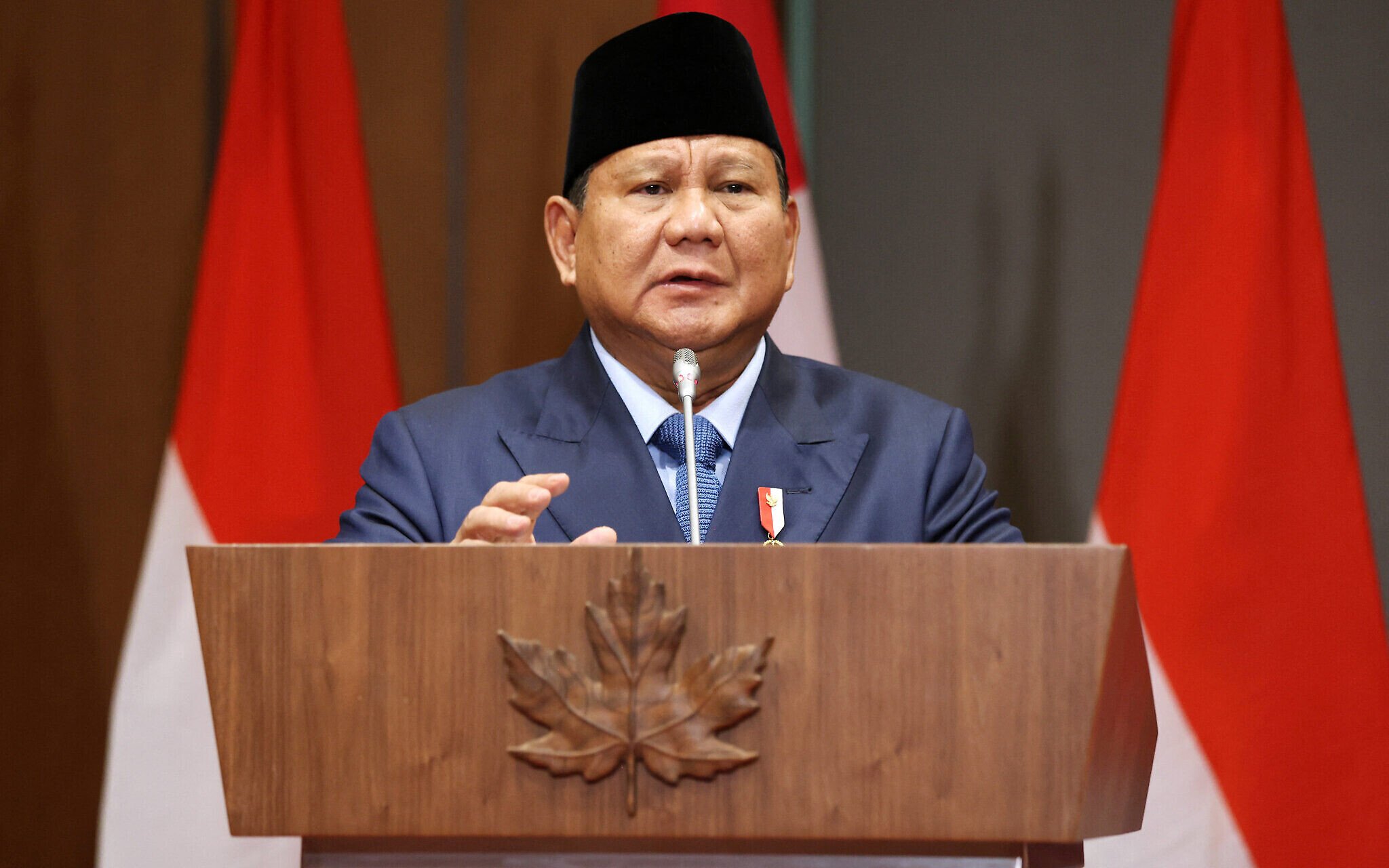
The press is increasingly mentioning the possible visit of Indonesian President Prabowo Subianto to Israel (denied by Jakarta), which would constitute a historic first. It would symbolize much more than a simple diplomatic gesture: an implicit recognition, by the largest Muslim country in the world, that above all the Israeli-Palestinian question can only be settled through direct dialogue. But in Indonesia the Palestinian cause remains a moral and identity pillar, and such a step can only be justified if it aims at political progress.
Indonesia has always refused any official relationship with Israel, conditioning normalization on the creation of a Palestinian state. This positioning, based on solidarity with the Palestinian people, has earned him a certain respect in the Muslim world. But in a context where regional geopolitics is changing and transforming—Abraham’s agreements, Arab-Israeli ties, and American and Chinese repositioning—Jakarta cannot ignore that diplomatic isolation is no longer synonymous with influence.
A ‘controlled’ opening towards Israel would not be a denial but an ‘adaptation’: making a moderate and pragmatic Muslim voice heard, which could act as a mediator. If Indonesia decides to exert influence over the Palestinian issue, it must be at the table of discussions, not only in statements of principle.
The internal political risk is immense. Indonesian society, largely committed to the Palestinian cause, could see a presidential visit to Jerusalem as a betrayal. Could President Prabowo, who is still consolidating his authority, undermine his legitimacy by appearing as the leader who broke the taboo of national diplomacy?
Added to this is a diplomatic danger: without a clear political framework, such a visit would immediately be perceived as a symbolic victory for Israel and not as a contribution to peace. It would then risk discrediting Jakarta among its traditional Arab allies and dividing the Muslim world more than it would unite it.
In the history of diplomacy, calculated breaks are sometimes worth more than sterile loyalties. If President Prabowo decided to go to Jerusalem, this gesture should not be analyzed as a conversion but as a strategy: that of an emerging power that wants to be a bridge between two worlds.
Indonesia should not hesitate to establish relations with Israel. It just needs to check that this door opens onto something.