
Mikhail Salita

Prayer, Blessing, and the Prepared Vessel: A Lesson from ‘Va’etchanan’

In the Torah portion “Va’etchanan,” we hear the voice of Moses as he prays — “And I pleaded with the Almighty” — asking to be allowed to enter the Land of Israel, then still called Canaan. He asks, but the answer is “no.” Not because his request was unworthy, but because, in the Divine plan, this was the very purpose: Moses was meant to pray, but not to enter. His mission was to prepare the people, to plow their hearts with the words of Torah, to plant them with faith. Gathering the harvest — entering and settling the land — would be the task of Joshua.

The Talmud teaches that the righteous do not pray just once or twice, but many times, even if the answer does not come in the form they desire. Moses’ prayer was not in vain; it created a spiritual vessel for future generations who would enter the land. Sometimes God answers not by giving us what we want, but by shaping the conditions for a blessing to be revealed at the right time and in the right way.

Prayer and blessing are not the same. Prayer is our turning to the Source, our desire to open the heavens. A blessing is the flow that descends from above. But for that flow to become reality, there must be a vessel capable of receiving and holding it. Without a vessel, the blessing will either spill away or become destructive.

It is the same in nature: we may pray for rain, but if the field is not plowed, not cleared of stones, and not sown with wheat, even the most abundant rain will not yield bread. Rain is the answer, but the harvest depends on whether the field is prepared.

The same is true in our lives: we pray for health — and must care for our bodies. We pray for peace — and must be peacemakers. We pray for sustenance — and must work. The vessel for blessing is created by our actions.

Here the parable of the butterfly is fitting. When it emerges from its cocoon, its wings are small and weak. To gain strength, it must struggle against the resistance of the cocoon. If it is helped out too soon, it will never be able to fly. The power of flight is born in the struggle.

Similarly, a child does not immediately stand and walk. First they crawl, then fall, then rise again, take a few unsteady steps, and only then begin to walk. Falling is not a failure — it is part of the Creator’s design.

The same applies in spiritual life: prayer opens the door, but obstacles build the staircase. Without a plowed field, rain is useless. Without the struggle of the cocoon, there is no flight. Without falling, there is no walking.

In “Va’etchanan,” God’s refusal to Moses is not a punishment but a transition. His prayer was heard, but its purpose was different — to complete his mission and hand the people over to Joshua. Sometimes the answer to our prayer is not what we asked for, but what the world needs. And if we have done our part — prepared the vessel, accepted the trials, overcome the obstacles — the blessing will surely come, even if its fruits are seen by others.

Thus we learn that true faith is not only to pray for rain, but to prepare the soil. Not only to dream of flight, but to embrace the struggle. And then Shabbat Nachamu — the Sabbath of Consolation — becomes not only a time of comfort after mourning, but a time of certainty: everything we do for the sake of the Creator will, without fail, bear fruit at its appointed time.
About the Author
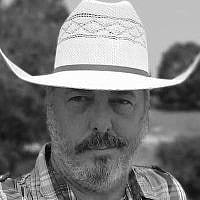
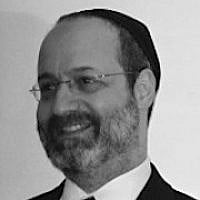
Rabbi Moshe (Mikhail) Salita is a Brooklyn-based rabbi, legal scholar, and emerging animal chaplain whose work unites Jewish spirituality, international law, and compassion for all living beings. He holds a Master’s in International Law (with honors) from the National University “Odesa Law Academy,” where he is currently a PhD student researching the restitution of unlawfully confiscated Jewish communal property in Soviet Ukraine. He also earned a Master’s in Library and Information Science from Pratt Institute (New York) and a Master’s in Education and Special Education from Touro University, with graduate certificates in Applied Behavior Analysis (ABA) and Bilingual Education. Rabbi Salita is an ordained rabbi of the Jewish Spiritual Leaders Institute (JSLI), a Doctor of Ministry student in Jewish Spirituality at the Graduate Theological Foundation, and an Animal Chaplain-in-Training with the Compassion Consortium in New York. His mission is to weave together justice, mercy, and creation care into one sacred path of Tikkun Olam — healing the moral and spiritual wounds of the world. He serves as Executive Director of the Salita Foundation, originally founded by his brother, Dmitriy Salita — former WBF World Champion boxer, and inductee of both the New York Boxing Hall of Fame and the Jewish Sports Hall of Fame. Today, Rabbi Salita leads the Foundation toward a broader vision — uniting humanitarian ethics, environmental awareness, and cultural restitution. Through the Foundation, he has launched the “Eco-Kosher Initiative,” a global program encouraging support for businesses and individuals who respect the environment, animals, and their communities. For him, “eco-kosher” is not limited to food — it is a moral philosophy of living in balance with creation, where sustainability and holiness walk hand in hand. He is also devoted to preserving and gaining international recognition for the rare Israeli cat breed Kanaani — a living symbol of harmony between Jewish heritage and the natural world. A descendant of Sruel ben Aharon Lekhtman, a Ruzhiner Hasid and brick-factory owner in Kitai-Gorod, Kamianets-Podilskyi — once a spiritual heart of the Ruzhin Hasidic movement in Tsarist-era Ukraine — Rabbi Salita continues his ancestor’s legacy of faith, integrity, and bridge-building. Sruel Lekhtman served as a close friend and estate manager for Pan Dembitsky, a Polish landowner remembered with respect in both Jewish and Ukrainian memory. Their friendship, crossing lines of faith and culture, remains a profound symbol of coexistence — especially meaningful for Ukraine today. Although Rabbi Salita received Reform rabbinic education in the spirit of Jewish Universalism, he maintains a deep spiritual connection with Chabad, whose living Hasidic tradition unites intellect, compassion, and joy. Following the example of the prophets — from Adam, the first caretaker of creation, to King Solomon, who understood the language of animals, and to Rav Papa, the sage who spoke kindly of cats — Rabbi Salita teaches that true holiness is revealed through compassion for all living beings. His life’s work is to show that caring for animals and serving God are one and the same sacred breath.
Related Topics
Related Posts
Sign in or Register
Please use the following structure: example@domain.com
Or Continue with
By registering you agree to the terms and conditions
Register to continue
Or Continue with
Log in to continue
Sign in or Register
Or Continue with
check your email
Check your email
We sent an email to you at .
It has a link that will sign you in.