
Preemptive force is necessary to keep Israel safe. It’s not sufficient.
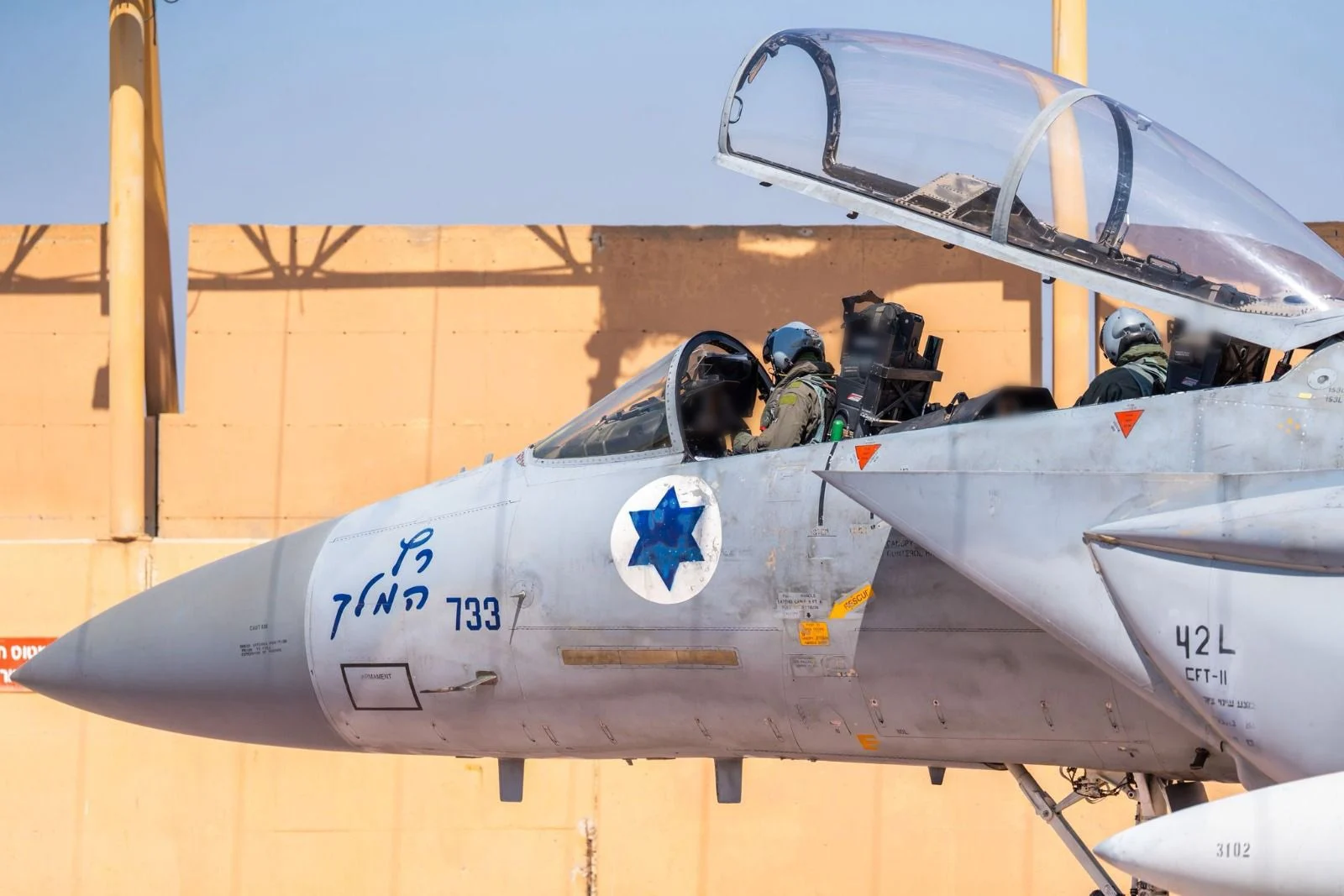
Israel’s assertive posture across the Middle East over the past year is often portrayed as an unchecked or reckless use of force. In reality, it reflects a fundamental shift in Israel’s security doctrine, forged in the trauma of October 7 and the following attack against it from seven fronts.
Israel is the only state openly threatened with annihilation by a radical axis led by Iran. Yet for decades, Israel relied on deterrence, early warning, defense and containment, assuming severe threats along its borders could be managed and absorbed to preserve quiet. October 7 shattered that logic. Deterrence collapsed when jihadist organizations, deployed on Israel’s borders with large forces, attacked it, willing to die as martyrs while sacrificing tens of thousands of their own population.
The cost of inaction turned out to be unbearable and Israel’s political and security leadership have therefore entered a new strategic era – one defined not by managing dangers but by acting to stop them before they mature. This preemptive doctrine targets existential threats, actors immune to deterrence and border militias capable of striking with close to zero warning time.
The clearest expression of this shift is the war Israel launched against Iran – a state that has long called for Israel’s destruction while building the capabilities to pursue it. When Israel struck Iranian nuclear and missile facilities earlier this year, it did so believing Tehran’s nuclear program had entered a dangerous phase and its long-range missile arsenal was expanding at an alarming pace. A projected stockpile of 8,000 missiles by 2027 would pose an existential danger, especially after Iran’s missile attacks against Israel in unprecedented barrages in 2024.
Even after the war, Israel is alarmed by how rapidly Iran is rebuilding its missile array. It cannot accept a renewed expansion of the missile capabilities that devastated Israeli cities during the war. For Israel, this is not abstract. It is a countdown to the next confrontation.
The same logic applies in Lebanon. After Hezbollah began attacking Israel on October 8 without provocation and refused to halt its fire, Israel delivered a crippling blow to the organization. Over the past year, Israel has continued targeting senior terror operatives and critical Hezbollah capabilities, especially precision-guided missiles and production sites. Yet Hezbollah is rebuilding faster than Israel – and far faster than the ineffective Lebanese Armed Forces – can dismantle it. If this trend continues, Israel may feel compelled to widen operations.
Israel’s actions in Syria reflect the same preventive logic. Dozens of Israeli strikes have targeted terror and militia infrastructure, not in retaliation but to avert future attacks reminiscent of October 7. Israel has no interest in bringing down the Syrian state, which it believes would unleash chaos. Its goal is narrower: ensuring that Islamist extremists, ISIS remnants and Iranian-backed militias along its border – an area with no strategic depth for early warning – cannot attack Israel.
Even Gaza – where the war began as a response to mass murder, not a preemptive strike – is now shaped by the same preventive doctrine. Israel seeks to ensure that the Trump plan and UN Security Council Resolution 2803, calling for Hamas’s disarmament, are translated into reality. Until then, in areas under Israeli control and in response to ceasefire violations, Israel targets Hamas commanders, tunnel networks, emerging weapons production sites and command infrastructure. The purpose is prevention, not retribution.
The limits of military action
Still, preemption alone cannot secure Israel’s future. Military action cannot replace diplomacy or political frameworks that reduce the need for force. Israel must distinguish between arenas where preemption is unavoidable – Hamas and Hezbollah on its borders and a nuclear-threshold Iran – and those where diplomacy could produce stability at lower cost.
Syria offers the clearest opening. Washington is exploring a limited nonaggression pact between Damascus and Jerusalem, including commitments on border security, demilitarization and reducing Iran’s presence and smuggling routes. A quiet Syrian front constrains Iran’s regional activity, eases pressure in Israel’s north and allows Jerusalem to focus on more urgent threats.
Lebanon requires a different model. Airstrikes alone cannot neutralize Hezbollah’s arsenal. Israel should support mechanisms tying economic and reconstruction aid to verifiable steps to dismantle Hezbollah’s military capabilities. A monitored border-security arrangement along the Syrian frontier and stronger US-French efforts to bolster the Lebanese Armed Forces under strict conditions that it sever all operational ties with Hezbollah must accompany military pressure.
With Iran, diplomacy should not be dismissed. President Trump’s pursuit of a nuclear agreement based on “zero enrichment” – consistent with Security Council sanctions reinstated through the snapback mechanism – deserves a serious attempt. Any agreement must include strict limits on Iran’s missile program, which constitutes a threat to the whole region.
The paradox of Gaza
In Gaza, Israel faces its deepest paradox. Only Israel, not an international force, can dismantle Hamas’s military infrastructure. Yet Israel neither wants nor can govern Gaza, and Hamas cannot be permitted to rule again. The only viable path is a reformed Palestinian Authority measured according to benchmarks outlined in the Trump peace plan, capable of assuming administrative responsibility under a regional umbrella. This structure should include a credible political horizon, including a pathway toward a Palestinian state – the key to Arab normalization and the only mechanism likely to draw regional partners into stabilizing Gaza.
Israel’s challenge now is to emerge from its trauma without losing sight of the lesson this trauma imparted. The impulse to prevent another October 7 is understandable and justified. But Israel must pair it with a strategy that reassures regional partners rather than alarms them, and that employs force selectively.
Israel’s behavior is not aimless aggression. It stems from a doctrine reshaped by a day no Israeli will ever forget. But if the first phase of this doctrine was preemption, the next must be integration – anchoring Israel’s security not only in its ability to thwart threats but in itsability to help build a more stable regional order alongside its neighbors.
–
This piece was co-authored by Col. (ret.) Udi Evental, an expert in policy and strategic planning consulting for the public and private sectors. Evental served as the head of the strategic planning unit of the Israeli Ministry of Defense, as an intelligence attaché in Washington, and was assistant to the Prime Minister’s military secretary.