
President Trump Expands Abraham Vision to North Africa
The Trump administration has set its sights on North Africa, where decades-old tensions between Morocco and Algeria over Western Sahara could soon give way to a landmark reconciliation. Steve Witkoff, President Trump’s special envoy for the Middle East, told CBS News that Washington expects to broker a peace deal between the two countries within 60 days—an ambitious timeline that reflects the administration’s signature approach to regional conflicts.
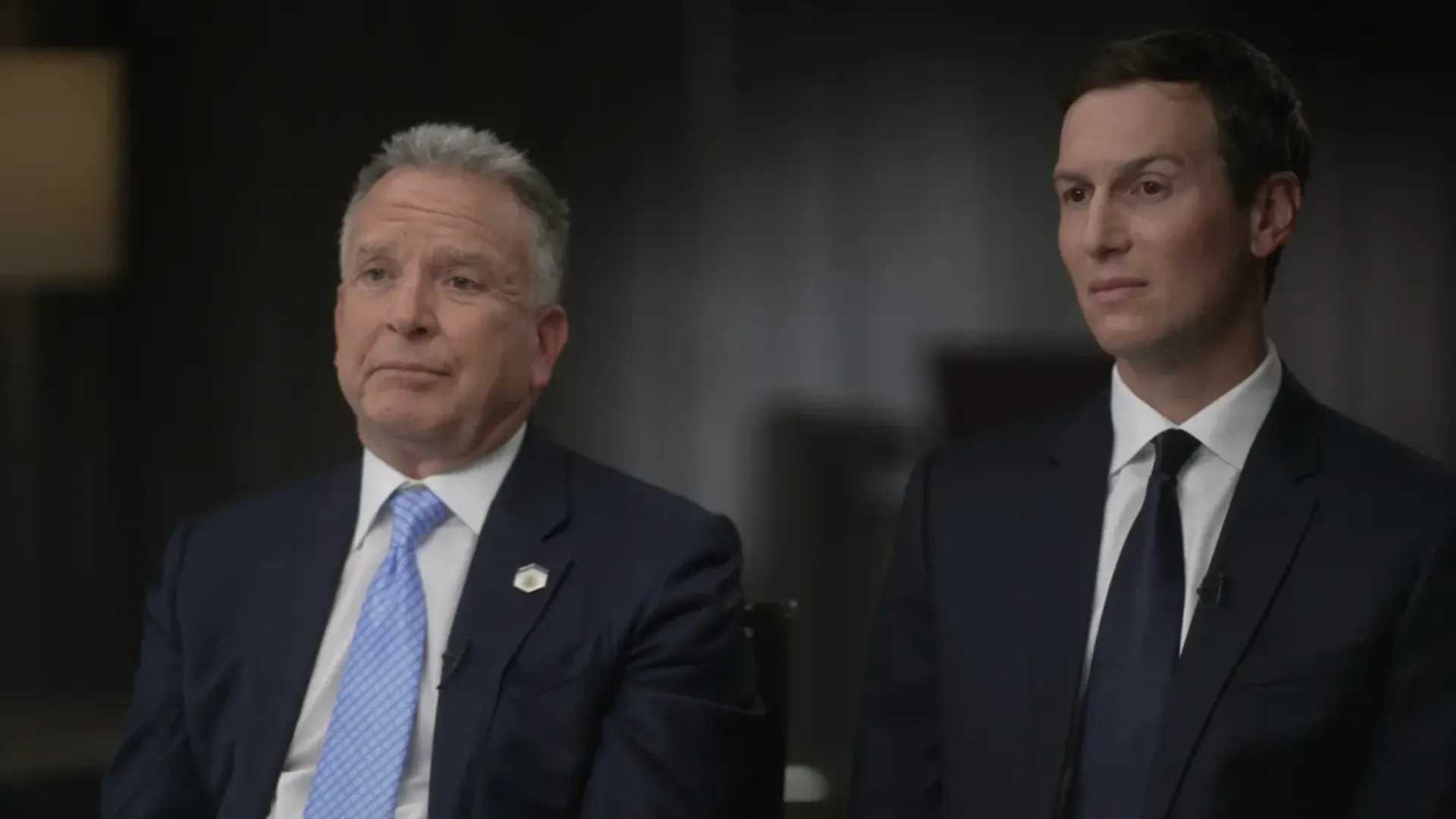
“There will be a peace agreement, in my opinion, within 60 days”, announced Mr. Witkoff on CBS’s “60 Minutes Overtime” TV program in presence of Jared Kushner, Trump’s son-in-law.
During the interview, Witkoff and Jared were responding to questions on issues related to peace talks in the Middle-East. Steve Witkoff, said his “team is working on a peace agreement between Morocco and Algeria at the moment. There will be a peace agreement, in my opinion, within 60 days”, he underlined.
The announcement comes as Massad Boulos, Trump’s adviser on African affairs, has been conducting shuttle diplomacy between Rabat and Algiers. In recent remarks, Boulos suggested that Algerian President Abdelmadjid Tebboune shows a willingness to “rebuild bridges of trust” with Morocco. He described the two nations as “brotherly” neighbors who share deep historical and cultural bonds despite years of estrangement. King Mohammed VI, in a recent address, reiterated Morocco’s commitment to finding a “fair and lasting solution” to the Sahara question—one that maintains Morocco’s sovereignty while offering substantial autonomy to the region.
Washington’s stance has been clear. The United States backs Morocco’s 2007 autonomy proposal as the most viable path forward. The plan would grant the Western Sahara considerable self-governance under Moroccan sovereignty, a framework that has gained traction among major powers including France, the United Kingdom, and Germany. In recent years, numerous African and Arab states have opened consulates in Laayoune and Dakhla, signaling their acceptance of Morocco’s territorial claims.
Algeria, however, remains a patron of the Polisario Front, which continues to demand full independence for Western Sahara. Algiers maintains that it simply supports the Sahrawi right to self-determination, though it has long provided the Polisario with financial and logistical backing. The rupture between Morocco and Algeria deepened in August 2021 when Algiers severed diplomatic relations, citing “hostile acts” by Rabat. The land border between the two countries has been sealed since 1994, and meaningful dialogue has been nearly impossible.
Still, the Trump administration believes the time is right for a breakthrough. Witkoff’s 60-day deadline reflects a broader foreign policy strategy that emphasizes economic leverage and transactional diplomacy over prolonged military engagement. This approach has already yielded results elsewhere, most notably through the Abraham Accords, which normalized relations between Israel and several Arab states.
Speaking at a White House Diwali celebration this week, Trump highlighted how his methods have helped avert conflict in volatile regions. He recounted how he intervened during heightened tensions between India and Pakistan, threatening both countries with a suspension of US trade if hostilities escalated. “Within 24 hours, they called back and said they didn’t want to fight,” Trump said. “And we have no war with Pakistan and India. That was a very, very good thing.”
The same logic now shapes his approach to North Africa. Trump’s advisers, including Jared Kushner and Massad Boulos, frame the Morocco-Algeria initiative as an extension of the Abraham Accords philosophy—one that prioritizes economic incentives and regional stability over ideological disputes. “This is a historic opportunity to open a new page of cooperation and joint development,” Kushner remarked, describing the effort as part of a broader push to unlock the Maghreb’s economic potential.
The implications are considerable. The Western Sahara dispute has stifled regional integration and cost both Morocco and Algeria billions in lost trade and investment. A peace agreement would restore diplomatic ties, enable cross-border infrastructure projects, and create new opportunities for energy cooperation—all core elements of Trump’s “peace through prosperity” vision.
Algeria’s response has been muted. President Tebboune made no mention of Morocco or Western Sahara in his latest public address, a silence that some analysts interpret as a tacit recognition of changing dynamics. For years, Algeria’s inflexible position on the Sahara has been central to its regional identity. Now, facing economic pressures and diplomatic isolation, that stance may be increasingly difficult to maintain.
The timing is strategic. The UN Security Council is expected to renew the mandate of its peacekeeping mission in Western Sahara in the coming weeks, with the United States likely to advocate for language that explicitly recognizes Morocco’s autonomy plan as the basis for future negotiations.
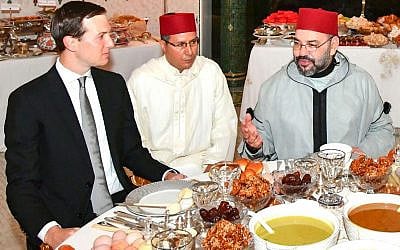
If Trump’s timeline holds and a Morocco-Algeria accord is reached within two months, it would mark a significant foreign policy achievement and further validate his administration’s unconventional methods. From the Middle East to the Maghreb, Trump’s doctrine rests on the belief that stability follows from strength, and that negotiations succeed when backed by clear economic incentives.
The broader regional picture adds weight to the Morocco-Algeria initiative. In a recent Fox Business Network interview, Trump expressed optimism about expanding the Abraham Accords further. “I hope to see Saudi Arabia go in, and I hope to see others go in. I think when Saudi Arabia goes in, everybody goes in,” he said.
Senior US administration officials point to what they call “positive momentum” sweeping the region, with potential new members including Saudi Arabia, Indonesia, Mauritania, Lebanon, and notably, Algeria itself. Morocco joined the Abraham Accords in 2020, making a peace deal between Rabat and Algiers not just a bilateral breakthrough but a potential gateway for Algeria’s entry into the broader normalization framework.
Whether the Western Sahara becomes the next testament to that philosophy depends on the willingness of leaders in Rabat and Algiers to take bold steps. For now, Washington’s message is unambiguous: the era of perpetual conflict is ending, replaced by one in which trade, dialogue, and shared interests may finally prevail where ideology has not.