Preventing Extremism-Nuclear Fusion
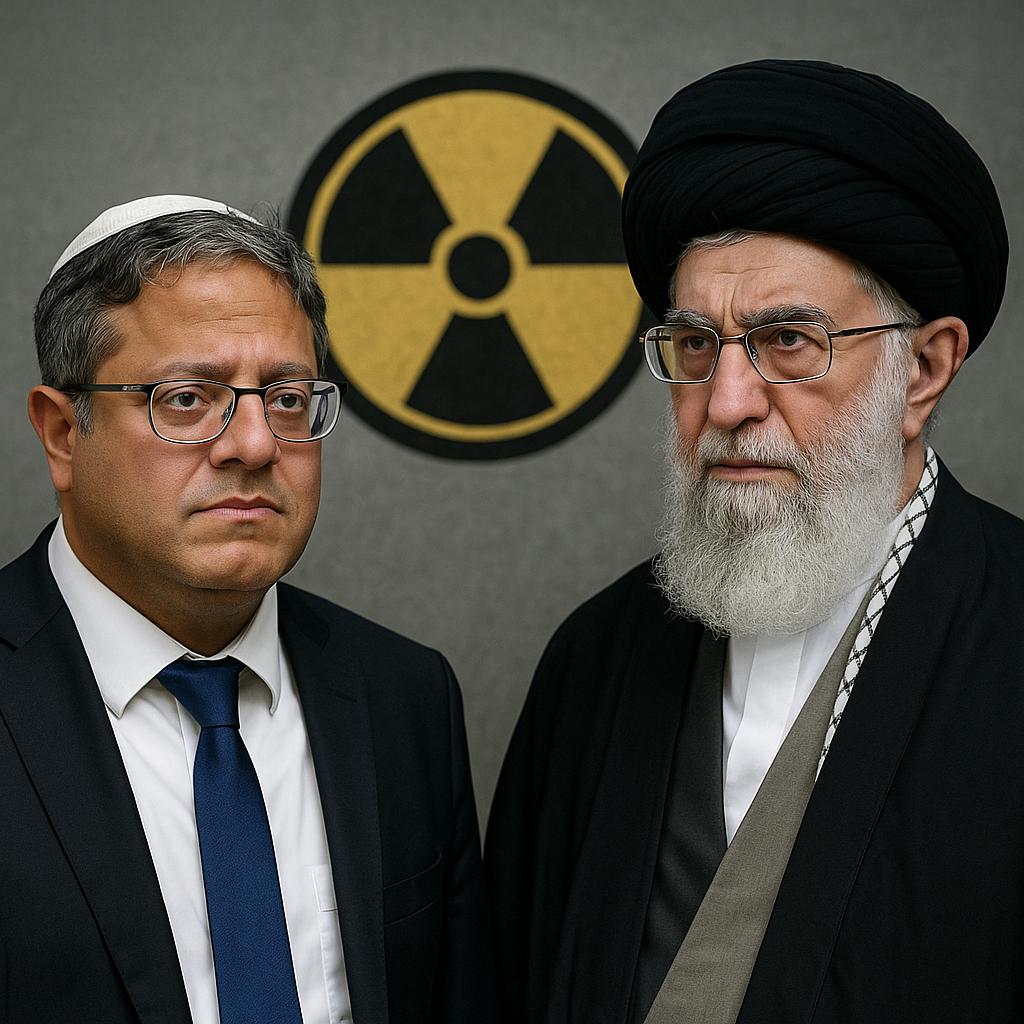
“With great power comes great responsibility,” said Spider-Man. And what power is greater than possessing a nuclear arsenal?
As Israelis, we are rightfully alarmed by the possibility that Iran could obtain nuclear weapons, especially in light of the regime’s recurring rhetoric about the destruction of Israel. At the same time, Israel’s own political system now fully legitimizes senior governing partners—such as Ben Gvir, Smotrich, and others—who speak openly in the language of dehumanization, and even annihilation.
If we zoom out from specific cases, the broader principle becomes clearer: shouldn’t any country in possession of nuclear weapons be required to ensure that individuals who promote ideologies of extermination and dehumanization are kept out of positions of power? The fusion of mass destruction capability with an ideology that justifies its use is a demonic combination that must be fought, impartially, in every case. Taking this approach could also provide greater legitimacy for efforts to confront both Iran’s nuclear ambitions and rising extremism within Israel.
But what would this mean in practice?
There is a need for binding international norms—or ideally, an explicit convention—establishing that any nuclear-armed country must maintain mechanisms of defensive democracy (or analogous safeguards in non-democratic regimes) that prevent advocates of dehumanization and extermination from gaining governing power.
In the Israeli context, this would mean that several current ministers and members of Knesset should have been disqualified from office due to their rhetoric. Consider, for instance, Minister Amichai Eliyahu of Otzma Yehudit, who refused to rule out the possibility of dropping a nuclear bomb on Gaza. In Iran’s case, this would likely mean replacing the entire regime with one of an entirely different character. This is not just about protecting democratic institutions—it is about a state’s capacity and willingness to fulfill its most basic obligations under international law.
A complicated distinction: calling for the destruction of a state vs. of a people
Things become murkier when we attempt to distinguish between calls for the destruction of a state (a political structure that can theoretically be replaced without harming anyone) and calls for the destruction of a population (which directly targets human lives).
In reality, this is often a disingenuous distinction. A call to destroy a state is not usually a call for radical reform, regime change, or transformation of its political identity. Take for example the widespread Israeli rhetoric calling to topple the Iranian regime—these are calls for political change, not for the obliteration of the country.
But Iranian slogans like “Death to Israel” (مرگ بر اسرائیل) introduce deliberate ambiguity. What exactly is meant? The phrasing is vague enough to be interpreted either as a genocidal threat or simply as a wish to eliminate Israel’s governing structures. And even the latter entails grave consequences: state structures provide legal and human rights protections—without them, vulnerable minorities, like Jews in the Middle East, become even more exposed.
On the other hand, if we broaden the definition of “extermination rhetoric” to include categorical denial of a state’s right to exist, then we must also acknowledge that significant parts of Israel’s political system reject the very legitimacy of a Palestinian state—not just for security reasons, but as a matter of principle. Even if they do not speak in terms of extermination or dehumanization, such rhetoric—especially now that Palestine is gaining wider recognition—is dangerous and undermines international norms.
In short, any rhetoric that seeks to erase collective existence—whether through physical annihilation or the denial of legitimate statehood—should be addressed consistently and seriously.
The bottom line
There is an urgent need to formulate consistent and more rigorous international standards for confronting extremism in nuclear-armed states. This is how we move beyond political biases and toward principles of universal justice that can also generate broader legitimacy.
Such a framework would justify efforts to prevent Iran’s nuclearization—which threatens Israel’s existence—while also confronting rising Israeli extremism that denies the collective rights of Palestinians, backed by, according to foreign reports, Israeli nuclear arsenal.