
An Iranian voice in exile
Iran’s Escalation Trap: The Operation Survives, the Nation Pays
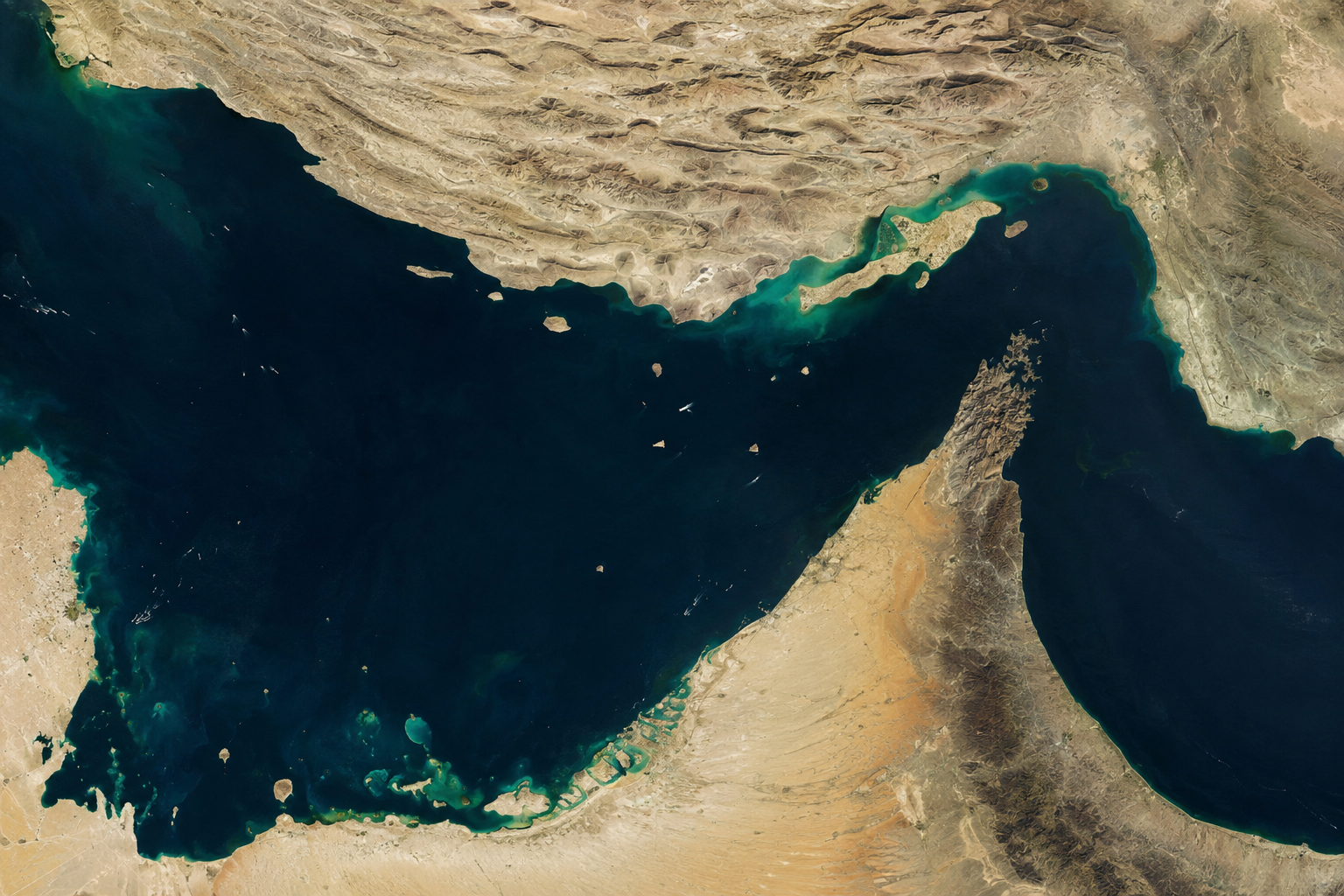
The weaponization of the Strait of Hormuz may offer the Islamic Republic short-term tactical leverage for regime survival, but it imposes a generational economic and reputational cost on Iran as a nation.
Robert Pape is not wrong. That needs to be said clearly, because what follows is not a dismissal of his framework but an examination of what it cannot reach.
Pape’s Escalation Trap theory, developed across decades and applied with precision to the current conflict, correctly identifies the structural dynamic now governing this conflict: each round of coercion produces conditions for the next, because neither side achieves durable resolution. His observation that Iran has demonstrated something new — that a determined actor, using geography and drone technology as force multipliers, can contest American military dominance and extract concessions — is accurate. Hormuz was weaponized. A memorandum was signed. Negotiations occurred on terms Washington did not fully control.
Where the framework runs into its limits is in a question it does not ask: beneficial for whom?
The Missing Distinction
The missing variable is regime-state divergence. Pape models Iran as a unitary actor. The current conflict increasingly suggests that it is not.
Western strategic analysis treats the Islamic Republic and Iran as interchangeable. When escalation “benefits Iran” in Pape’s framework, it means Tehran resisted coercion, maintained leverage, and forced a negotiation. From a state-behavior perspective, this holds.
But the Islamic Republic is not Iran. It is an operation embedded within Iran — one whose interests are structurally distinct from those of the Iranian people. When the operation survives, Iran pays the bill.
The costs that do not appear in the framework are already accumulating. Since the war began, Iran has launched missile and drone strikes against the UAE, Saudi Arabia, Kuwait, Bahrain, Qatar, Jordan, Oman, and Iraq — targeting airports, desalination plants, oil facilities, and US military bases. On July 12 alone, Iran widened its campaign to six Gulf states simultaneously. Twelve Arab and Islamic countries issued a joint statement condemning the strikes as deliberate attacks on civilian infrastructure. Qatar, which had served as a key mediator throughout the conflict, announced it would not continue mediating while under attack. These strikes applied tactical pressure on Washington. They also systematically destroyed relationships with neighboring states that any post-regime Iran will need for economic reconstruction. The enmity manufactured in Riyadh, Doha, and Abu Dhabi today may well outlast the regime itself. It is being inherited by whoever comes next.
The weaponization of Hormuz is similarly double-edged. The regime discovered, in real time, that it could hold around one-fifth of globally traded oil hostage. This is a capability gain for the operation. It is a reputational cost for Iran as a future participant in the international economic order — one that will shape how the world prices Iranian risk for a generation.
The Current Alignment of Actors
As of this writing, the strategic picture is the following.
On July 11, Mohammad Bagher Zolqadr, Secretary of Iran’s Supreme National Security Council, issued his first public statement via Iranian state television: any attack on Iranian infrastructure will be met with retaliation, and “Israel will not be spared from the response” — as reported by JPost. This is a named threshold, publicly declared.
On July 13 and again on July 19, Foreign Ministry spokesperson Esmail Baghaei announced that Iran no longer considers itself bound by the Islamabad Memorandum of Understanding. The framework signed at Versailles is, from Tehran’s stated position, suspended.
Israel is currently not conducting direct military operations against Iran. It is watching. Speaking at the Negev Conference in Dimona on July 14, Netanyahu warned Tehran directly: “Do not expect a repeat of what happened before, because there will be no repeat. The previous response was powerful enough, but any further attempt to harm us will be met with a different response — far more powerful.” The silence is not passivity. It is a position.
Israeli officials have identified two conditions under which Israel would re-enter the conflict directly: a direct Iranian attack on Israeli territory, or an explicit request from Washington. The IDF is on full alert. The United States is dispatching additional F-35 stealth fighters and F-16 jets to the region, capable of targeting Iranian radar and air defense systems.
On July 18, the conflict crossed a further threshold. Two U.S. service members were killed and one reported missing in an Iranian missile and drone attack on a base in Jordan — bringing the confirmed American military death toll to sixteen since the war began. The U.S. launched retaliatory strikes the same night, its eighth consecutive night of operations against Iranian targets.
Trump, on the margins of the NATO summit in Ankara, described Iranian leadership as “crazy people.” The diplomatic register and the military posture are moving in opposite directions.
Meanwhile, Iran is reportedly preparing Houthi forces in Yemen for potential closure of the Bab el-Mandeb — a second chokepoint that, combined with Hormuz, would place roughly a quarter of the world’s energy supply under simultaneous threat.
The Variable Pape’s Framework Cannot Model
Iran has not yet struck Israel directly. It has struck Arab states’ infrastructure. It has attacked commercial shipping. It has moved against American military facilities in the Gulf. But it has not crossed the line that would trigger Israeli direct military engagement.
This restraint may reflect deliberate calculation. It may also reflect something more structural: the internal fractures within the Islamic Republic’s command architecture.
On July 6-7, Iranian forces began attacking commercial tankers in the Strait of Hormuz with missiles and drones, in what Axios described as a direct threat to unravel the memorandum signed less than three weeks earlier. Days later, senior U.S. officials told CBS News that Iranian authorities had privately attributed the attacks to an “errant” sect of hardliners seeking to derail negotiations.
This attribution deserves scrutiny. In Iranian intelligence doctrine, the claim of “unauthorized actors” is a recognized tactic — a form of organized plausible deniability designed to extract concessions while avoiding direct accountability. The regime fires, then distances. The message reaches Washington; the fingerprints do not. Whether the “hardliner” framing reflects genuine internal fracture or a coordinated good cop/bad cop operation, the practical consequence for any negotiating framework is identical: the party across the table cannot reliably distinguish between policy and theater.
As I have examined separately, the structural ambiguity at the apex of Iran’s command hierarchy — the opacity surrounding who holds authority and how decisions are made — makes the behavior of the Islamic Republic increasingly difficult to model using classical deterrence frameworks. Whether the system is fracturing or performing fracture is, from a strategic standpoint, nearly the same problem. Pape’s framework was not designed for an actor that may be doing both simultaneously.
The Scenarios and Their Common Direction
Several trajectories are currently possible. None of these scenarios appear likely to produce a net strategic benefit for Iran as a nation.
In the first scenario, the current pattern continues: limited strikes, contested shipping, diplomatic signals that alternate between suspension and resumption. This is the Mexican standoff — a condition in which neither side achieves resolution and both absorb ongoing costs. For the Islamic Republic, this is sustainable because the operation’s goal is survival, not victory. For Iran as a country, the economic attrition, international isolation, and accumulation of regional enmities are not sustainable on the same terms.
In the second scenario, Iran crosses the threshold into direct engagement with Israel. Netanyahu’s warning is explicit. Israeli military capacity, held in reserve through the current phase, would enter the conflict. The escalation dynamic that Pape describes as a “trap” would reach its terminal stage — not a trap from which both sides are trying to exit, but one from which exit requires crossing thresholds neither has yet reached.
In the third scenario, the pressure on Hormuz reaches a point where the international community determines that it has no acceptable option but to secure the strait by force. This would require ground forces. It would likely trigger Iranian strikes on those positions — a scorched-earth phase in which the costs to Iranian territory and infrastructure would be severe. One plausible endpoint of this scenario is that Iran loses physical control of Hormuz: not to the Islamic Republic’s adversaries, but to international forces acting under a mandate that the regime’s own behavior made unavoidable.
This third scenario carries a cost that outlasts the conflict itself. A forced international intervention to secure a waterway that Iran has held for decades would produce a wound in Iranian national memory — a sense of historic loss and humiliation — that would generate lasting enmity toward the West, and particularly toward the United States, across a generation. The regime, which caused the crisis, would likely not survive to bear that cost. The Iranian people would bear it instead.
Across all three scenarios, the direction of the analysis is consistent: intensification of the conflict does not produce net benefit for Iran. It produces scenarios in which the costs — strategic, economic, territorial, generational — fall on Iran while the operation that created them either collapses or is removed.
That is not Pape’s conclusion. But it is a conclusion his data, gathered from outside, cannot reach on its own.
Related Topics
Related Posts