
CEO of Time to Stand Up for Israel
Promises of Peace, Wars Without End
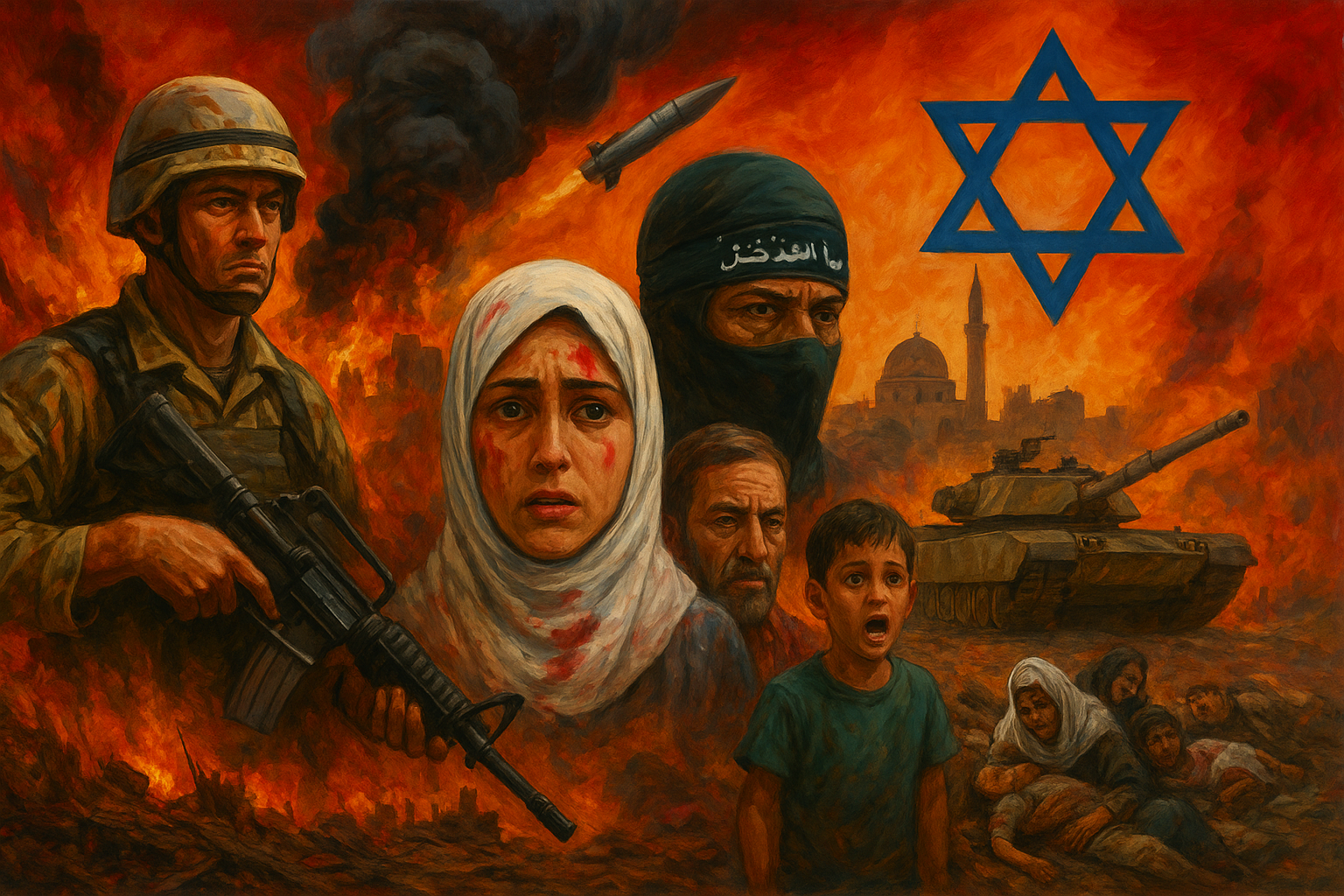
Photo Credits: Sabine Sterk (AI)
Promises of Peace, Wars Without End
“Peace will come when the Arabs love their children more than they hate us.”
( Golda Meir)
Trump claimed he brought “peace” to the Middle East. Yet as soon as the ink on the agreements was barely dry, disasters unfolded. While Israel celebrated the return of living hostages and the hope of real peace, Hamas regrouped with astonishing speed, torturing and executing Gazans in public without trial. Their aim was clear: restore a regime of terror and fear as fast as possible. Meanwhile, the United States, seemingly oblivious to the culture and rhetoric of the Middle East, stood by. They allowed troops who could be considered enemies of Israel, to approach Gaza, just 65 km from Tel Aviv. Israel faces imminent danger, and history suggests the U.S. may again turn its back if the situation spirals. Would it not be wiser for the U.S. to refrain from interfering in the internal politics of its allies?
The History Repeats Itself
When powerful nations intervene in foreign conflicts, they often promise peace, stability, and democratic transformation. Yet history shows that these interventions frequently fail, leaving countries fractured, governments weak, and populations suffering. The United States, in particular, has repeatedly launched military campaigns or supported regime changes with the stated goal of creating long-lasting peace. However, in many cases, peace has remained elusive.
Take Iraq, Afghanistan, or Libya. In each instance, the U.S. entered promising to liberate, democratize, or stabilize. In Iraq, the removal of Saddam Hussein in 2003 unleashed years of insurgency and sectarian violence, culminating in the rise of ISIS. Afghanistan saw nearly 20 years of U.S. and NATO presence, yet the Taliban returned to power in 2021, leaving a nation in turmoil. Libya, once considered a success story after the ousting of Muammar Gaddafi, descended into civil war, with multiple governments and militias vying for power
These are the Interventions the USA is responsible for and their outcome:
- Country: Iraq
Year(s) of intervention: 2003–present
U.S Goal: Remove Saddam Hussein, build democracy
Outcome/ Current status: Insurgency, sectarian conflict, rise of ISIS
Peace status: No lasting peace - Country: Afghanistan
Year(s) of intervention: 2001–2021
U.S Goal: Topple Taliban, nation-building
Outcome/ Current status: Taliban returned, instability
Peace status: No lasting peace - Country: Libya
Year(s) of intervention: 2011
U.S Goal: Remove Gaddafi, support transition
Outcome/ Current status: Civil war, fragmented government
Peace status: No lasting peace - Country: Somalia
Year(s) of intervention: 1992–present
U.S Goal: Humanitarian aid, stabilization
Outcome/ Current status: Weak governance, al-Shabab insurgency
Peace status: Fragile peace - Country: Yemen
Year(s) of intervention: 2015–present
U.S Goal: Support Saudi-led coalition
Outcome/ Current status: Civil war, humanitarian crisis
Peace status: No lasting peace - Country: South Sudan
Year(s) of intervention: 2011–present
U.S Goal: Support independence, state-building
Outcome/ Current status: Civil war, political instability
Peace status: Fragile peace - Country: Haiti
Year(s) of intervention: 1994–present
U.S Goal: Restore order, democratization
Outcome/ Current status: Recurrent crises, fragile government
Peace status: No lasting peace - Country: Vietnam / Laos / Cambodia
Year(s) of intervention: 1960s–1970s
U.S Goal: Contain communism, stabilize region
Outcome/ Current status: Civil conflict, political upheaval
Peace status: No lasting peace - Country: Iran
Year(s) of intervention: 1953
U.S Goal: Overthrow Mossadegh, install pro-West regime
Outcome/ Current status: Long-term resentment, 1979 revolution
Peace status: No lasting peace - Country: Guatemala
Year(s) of intervention: 1954
U.S Goal: Remove Árbenz, anti-communist
Outcome/ Current status: Civil war for decades
Peace status: No lasting peace - Country: Chile
Year(s) of intervention: 1973
U.S Goal: Overthrow Allende
Outcome/ Current status: Military dictatorship, human rights abuses
Peace status: No lasting peace - Country: Congo / DRC
Year(s) of intervention: 1960s
U.S Goal: Contain communism, regime change
Outcome/ Current status: Instability, coups, violence
Peace status: No lasting peace - Country: Nicaragua
Year(s) of intervention: 1980s
U.S Goal: Counter Sandinistas
Outcome/ Current status: Civil war, political turmoil
Peace status: Fragile peace - Country: Lebanon
Year(s) of intervention: 1982–1984
U.S Goal: Stabilization, peacekeeping
Outcome/ Current status: Civil war continued, U.S withdrew
Peace status: No lasting peace - Country: Panama
Year(s) of intervention: 1989
U.S Goal: Remove Noriega, stabilize
Outcome/ Current status: Political change but instability remained
Peace status: Fragile peace - Country: Grenada
Year(s) of intervention: 1983
U.S Goal: Protect citizens, stop communist influence
Outcome/ Current status: Short-term stability, long-term minimal impact
Peace status: Fragile peace - Country: Kosovo
Year(s) of intervention: 1999
U.S Goal: Stop ethnic cleansing
Outcome/ Current status: Partial stabilization, political tension
Peace status: Fragile peace - Country: Syria
Year(s) of intervention: 2014–present
U.S Goal: Counter ISIS
Outcome/ Current status: Ongoing civil war
Peace status: No lasting peace - Country: Pakistan / Afghanistan (Drone Campaigns)
Year(s) of intervention: 2004–present
U.S Goal: Counter-terror
Outcome/ Current status: Regional destabilization
Peace status: Fragile peace - Country: Philippines
Year(s) of intervention: 2001–present
U.S Goal: Support counter-terror
Outcome/ Current status: Localized stability, insurgency continues
Peace status: Fragile peace
These examples reflect a broader pattern: external intervention, even when well-intentioned, cannot guarantee peace. It requires local ownership, strong institutions, and societal cohesion, elements that foreign powers alone cannot impose.
This pattern is striking when contrasted with Israel, a nation that has faced nearly continuous attacks since its founding. Unlike foreign powers intervening abroad, Israel’s military actions are primarily defensive, and its leadership consistently seeks peace through negotiation and diplomacy when possible. Israel’s historic treaties with Egypt (1979) and Jordan (1994), as well as its role in the Abraham Accords, demonstrate a commitment to coexistence. Even amid war, Israel provides humanitarian aid to civilians in conflict zones, including Palestinians in Gaza and the Judea&Samaria, showcasing a moral responsibility rarely matched in international interventions.
While other nations have struggled to turn intervention into lasting peace, Israel’s approach, fighting for survival while pursuing diplomatic and humanitarian solutions, reveals the stark moral and factual contrast. Peace cannot be exported; it must be defended and earned. This lesson is essential for understanding global politics today.
| The historical record is clear: military intervention rarely produces lasting peace. Israel, by contrast, demonstrates that true stability comes from defending one’s people while negotiating in good faith and upholding moral responsibility, even in war. The world should take note: peace is not a promise to be dropped from the sky; it is a responsibility to be earned and protected. |
Am Yisrael Chai
Related Topics
Related Posts