Designing a world that works for everyone with no one left out.
Proposal for Palestinian-governed financial tools
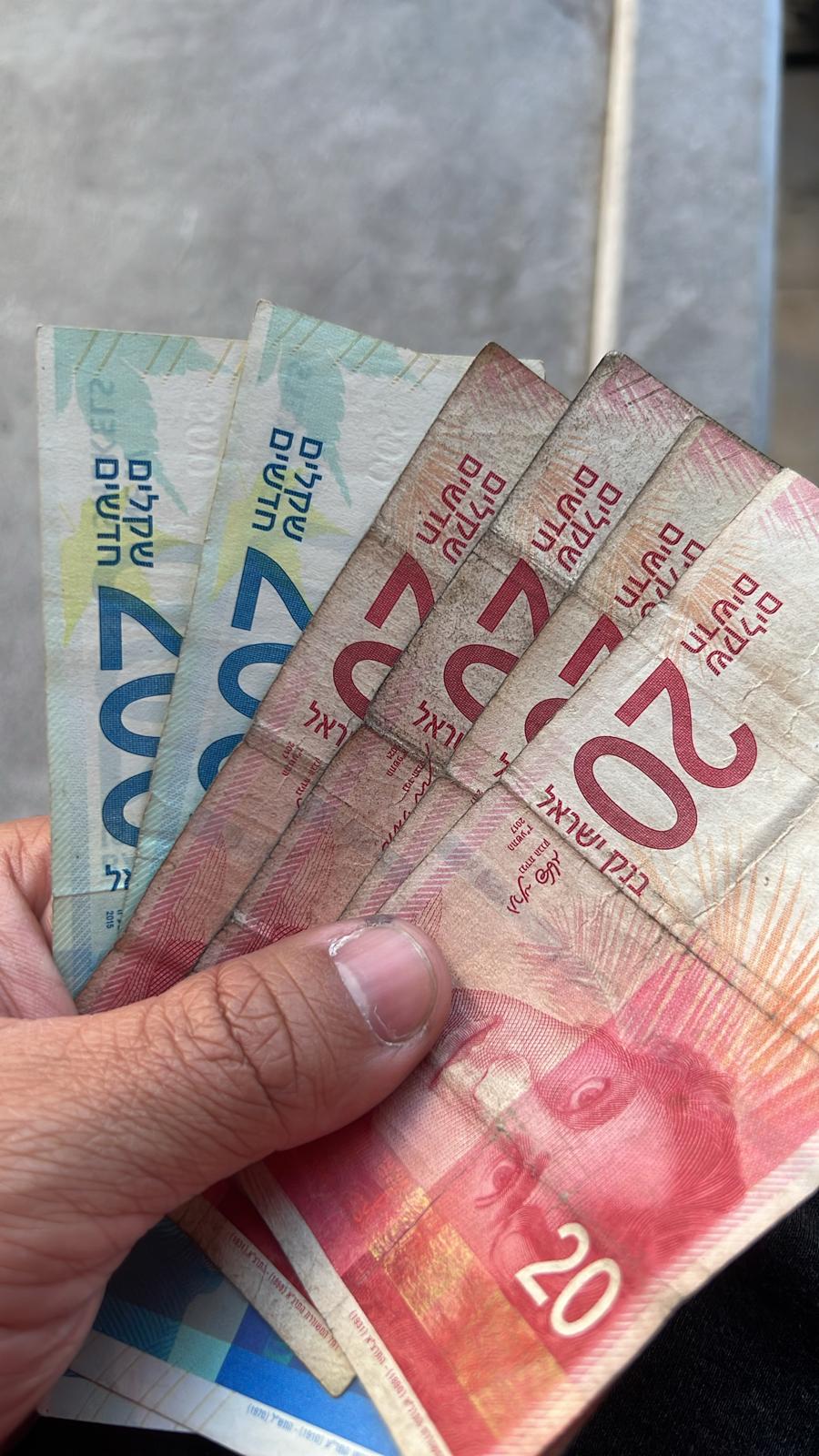
A concept for Palestinian-governed financial tools that could help households direct the money they receive and give communities a transparent way to decide how shared funds are used.
I’m good at imagining how things could work for everyone with no one left out. And with the technical tools at my fingertips, there’s no limit to what I can build and ship in record time. The harder part is finding out whether an idea survives contact with the people who would actually have to live with it.
So here’s the Big Idea. And an invitation to tell me where it falls apart.
I’ve put together a community proposal targeting the Palestinian population called ILNA, a working name for a project exploring Palestinian financial agency. By agency, I mean: having a say over your own money, the rules you live with, and the people making decisions on your behalf.
Ordinary things can become extraordinary when people don’t have them.
Readers may recall my friendship with a man in Gaza has made questions about dignity and opportunity inside the enclave personal to me. A person trying to support his family has skills, preferences, judgment and plans. Those things should matter in the systems intended to serve him.
That is the question behind ILNA: could people have more practical control over the money they receive, and could Palestinian participants govern shared resources in a way they can inspect, question and change?
The inspiration behind much of my thinking comes from Buckminster Fuller’s approach to social change through design: create better systems and build new models. The part I want to explore is voluntary participation. Give people a useful alternative they can choose because it makes their lives better.
Then let the usefulness do the persuading. That’s what I mean by the phrase on the website: “Better systems. Freely chosen.” There’s a rather large catch, of course. I don’t get to decide what “better” means for Palestinians.
The guiding principle is “Nothing about us without us.” لا شيء عنا بدوننا.
For this proposal to deserve anyone’s time, Palestinians would need a meaningful role in defining the problem, choosing the tools, setting the rules and deciding whether to proceed at all. Even ILNA is provisional. A future Palestinian-led process could choose another name.
In plain language, the proposal explores two connected things. First, a way for recipients to hold and use funds through a payment option they can choose. Second, rules for a shared reserve that Palestinian participants would help govern, with records that make institutional decisions easier to scrutinize.
The concept paper considers blockchain for some public governance records and stablecoins as one possible payment route. Those choices need public scrutiny. A digital balance is only useful if someone can safely access it and actually buy what they need. The questions about electricity, connectivity, merchants, prices, privacy, custody and the law are part of the design problem from the beginning.
I can make a website. I cannot make those constraints disappear by putting a wallet on it.
The first proposed technical step is a prototype using fictional data and no real money. Before that, I’m asking Palestinian payment specialists, economists, lawyers, developers, merchants and community voices to challenge the proposal.
Does it address a problem people actually have? What Palestinian systems and institutions should it work with? Who would hold the funds? Who could remove the people holding them? Could public records expose someone to danger? What would make participation genuinely voluntary? And perhaps the most useful question: what should be thrown out?
I’m sharing this concept with the world in hopes of beginning a serious inquiry. There is no claim of Palestinian buy-in, no investment offering, no live payment service and no fundraising campaign. I have no budget to compensate reviewers. Participation is voluntary and currently unpaid, and an initial conversation carries no obligation to continue.
ilna.money in is available in Arabic, English, Hebrew and French; the full feasibility paper is currently in English. There’s a private Telegram discussion group with approval required to join.
I would like this to become a useful conversation, especially with people who see something I’ve missed. A good critique could change the whole direction. That would be progress too.
Read the proposal and the paper at https://www.ilna.money/.
Request to join the discussion: https://t.me/+ywruiVi9cO8xNTIx
Related Topics
Related Posts