Leadership With Heart
When Jew-Hatred Calls Itself Social Justice
The strategy: demonize Israel, punish Jews, and make everyone else fall in line
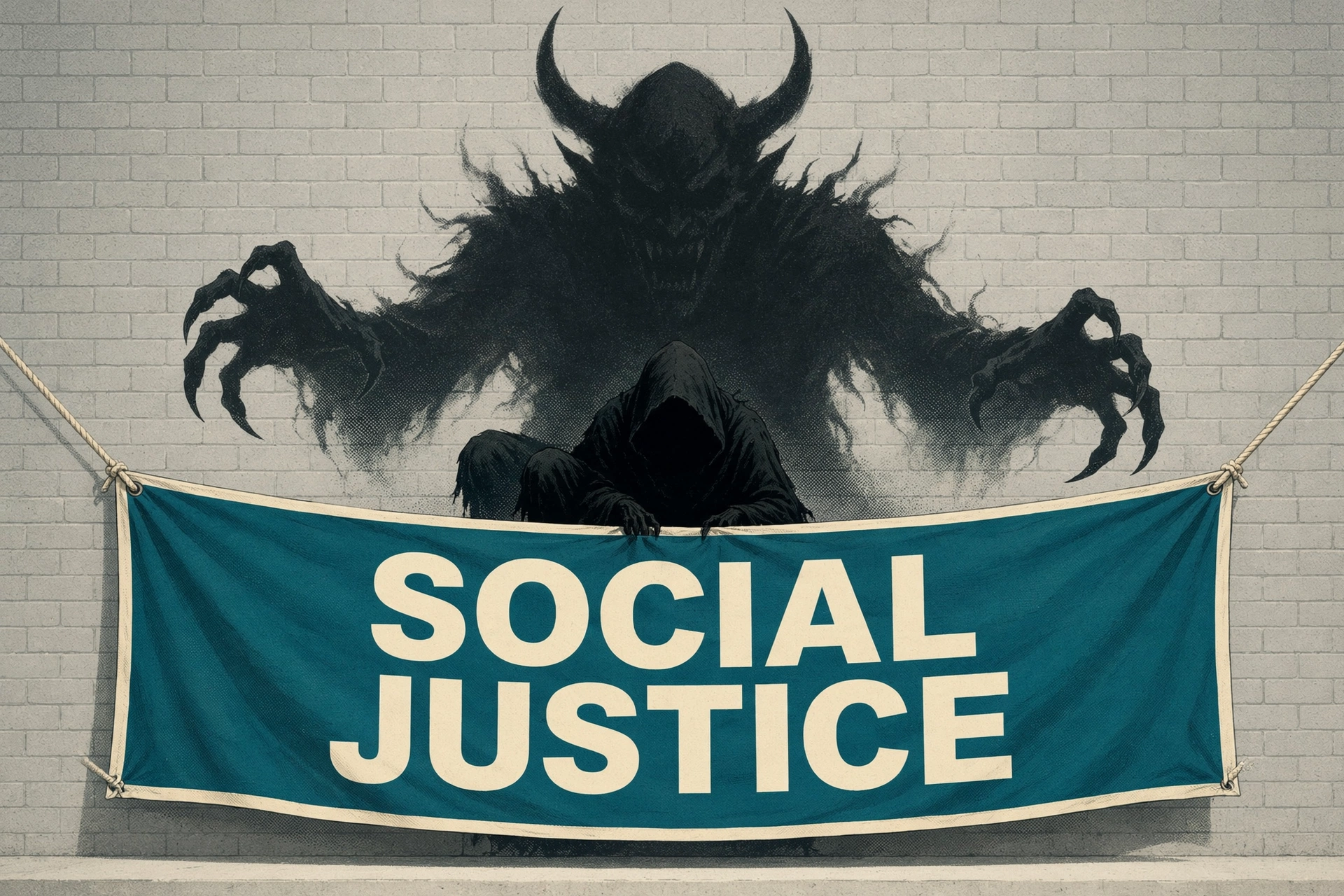
AI generated image
Jewish businesses belong in Philadelphia. Jewish students belong on campus. Jewish artists belong in cultural life.
None should have to renounce Israel as the price of acceptance.
On Sunday, November 8, activists are scheduled to gather at Philadelphia’s Rittenhouse Square at 11:30 a.m. for a “Boycott Ride” targeting six Jewish-owned or Israeli-associated restaurants. Promotional language includes “These Zionist establishments must go.”
“Must go.”
Imagine a protest targeting Muslim-owned restaurants under the slogan “No business for jihadists.” People who rightly oppose anti-Muslim bigotry would recognize the maneuver: attach a threatening label to a community, then present its exclusion as a public service.
Calling the targets “Zionists” does not put the same maneuver beyond scrutiny.
The ride falls on the eve of the anniversary of Kristallnacht, the Nazi-organized pogrom of November 9–10, 1938. A bicycle boycott is not Kristallnacht. But remembrance should sharpen our attention to the stories that make targeting Jews seem righteous—not make us wait for an exact historical replay.
Make the target into the threat
Nazi propaganda depicted Jews as poisonous, parasitic, and dangerous to the national body. Disease imagery presented segregation as protection. Persecution acquired the vocabulary of public welfare.
That was the inversion: make the people being targeted appear responsible for the danger. Then present their mistreatment as the remedy.
The contemporary circumstances are profoundly different. The relevant warning is about justification: how people are taught to see their neighbors as threats whose exclusion serves the common good.
In the campaigns described here, the alleged contamination is moral and political. Association with Israel becomes the stain. Refusing association becomes proof of virtue.
The message is not simply that these people are wrong. It is that their presence is wrong.
Reverse victim and perpetrator
On October 7, Hamas-led armed groups murdered civilians, mutilated bodies, and took hostages. A UN mission found reasonable grounds to believe that rape and gang rape occurred during the attacks. Armed groups circulated recordings of their crimes.
Those who justify these attacks recast terror as resistance and treat civilians as representatives of an allegedly guilty state. The victims become responsible for the violence inflicted on them.
Reject that evasion. Whatever the history of failed negotiations, murdering civilians is a choice—not an inevitability, not a peace proposal, and not the victims’ responsibility.
Later allegations cannot retroactively absolve the perpetrators. Nor can responsibility be transferred to Jews elsewhere.
Beyond the battlefield, demonization can pursue political isolation: make Israel illegitimate, support for it disreputable, and association with it costly. The examples below do not establish a single Hamas-directed operation. They reveal a recurring method of public pressure.
Its five tactics are demonization, condemnation, coercion, exclusion, and violence. These overlap; they are not an inevitable sequence. Their connecting danger is collective guilt.
1. Demonization
Make false accusations. Brand the target as evil.
Begin by making “Zionist” a verdict rather than a description.
Zionism affirms Jewish self-determination in our ancestral homeland. It does not require agreement with every Israeli government. Yet when the word becomes shorthand for absolute evil, a connection to Israel becomes sufficient evidence of guilt.
A restaurant owner becomes a proxy for a government. An artist becomes a proxy for a war. A student becomes a defendant in a case they did not create.
False accusations and blood-libel imagery are especially poisonous because they place the accused beyond ordinary sympathy. Historically, fabricated claims that Jews used the blood of non-Jewish children helped incite persecution and violence. The horror of the accusation became a weapon against innocent people.
An allegation must stand on evidence. Its severity cannot substitute for proof. Its target cannot expand from an alleged perpetrator to an entire people.
2. Condemnation
Give collective blame public authority.
In Denver, restaurant Sắp Sửa’s social media accounts declared Zionists unwelcome before the restaurant walked back its explicit exclusion. In New York, protesters outside NYU Langone chanted, “We don’t want no Zionists here.”
Alongside Philadelphia’s “must go,” these are declarations about who belongs. They invite the public to demonstrate its conscience by rejecting the designated people.
International institutions deserve scrutiny, too. UN Watch counted 15 General Assembly resolutions concerning Israel in its 2025 tally of resolutions it considers condemnatory or one-sided, compared with 11 concerning other countries. That is the advocacy organization’s classification—not a count of every UN resolution or action.
The British government has separately criticized the UN Human Rights Council’s standing agenda item singling out Israel as unfair and unique.
Institutional authority does not turn exceptional treatment into equality. A resolution is not infallible. Repetition is not proof. Condemnation must establish responsibility—not manufacture collective guilt.
3. Coercion
Make refusal to join a punishable offense.
At Northwestern, the student organization Spoon University removed Wildcats for Israel from a Cultural Food Festival after other groups objected and withdrew. Organizers ultimately canceled the event and took “full accountability for including Wildcats for Israel.”
Accountability—for inclusion.
This was the student organization’s decision, not the university administration’s. Northwestern subsequently announced an investigation.
In Chicago, Arts Judaica shelved a planned revival of Naomi Ragen’s Women’s Minyan. Its artistic director told Ragen that actors, directors, and designers feared working with a “pro Zionist Jew/Israeli” would hurt their careers. Speaking to JTA, the director also described objections to Ragen’s politics from prospective participants and a potential funder.
The pressure reached beyond the designated target to anyone willing to work with her.
That is the coercive turn: join the rejection or become suspect yourself. Defending participation is recast as endorsing the wrongdoing alleged against the participant.
I understand the fear of losing professional standing or being branded immoral. But making dissent costly does not establish a campaign’s righteousness.
Working with an Israeli writer is not endorsing a government. Including a student organization is not signing its political platform. People should not have to choose between protecting their reputation and refusing to exclude a neighbor.
4. Exclusion
Turn the accusation into concrete barriers.
At UCLA, protesters during the 2024 encampment blocked Jewish students from portions of campus, including access to classrooms and services. A federal judge ordered the university to protect their access. UCLA subsequently agreed to pay more than $6 million to settle litigation involving three Jewish students and a Jewish professor.
Protesters erected the barriers; the university was challenged for failing to protect equal access.
This was not merely a hostile message. It obstructed ordinary participation.
BDS—boycott, divestment, and sanctions—organizes economic and institutional pressure on Israel in the language of Palestinian rights. Its campaigns must answer the same question as any political campaign: are they challenging conduct, or making nationality and association grounds for exclusion? Calling a tactic a boycott does not settle whether its targets are just.
The double standard reaches into ordinary life when restaurant owners, artists, and students must answer for Israel before their rights will be respected.
Israel’s policies can be debated as other sovereign nations’ policies are debated. Those debates do not confer permission to intimidate its supporters, exclude its citizens, or demand that Jews renounce it to belong.
Nor are a government’s decisions and a nation’s existence the same question. Demanding Israel’s elimination is not a proposal to change a policy. Jewish self-determination is not a privilege opponents may revoke.
Our rights do not depend on proving Israel innocent.
5. Violence
The danger extends beyond exclusion to threats, vandalism, and physical attacks—and to the willingness of others to excuse them.
ADL has documented threats against synagogues, vandalism, and assaults on congregants, including incidents explicitly blaming Jews for Israel’s actions.
In 2025, ADL recorded 203 antisemitic assault incidents in the United States, its highest annual total, up from 196 in 2024. Three people were murdered in attacks ADL classified as antisemitic.
These figures do not prove that a particular slogan caused an attack. They do show why rhetoric that makes Jews into deserving targets cannot be treated casually.
Members of a threatened synagogue should not have to explain Israel. A vandalized business owner should not have to prove political innocence. An assaulted Jew should not have to demonstrate acceptable beliefs to receive sympathy.
Calling harassment “activism” does not make it legitimate. Calling collective blame “accountability” does not make it true. Calling violence “liberation” does not make it just.
Put remembrance to work
Supporting Palestinian rights does not require excusing Hamas, excluding Jews, or demanding Israel’s elimination. When “from the river to the sea” is used to demand that elimination, invoking liberation does not make the demand just.
A campaign deserves scrutiny for what it asks people to do—not immunity because it calls itself righteous.
Patronize the targeted restaurants. Defend equal access to education. Support cultural institutions that refuse ideological blacklists. Expect consistent standards from political leaders.
Jewish businesses belong in Philadelphia. Jewish students belong on campus. Jewish artists belong in cultural life.
False accusations are not truth. Double standards are not equality. Exclusion, harassment, and violence against Jews and Israelis are not justice.
Remembering Kristallnacht means more than mourning what happened to Jews then. It means refusing to let hatred pass for justice now.
Related Topics
Related Posts